 Fin's Fish Guide
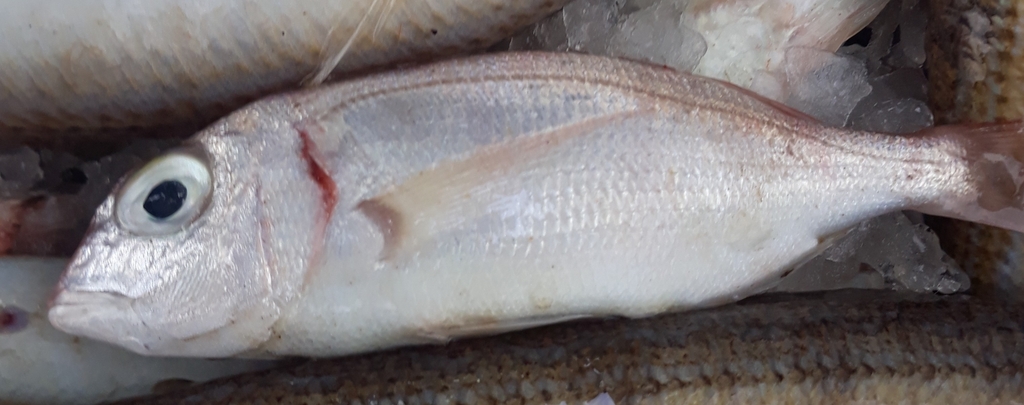
The Red pandora (Pagellus bellottii) is a saltwater fish of the family Sparidae that grows up to 42 cm.
Eastern Atlantic from West Africa to southern Iberia and the Macaronesian islands, over sandy and silty bottoms of the continental shelf.
Description
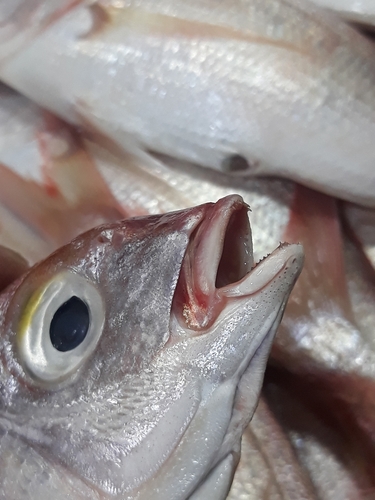
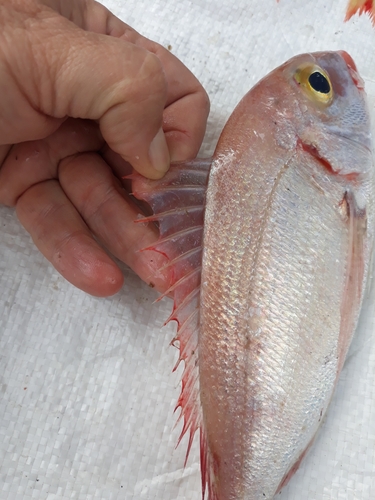
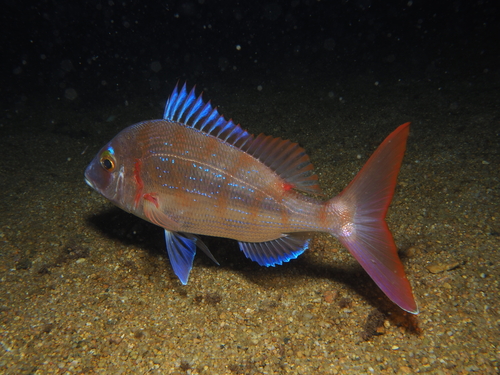
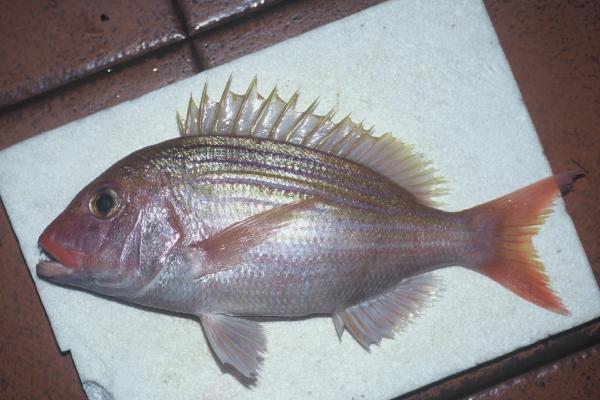
The red pandora is a reddish-pink sea bream of the family Sparidae reaching about 42 cm. It resembles the European sea breams, with a deep, laterally compressed body, a bluish rim around the eyes and often a red spot at the pectoral-fin base. Like many sea breams it is a protogynous hermaphrodite: individuals begin as females and may later turn into males. The species lives in schools over sand and mud bottoms of the continental shelf of the eastern Atlantic, from West Africa to southern Iberia and the Macaronesian islands. On the bottom it searches for small crustaceans, molluscs, worms and small fish. The red pandora is a valued commercial and sport fish.
Frequently asked questions
How do you recognise the Red pandora?
The Red pandora has a torpedo-shaped body, is mainly red-orange and shows a plain pattern. Red-pink sea bream with a blue rim around the eyes and often a red blotch at the pectoral fin base; a valued West African food fish.
Where does the Red pandora live?
The Red pandora lives in the sea (marine waters) and is mostly found around sand or mud bottom. Eastern Atlantic from West Africa to southern Iberia and the Macaronesian islands, over sandy and silty bottoms of the continental shelf.
How big does the Red pandora get?
The Red pandora grows to a maximum of about 42 cm. On average the species is around 25 cm.
Is the Red pandora dangerous to humans?
No, the Red pandora is harmless to humans. None required: this species is harmless to humans.
Is the Red pandora edible?
Yes, the Red pandora is a highly prized food fish.
More photos
Easily confused with
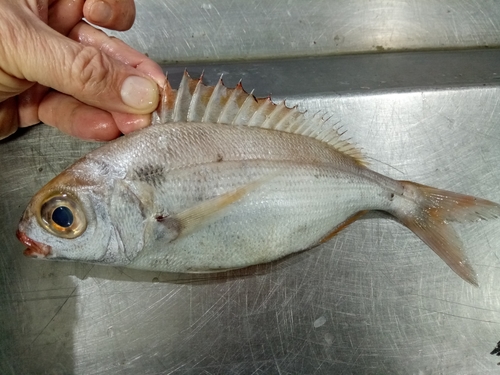
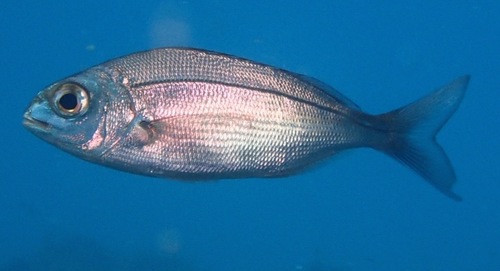
These species look like the Red pandora and live in the same waters.



Want the complete picture on the Red pandora?
Point your camera at the fish and Fin names the species in seconds. Free, and the Red pandora is one of 12,519 species in the app.
All data
Identification
Appearance
Habitat & distribution
Behaviour & biology
For anglers
Safety
Status & sources
Same genus Pagellus
More from the family Sparidae





Want the complete picture on the Red pandora?
Point your camera at the fish and Fin names the species in seconds. Free, and the Red pandora is one of 12,519 species in the app.