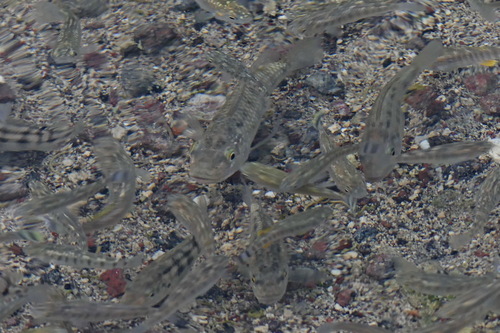
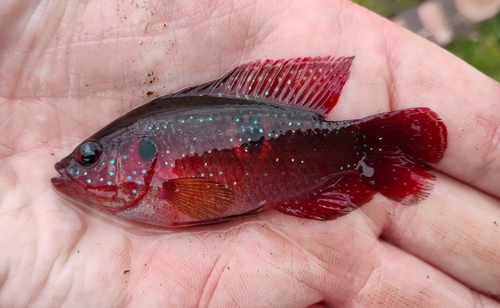
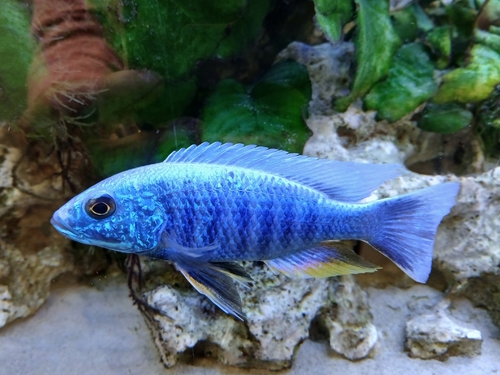
Home · Cichlidae · Longfin tilapia
Longfin tilapia (Oreochromis macrochir) — Cichlidae

Longfin tilapia

Oreochromis macrochir
Family: Cichlidae
VU · Vulnerable
NativeIntroduced

The Longfin tilapia (Oreochromis macrochir) is a freshwater fish of the family Cichlidae that grows up to 43 cm.

Length
43 cm
Water
Freshwater
Depth
5.0–14.0 m
Diet
Herbivore
Behaviour
Schooling
Activity
Diurnal
Body shape
Torpedo-shaped
Substrate
Algae or seagrass meadow
Danger
Harmless
Range
Fresh water of south-central Africa, including the Zambezi and Congo basins, in lakes, rivers and swamps; introduced elsewhere.
Edibility
Highly prized

Want the complete picture on the Longfin tilapia?

Get the app

Description

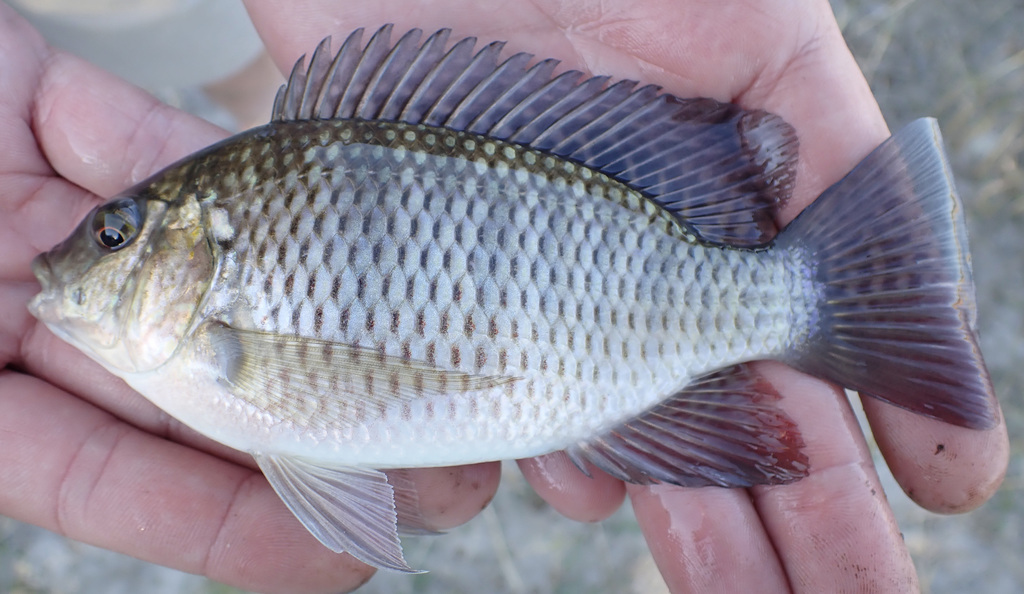
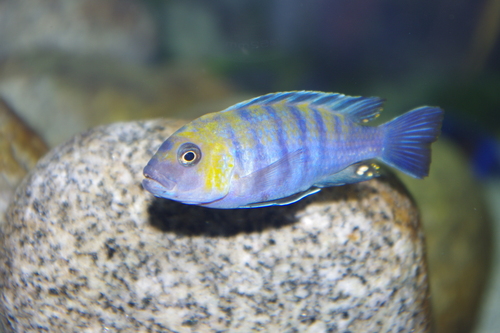
The longfin tilapia is a robust cichlid of the family Cichlidae reaching about 43 cm. The deep, laterally compressed, silvery-grey body has a long dorsal fin; the breeding male develops elongated front dorsal-fin rays and a blue-yellow glow. It is a maternal mouthbrooder: the male digs a large spawning pit on a shallow bottom, and after mating the female broods the fertilised eggs in her mouth. As a plant-eater it feeds mainly on phytoplankton, algae, water plants and detritus. The species comes from south-central Africa, including the Zambezi and Congo basins, and has been stocked elsewhere for fish farming. Through overfishing and displacement by introduced tilapias it has declined in parts of its range; the IUCN assesses it as Vulnerable (VU).

Frequently asked questions

How do you recognise the Longfin tilapia?

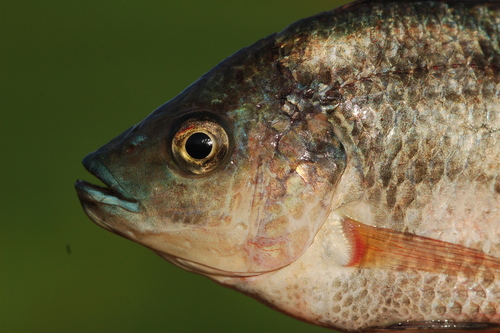
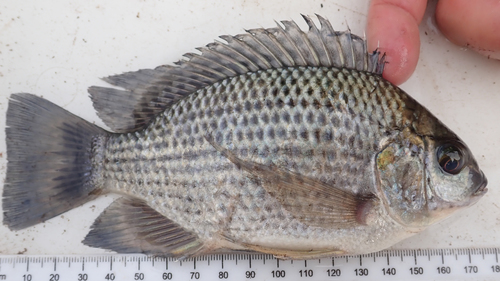
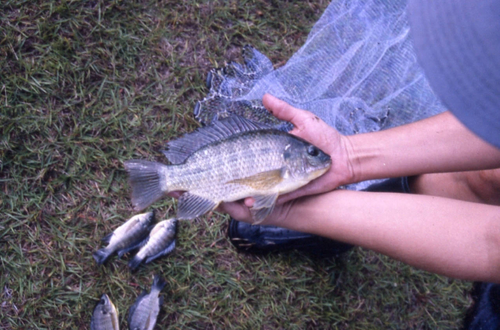
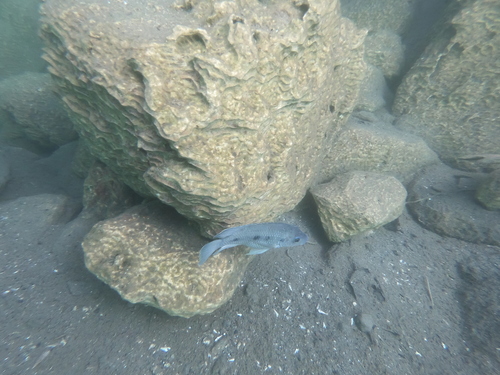
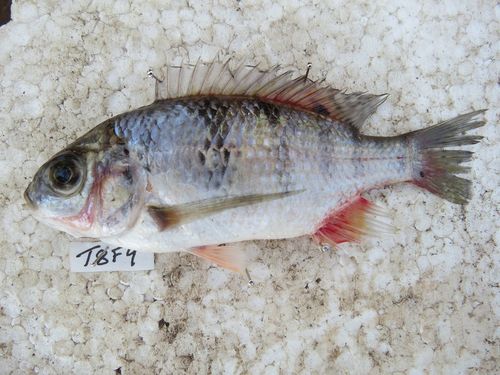
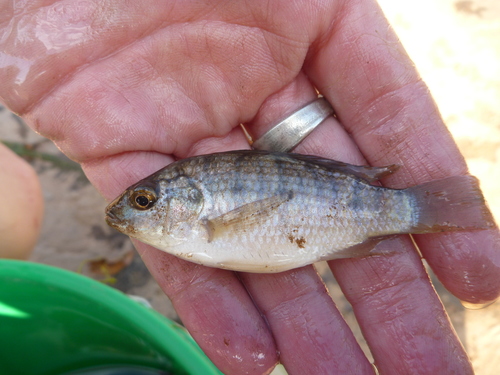
The Longfin tilapia has a torpedo-shaped body, is mainly silver-grey and shows a plain pattern. Sturdy tilapia with a high dorsal fin; the breeding male develops elongated front dorsal fin rays and builds a large spawning pit (lek).

Where does the Longfin tilapia live?

The Longfin tilapia lives in fresh water and is mostly found around algae or seagrass beds. Fresh water of south-central Africa, including the Zambezi and Congo basins, in lakes, rivers and swamps; introduced elsewhere.

How big does the Longfin tilapia get?

The Longfin tilapia grows to a maximum of about 43 cm.

Is the Longfin tilapia dangerous to humans?

No, the Longfin tilapia is harmless to humans. None required: this species is harmless to humans.

Is the Longfin tilapia edible?

Yes, the Longfin tilapia is a highly prized food fish.

More photos
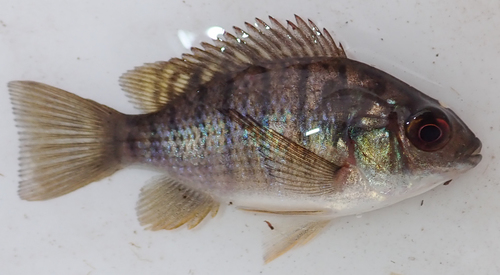
Longfin tilapia (Oreochromis macrochir) — Cichlidae — 2
iNaturalist ((c) Wilderness Safaris Botswana - Conservation Team, some rights reserved (CC BY))
Longfin tilapia (Oreochromis macrochir) — Cichlidae — 3
Wikimedia Commons — Boulenger, George Albert, 1858-1937 (Public domain)
Longfin tilapia (Oreochromis macrochir) — Cichlidae — 4
iNaturalist ((c) Ruben Foquet, some rights reserved (CC BY-NC))
Longfin tilapia (Oreochromis macrochir) — Cichlidae — 5
iNaturalist ((c) Wilderness Safaris Botswana - Conservation Team, some rights reserved (CC BY))
Fin

Want the complete picture on the Longfin tilapia?

Point your camera at the fish and Fin names the species in seconds. Free, and the Longfin tilapia is one of 12,519 species in the app.

Get the app →

All data

Identification

English name
Longfin tilapia verified
Scientific name
Oreochromis macrochir
Family
Cichlidae
Other names
Congo bream; Greenhead bream; Greenhead tilapia; Cichlid; Green-head tilapia; Green-headed bream; Mango fish verified

Appearance

Size class
Large verified
Max length (cm)
43.0 verified
Body shape
Torpedo-shaped sourced
Dominant colour
Silver / grey sourced
Pattern
Plain sourced
Tail shape
Straight inferred
Mouth position
Terminal inferred
Lips
Thick / fleshy inferred
Barbels
No verified
Dorsal fins
One continuous sourced
Dorsal spines
Yes verified

Habitat & distribution

Water type
Freshwater verified
Substrate
Algae or seagrass meadow verified
Min depth (m)
5.0 verified
Max depth (m)
14.0 verified
Natural range
Fresh water of south-central Africa, including the Zambezi and Congo basins, in lakes, rivers and swamps; introduced elsewhere. verified
Origin
Native verified

Behaviour & biology

Diet
Herbivore verified
Diet (detail)
Phytoplankton, algae, aquatic plants and detritus sourced
Social behaviour
Schooling verified
Territorial
Yes verified
Activity
Diurnal inferred
Reproduction
Separate sexes verified
Sexual dimorphism
Yes verified
Seasonality
The male digs a large spawning pit; the female incubates the fertilised eggs in her mouth (maternal mouthbrooder). sourced
Special features
Sturdy tilapia with a high dorsal fin; the breeding male develops elongated front dorsal fin rays and builds a large spawning pit (lek). sourced

For anglers

Edibility
Highly prized verified
Fishing method
Angling with paste bait or bread in lakes and rivers; a prized food and farmed fish sourced
Regulations source
FishBase ↗ inferred

Safety

Danger to humans
Harmless verified
First aid
None required: this species is harmless to humans. sourced

Status & sources

Sources
FishBase via GBIF (DwC-A), CC-BY-NC 4.0

Same genus Oreochromis

More from the family Cichlidae

Fin

Want the complete picture on the Longfin tilapia?

Point your camera at the fish and Fin names the species in seconds. Free, and the Longfin tilapia is one of 12,519 species in the app.

Get the app →
Is this the Longfin tilapia? Get the app