Home · Carcharhinidae · Brown shark
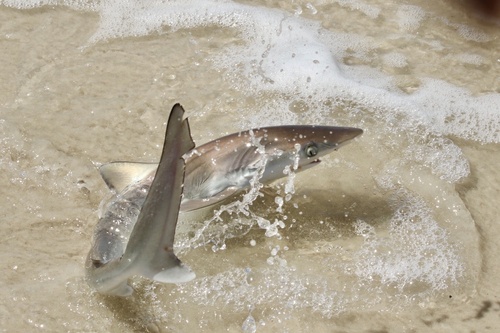
Brown shark (Carcharhinus plumbeus) — Carcharhinidae

Brown shark

Carcharhinus plumbeus
EN · Endangered

The Brown shark (Carcharhinus plumbeus) is a brackish-water fish of the family Carcharhinidae that grows up to 300 cm.

Length
300 cm
Water
Brackish
Depth
0.0–500.0 m
Diet
Carnivore
Behaviour
Small groups
Body shape
Torpedo-shaped
Substrate
Mixed bottom
Danger
Harmless
Range
Temperate and tropical coastal waters worldwide.
Edibility
Commonly eaten

Want the complete picture on the Brown shark?

Get the app

Description

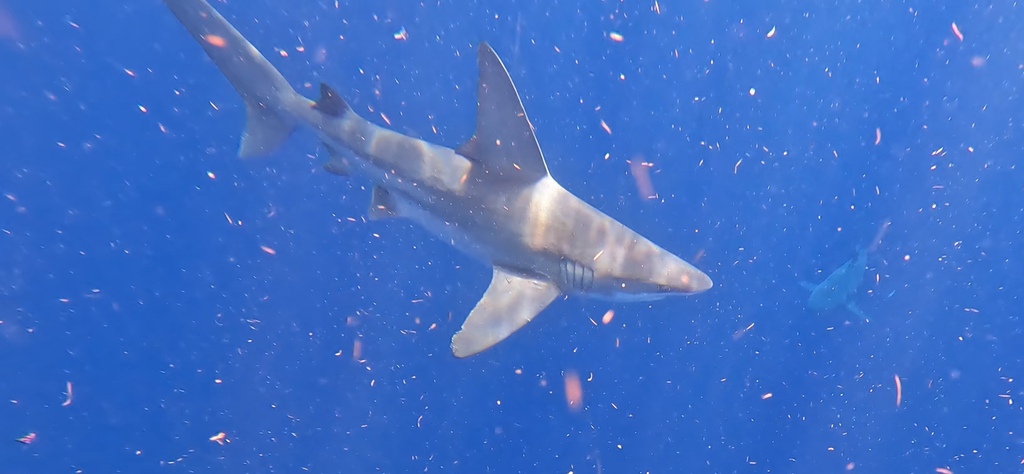
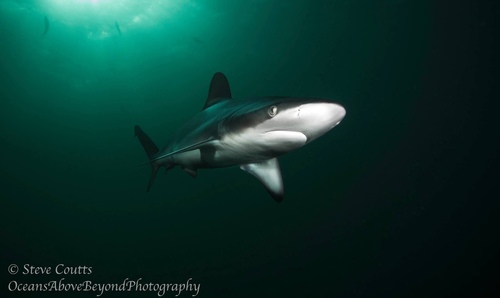
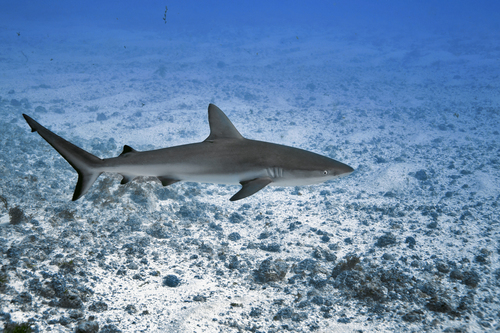
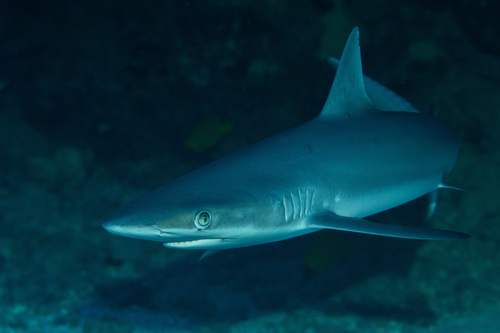
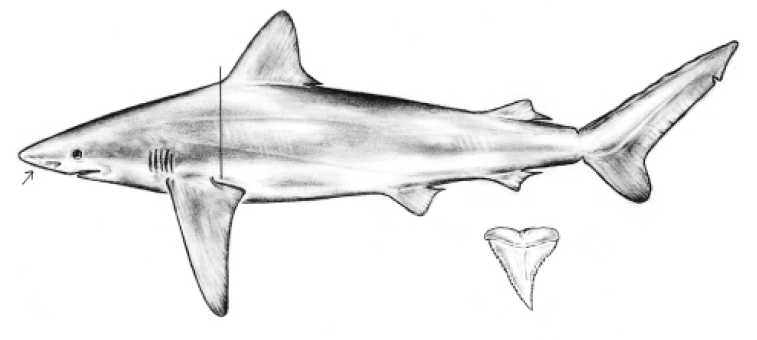
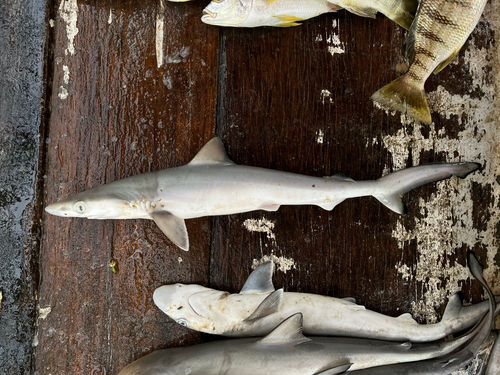
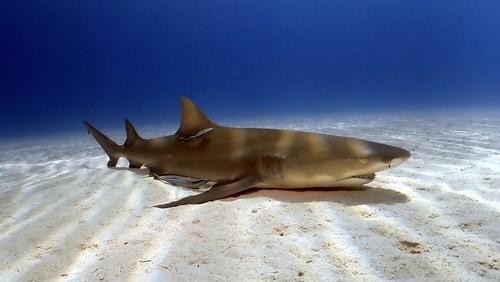
The sandbar shark (Carcharhinus plumbeus) is a stocky requiem shark of the family Carcharhinidae from temperate and tropical coastal waters. The species is recognised by its very tall, forward-set first dorsal fin and a brown-grey, streamlined body that can reach about three metres. It lives on continental and insular shelves, especially in bays, river mouths and harbours, and avoids the surf zone and coral reefs. It is a bottom-associated hunter of fishes, rays and crustaceans. The species is generally not aggressive toward people but, owing to slow reproduction and fishing, is considered Endangered (EN).

Frequently asked questions

How do you recognise the Brown shark?

The Brown shark has a torpedo-shaped body, is mainly silver-grey and shows a plain pattern. Strikingly tall, forward-placed first dorsal fin; endangered by slow reproduction (EN).

Where does the Brown shark live?

The Brown shark lives in brackish water and is mostly found around mixed bottom. Temperate and tropical coastal waters worldwide.

How big does the Brown shark get?

The Brown shark grows to a maximum of about 300 cm. On average the species is around 200 cm.

Is the Brown shark dangerous to humans?

No, the Brown shark is harmless to humans. This species is harmless to humans. No specific first aid is needed. Still handle the fish with care: mind the fin rays and the sharp edges of the gill cover, and rinse any scratch with clean water and cover it. For a dirty or deep wound check tetanus status.

Is the Brown shark edible?

Yes, the Brown shark is commonly eaten.

More photos
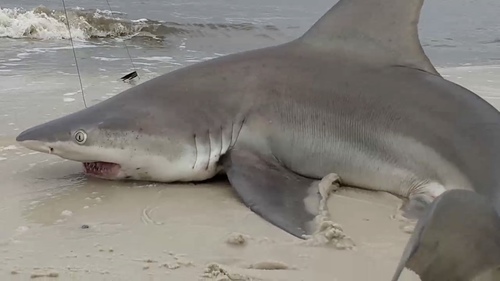
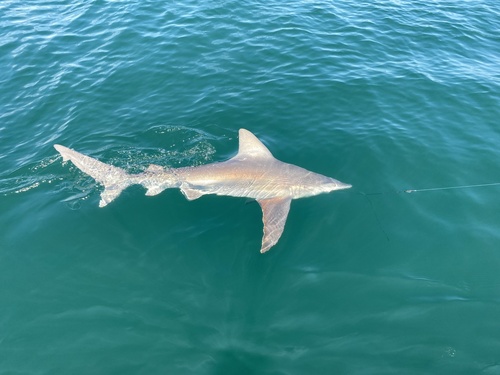
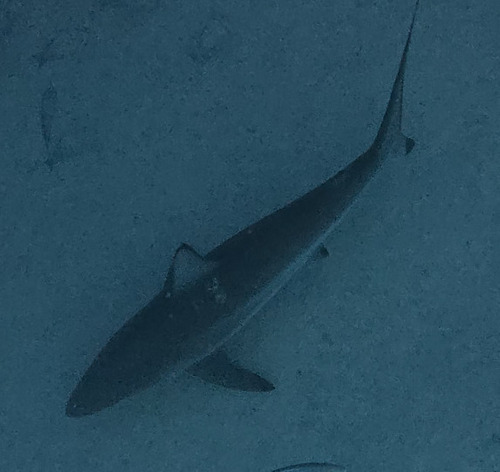
Brown shark (Carcharhinus plumbeus) — Carcharhinidae — 2
iNaturalist ((c) Nick Carlson, some rights reserved (CC BY-NC))
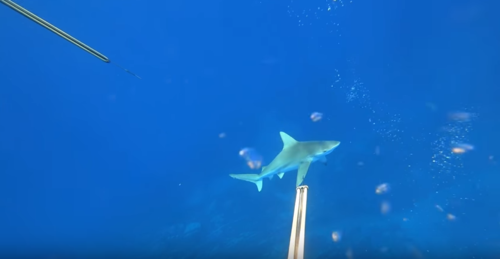
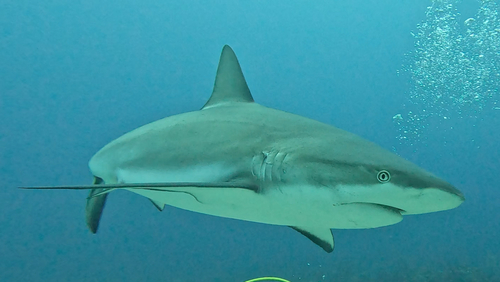
Brown shark (Carcharhinus plumbeus) — Carcharhinidae — 3
iNaturalist ((c) declanandfred, some rights reserved (CC BY-NC))
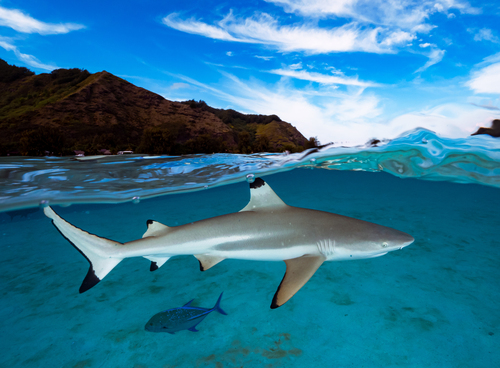
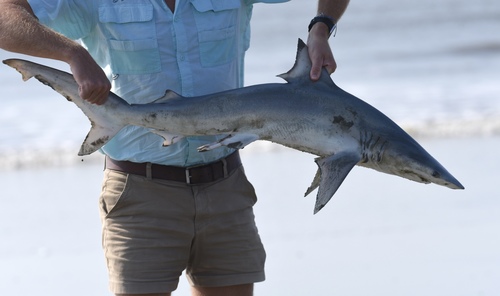
Brown shark (Carcharhinus plumbeus) — Carcharhinidae — 4
iNaturalist ((c) biodiversitygr, some rights reserved (CC BY))

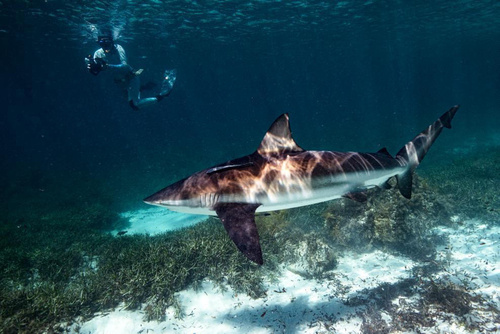
Easily confused with

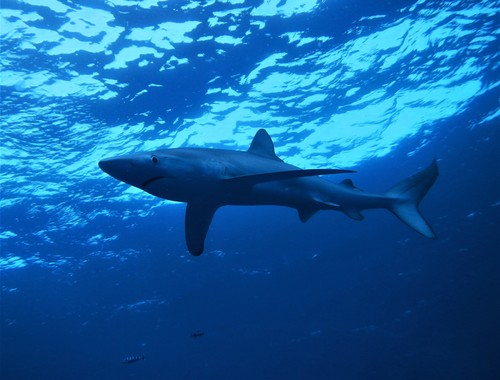
These species look like the Brown shark and live in the same waters.
Fin

Want the complete picture on the Brown shark?

Point your camera at the fish and Fin names the species in seconds. Free, and the Brown shark is one of 12,519 species in the app.

Get the app →

All data

Identification

English name
Brown shark verified
Scientific name
Carcharhinus plumbeus
Family
Carcharhinidae
Other names
Brown shark; Large finned shark; Northern whaler shark; Queriman shark; Sand shark; Sandbar shark; Thickskin shark; Shark verified

Appearance

Size class
Extra large verified
Max length (cm)
300.0 verified
Average length (cm)
200.0 verified
Body shape
Torpedo-shaped sourced
Dominant colour
Silver / grey inferred
Pattern
Plain inferred
Tail shape
Crescent (lunate) inferred
Mouth position
Inferior (downward) inferred
Lips
Thin inferred
Barbels
No sourced
Dorsal fins
Two separate inferred
Dorsal spines
No sourced

Habitat & distribution

Water type
Brackish sourced
Substrate
Mixed bottom sourced
Min depth (m)
0.0 verified
Max depth (m)
500.0 verified
Natural range
Temperate and tropical coastal waters worldwide. inferred
Origin
Native sourced

Behaviour & biology

Diet
Carnivore sourced
Diet (detail)
Fishes, rays and crustaceans sourced
Social behaviour
Small groups inferred
Territorial
No inferred
Reproduction
Separate sexes sourced
Sexual dimorphism
No inferred
levensduur_max_jaar
34.0 verified
Seasonality
Present year-round in its habitat; no pronounced seasonality known. inferred
Special features
Strikingly tall, forward-placed first dorsal fin; endangered by slow reproduction (EN). sourced

For anglers

Edibility
Commonly eaten sourced
Fishing method
Caught by anglers with heavy longline or boat tackle and natural fish bait; given its endangered status, release is preferred. sourced
Regulations source
FishBase ↗ inferred

Safety

Danger to humans
Harmless sourced
First aid
This species is harmless to humans. No specific first aid is needed. Still handle the fish with care: mind the fin rays and the sharp edges of the gill cover, and rinse any scratch with clean water and cover it. For a dirty or deep wound check tetanus status. verified

Status & sources

Sources
FishBase via GBIF (DwC-A), CC-BY-NC 4.0

Same genus Carcharhinus

More from the family Carcharhinidae
Fin

Want the complete picture on the Brown shark?

Point your camera at the fish and Fin names the species in seconds. Free, and the Brown shark is one of 12,519 species in the app.

Get the app →
Is this the Brown shark? Get the app