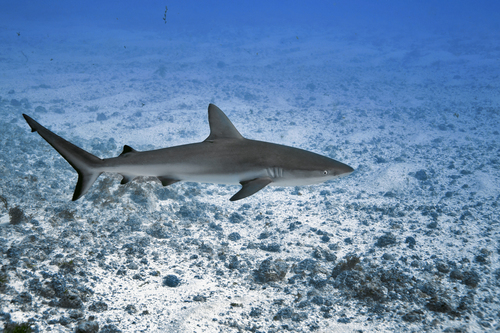
Home · Carcharhinidae · Blue dog
Blue dog (Prionace glauca) — Carcharhinidae

Blue dog

Prionace glauca
NT · Near Threatened

The Blue dog (Prionace glauca) is a brackish-water fish of the family Carcharhinidae that grows up to 400 cm.

Length
400 cm
Water
Brackish
Depth
0.0–1082.0 m
Diet
Carnivore
Behaviour
Small groups
Body shape
Torpedo-shaped
Substrate
Open water
Danger
Can cause injury
Range
Circumglobal in temperate and tropical waters of the Atlantic, Pacific and Indian Ocean.
Edibility
Rarely eaten

Want the complete picture on the Blue dog?

Get the app

Description

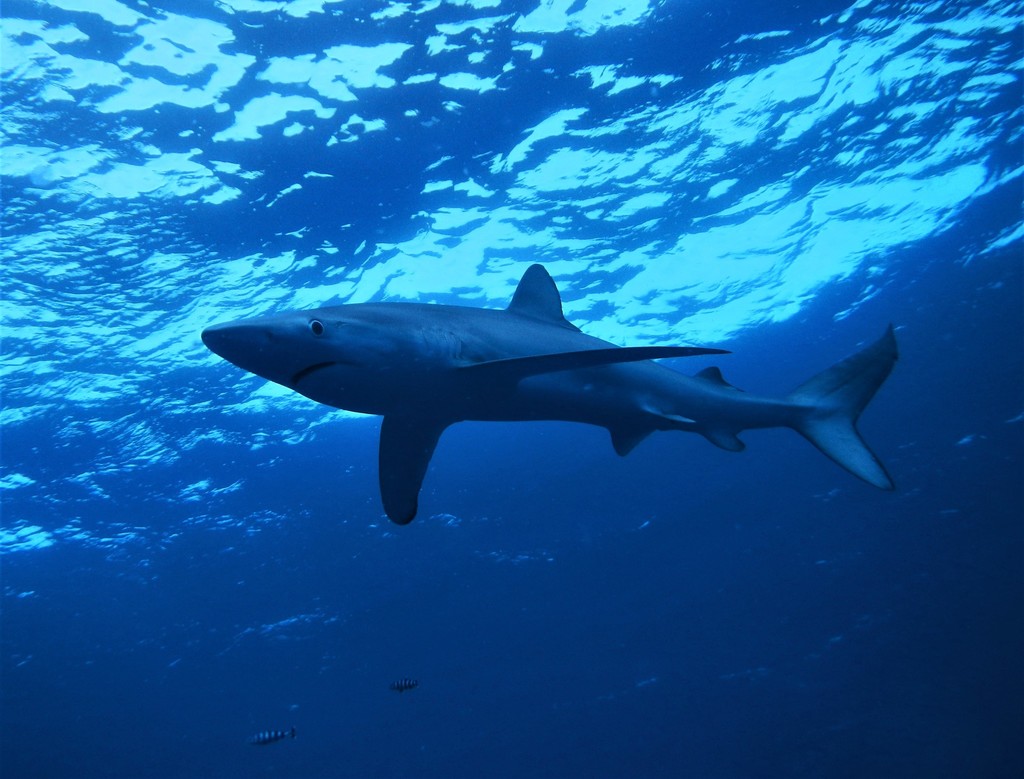
The blue shark is a slender, graceful oceanic shark of the family Carcharhinidae reaching about 400 cm. The species is named for its colour: deep blue on the back, bright blue on the flanks and white on the belly. Very long, pointed pectoral fins and a slender, long snout are characteristic. The blue shark is one of the most migratory of sharks and can travel thousands of kilometres. It lives pelagically in all temperate and tropical seas, hunting fish such as herring and mackerel, small sharks and squid. It is viviparous with large litters. Fishing pressure has left the species assessed as Near Threatened.

Frequently asked questions

How do you recognise the Blue dog?

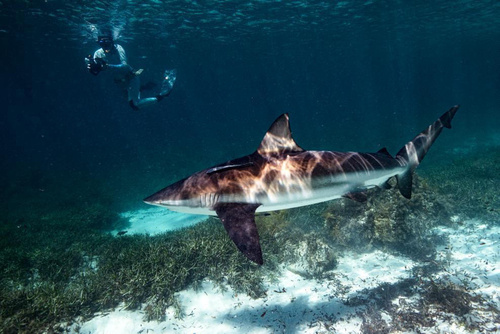
The Blue dog has a torpedo-shaped body, is mainly blue and shows a plain pattern. Slender, graceful ocean shark with very long, pointed pectoral fins; deep blue back, bright blue flanks and white belly. Highly migratory.

Where does the Blue dog live?

The Blue dog lives in brackish water and is mostly found around open water. Circumglobal in temperate and tropical waters of the Atlantic, Pacific and Indian Ocean.

How big does the Blue dog get?

The Blue dog grows to a maximum of about 400 cm. On average the species is around 335 cm.

Is the Blue dog dangerous to humans?

The Blue dog can cause injury; handle it with care. Usually shy, but as a large predatory shark potentially dangerous. Keep your distance in the water and never handle a captured animal with bare hands because of the sharp teeth.

Is the Blue dog edible?

The Blue dog is rarely eaten.

More photos
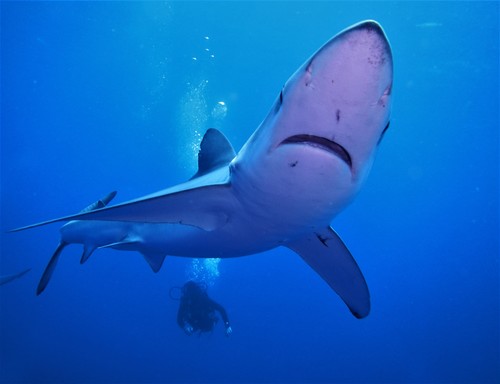
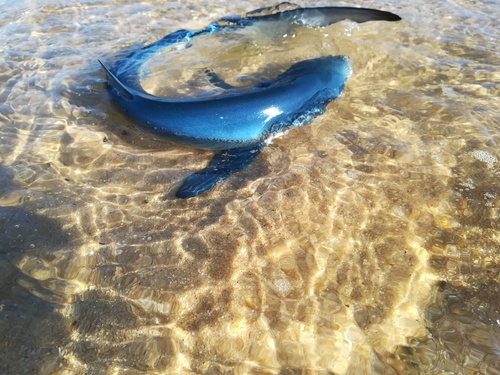
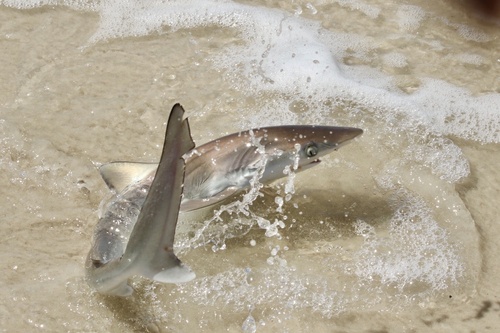
Blue dog (Prionace glauca) — Carcharhinidae — 2
iNaturalist ((c) Rino, some rights reserved (CC BY-NC))
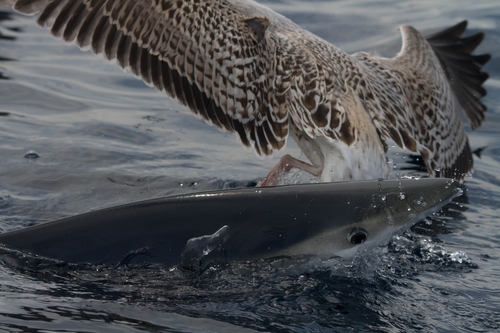
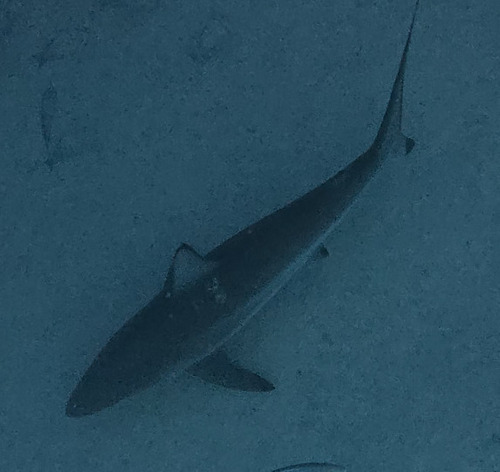
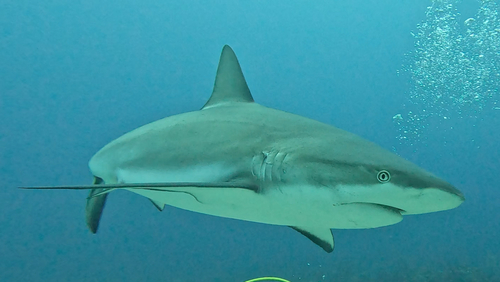
Blue dog (Prionace glauca) — Carcharhinidae — 3
iNaturalist ((c) Paulo Martins, some rights reserved (CC BY-SA))
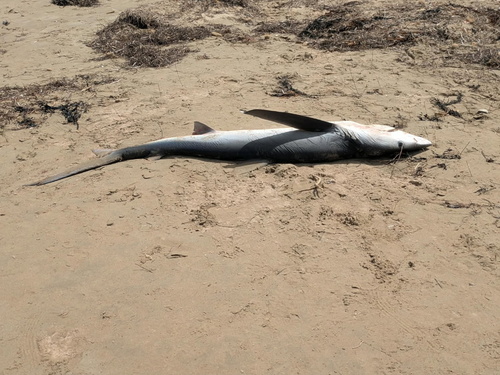
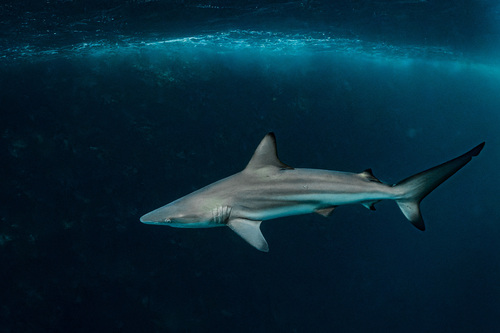
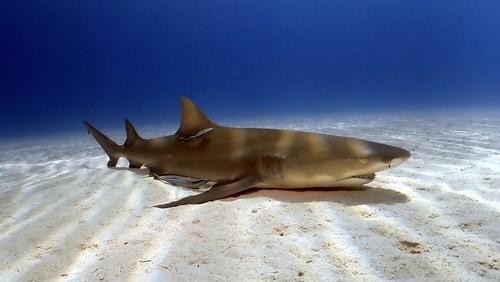
Blue dog (Prionace glauca) — Carcharhinidae — 4
iNaturalist ((c) svennormant, some rights reserved (CC BY-NC))
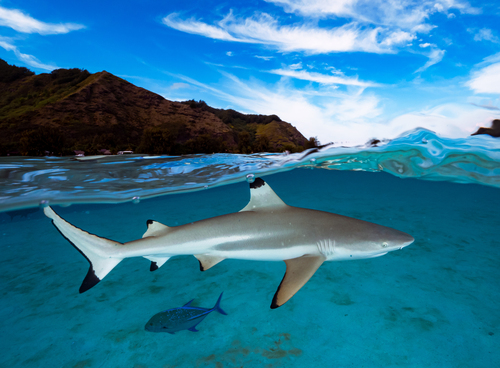
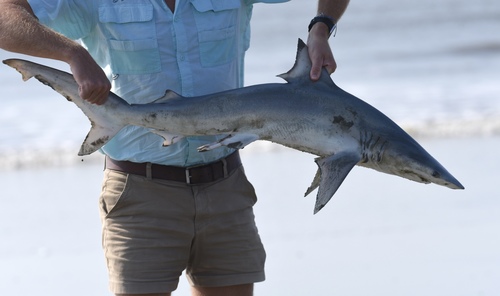
Blue dog (Prionace glauca) — Carcharhinidae — 5
Timothy Hartman (http://creativecommons.org/licenses/by-nc/4.0/) via GBIF

Easily confused with

These species look like the Blue dog and live in the same waters.
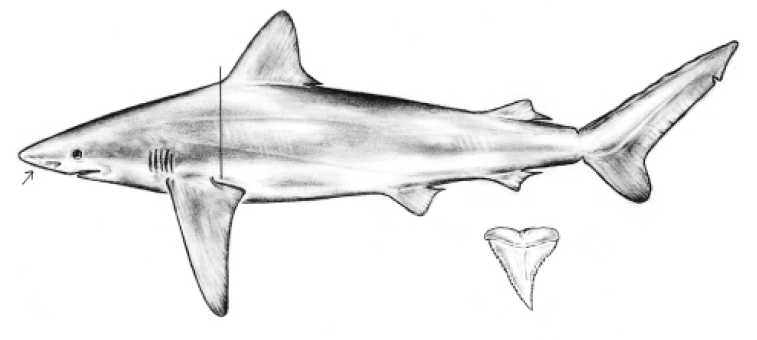
Fin

Want the complete picture on the Blue dog?

Point your camera at the fish and Fin names the species in seconds. Free, and the Blue dog is one of 12,519 species in the app.

Get the app →

All data

Identification

English name
Blue dog verified
Scientific name
Prionace glauca
Family
Carcharhinidae
Other names
Blue dog; Blue poninter; Blue shark; Great blue shark; Blue whaler; Blue whaler shark; Great blue; Great blue whaler; Shark; Tribon blou verified

Appearance

Size class
Extra large verified
Max length (cm)
400.0 verified
Average length (cm)
335.0 verified
Body shape
Torpedo-shaped sourced
Dominant colour
Blue sourced
Pattern
Plain sourced
Tail shape
Crescent (lunate) sourced
Mouth position
Inferior (downward) inferred
Barbels
No verified
Dorsal fins
Two separate sourced
Dorsal spines
No verified

Habitat & distribution

Water type
Brackish sourced
Substrate
Open water sourced
Min depth (m)
0.0 verified
Max depth (m)
1082.0 verified
Natural range
Circumglobal in temperate and tropical waters of the Atlantic, Pacific and Indian Ocean. verified
Origin
Native verified

Behaviour & biology

Diet
Carnivore verified
Diet (detail)
Small fishes, crustaceans and zooplankton inferred
Social behaviour
Small groups verified
Territorial
No verified
Reproduction
Separate sexes verified
Sexual dimorphism
No verified
levensduur_max_jaar
20 verified
Seasonality
Highly migratory over great distances; viviparous with a placenta and 4-135 young per litter after 9-12 months' gestation. sourced
Special features
Slender, graceful ocean shark with very long, pointed pectoral fins; deep blue back, bright blue flanks and white belly. Highly migratory. sourced

For anglers

Edibility
Rarely eaten verified
Fishing method
Angling with lures or (dead/live) baitfish by trolling, casting or drift fishing in open water. inferred
Regulations source
FishBase ↗ inferred

Safety

Danger to humans
Can cause injury verified
First aid
Usually shy, but as a large predatory shark potentially dangerous. Keep your distance in the water and never handle a captured animal with bare hands because of the sharp teeth. sourced

Status & sources

Sources
FishBase via GBIF (DwC-A), CC-BY-NC 4.0

More from the family Carcharhinidae
Fin

Want the complete picture on the Blue dog?

Point your camera at the fish and Fin names the species in seconds. Free, and the Blue dog is one of 12,519 species in the app.

Get the app →
Is this the Blue dog? Get the app