Home · Cyprinidae · Red shiner
Red shiner (Cyprinella lutrensis) — Cyprinidae

Red shiner

Cyprinella lutrensis
Family: Cyprinidae
LC · Least Concern

The Red shiner (Cyprinella lutrensis) is a freshwater fish of the family Cyprinidae that grows up to 9 cm.

Length
9.3 cm
Water
Freshwater
Diet
Omnivore
Behaviour
Schooling
Activity
Diurnal
Body shape
Torpedo-shaped
Substrate
Mixed bottom
Danger
Harmless
Range
North America: Mexico, USA
Edibility
Commonly eaten

Want the complete picture on the Red shiner?

Get the app

Description

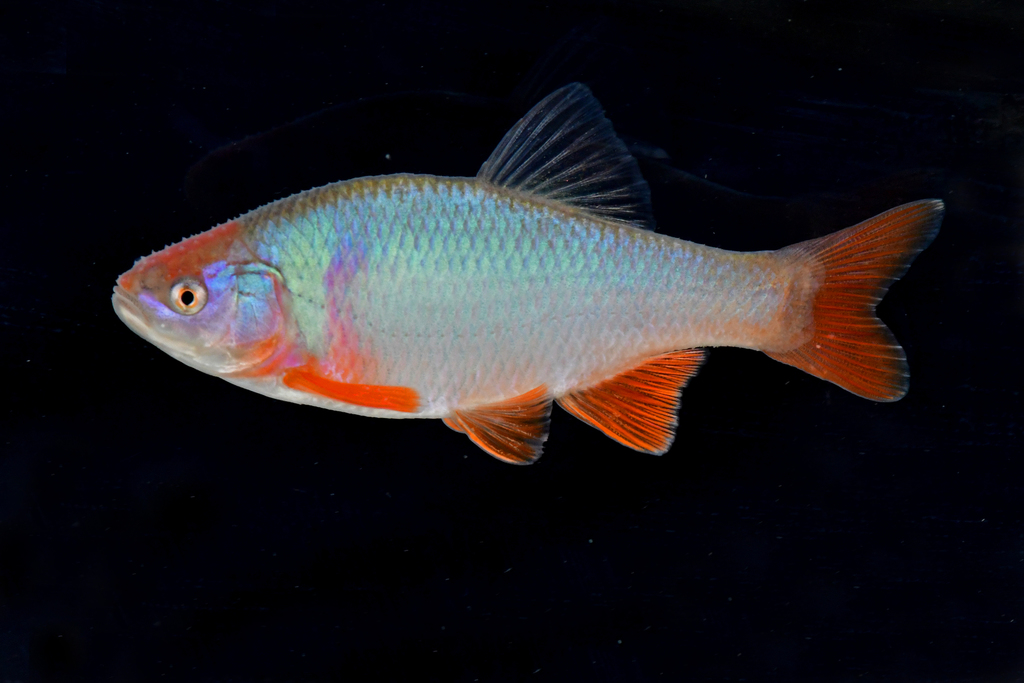
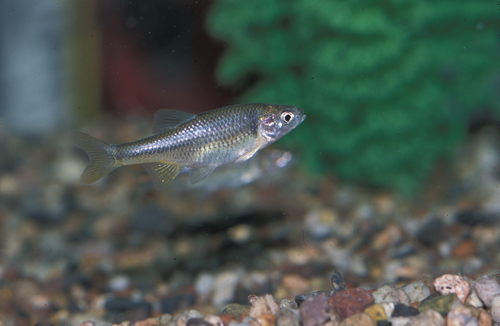
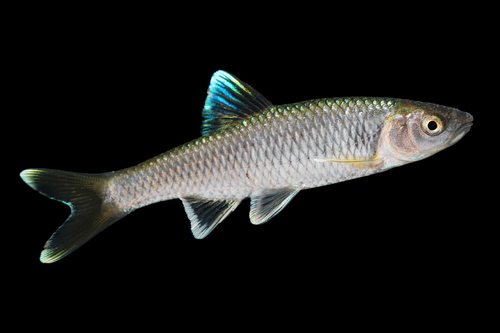
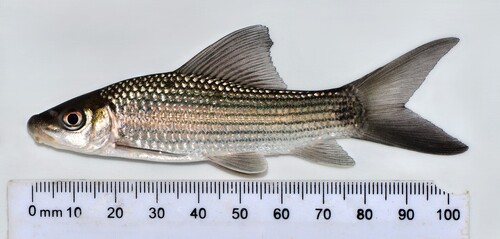
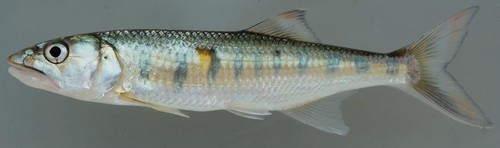
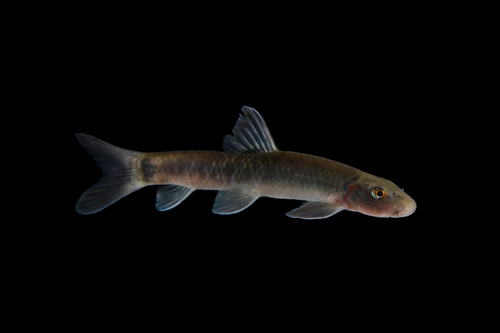
The red shiner is a small, robust cyprinid from the southern and central United States. It grows to about 9 cm and has a deep, laterally compressed body that is mostly silvery-blue; in the breeding season males turn strikingly red-orange in the fins with a bluish sheen. The species inhabits silty, sandy and rocky pools and runs of creeks and small rivers and tolerates high turbidity well. It feeds on terrestrial and aquatic insects and algae. Thanks to its adaptability it has spread beyond its native range, where it is locally considered invasive. It is harmless to humans.

Frequently asked questions

How do you recognise the Red shiner?

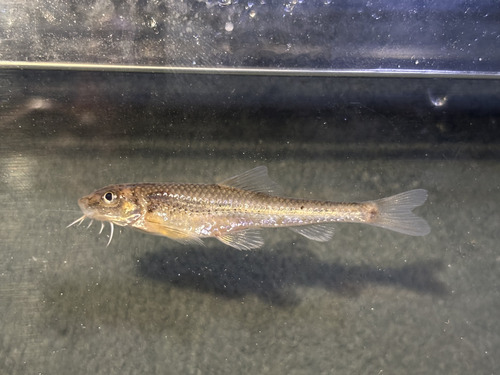
The Red shiner has a torpedo-shaped body, is mainly silver-grey and shows a plain pattern. Males turn bright red-orange during spawning; very tolerant of turbidity.

Where does the Red shiner live?

The Red shiner lives in fresh water and is mostly found around mixed bottom. North America: Mexico, USA

How big does the Red shiner get?

The Red shiner grows to a maximum of about 9 cm. On average the species is around 5 cm.

Is the Red shiner dangerous to humans?

No, the Red shiner is harmless to humans. This species is harmless to humans. No specific first aid is needed. Still handle the fish with care: mind the fin rays and the sharp edges of the gill cover, and rinse any scratch with clean water and cover it. For a dirty or deep wound check tetanus status.

Is the Red shiner edible?

Yes, the Red shiner is commonly eaten.

More photos

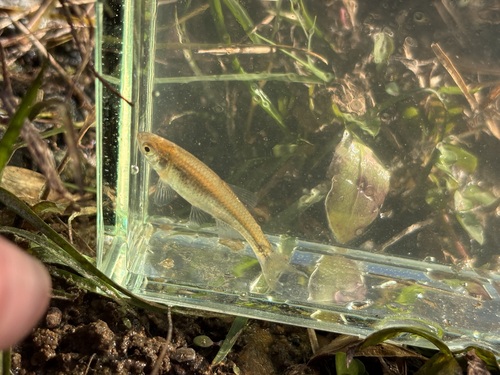
Red shiner (Cyprinella lutrensis) — Cyprinidae — 2
Wikimedia Commons — USFWS (Public domain)
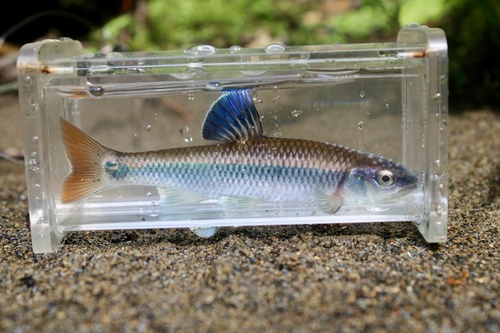
Red shiner (Cyprinella lutrensis) — Cyprinidae — 3
Wikimedia Commons — USFWS Mountain Prairie (Public domain)
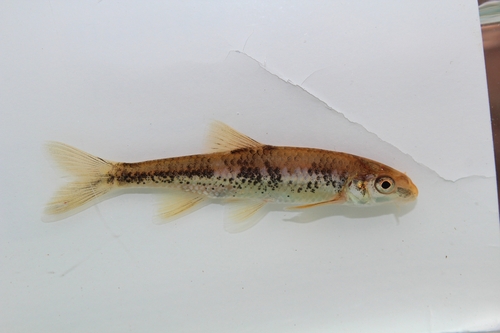
Red shiner (Cyprinella lutrensis) — Cyprinidae — 4
Caden Bettis (CC BY-NC 4.0) via GBIF — iNaturalist
Red shiner (Cyprinella lutrensis) — Cyprinidae — 5
Wikimedia Commons — USFWS Mountain Prairie (Public domain)
Fin

Want the complete picture on the Red shiner?

Point your camera at the fish and Fin names the species in seconds. Free, and the Red shiner is one of 12,519 species in the app.

Get the app →

All data

Identification

English name
Red shiner verified
Scientific name
Cyprinella lutrensis
Family
Cyprinidae
Other names
Red shiner verified

Appearance

Size class
Small verified
Max length (cm)
9.3 verified
Average length (cm)
4.9 verified
Body shape
Torpedo-shaped sourced
Dominant colour
Silver / grey inferred
Pattern
Plain inferred
Tail shape
Forked inferred
Mouth position
Terminal inferred
Lips
Thin inferred
Barbels
No sourced
Dorsal fins
One continuous inferred
Dorsal spines
No sourced

Habitat & distribution

Water type
Freshwater sourced
Substrate
Mixed bottom sourced
Natural range
North America: Mexico, USA sourced
Origin
Native inferred

Behaviour & biology

Diet
Omnivore sourced
Diet (detail)
Terrestrial and aquatic insects and algae sourced
Social behaviour
Schooling inferred
Territorial
No inferred
Activity
Diurnal inferred
Reproduction
Separate sexes sourced
Sexual dimorphism
Yes inferred
levensduur_max_jaar
3.0 verified
Seasonality
Spawns during a long warm period in spring and summer. inferred
Special features
Males turn bright red-orange during spawning; very tolerant of turbidity. sourced

For anglers

Edibility
Commonly eaten sourced
Fishing method
Small in size and barely an angling target; mostly caught incidentally or as baitfish. inferred
Regulations source
FishBase ↗ inferred

Safety

Danger to humans
Harmless sourced
First aid
This species is harmless to humans. No specific first aid is needed. Still handle the fish with care: mind the fin rays and the sharp edges of the gill cover, and rinse any scratch with clean water and cover it. For a dirty or deep wound check tetanus status. verified

Status & sources

Sources
FishBase via GBIF (DwC-A), CC-BY-NC 4.0

Same genus Cyprinella

More from the family Cyprinidae

Fin

Want the complete picture on the Red shiner?

Point your camera at the fish and Fin names the species in seconds. Free, and the Red shiner is one of 12,519 species in the app.

Get the app →
Is this the Red shiner? Get the app