Home · Tetraodontidae · Oceanic puffer
Oceanic puffer (Lagocephalus lagocephalus) — Tetraodontidae

Oceanic puffer

Lagocephalus lagocephalus
LC · Least Concern

The Oceanic puffer (Lagocephalus lagocephalus) is a saltwater fish of the family Tetraodontidae that grows up to 61 cm.

Length
61 cm
Water
Saltwater
Depth
10.0–476.0 m
Diet
Carnivore
Behaviour
Solitary
Activity
Diurnal
Body shape
Torpedo-shaped
Substrate
Open water
Danger
Venomous / poisonous
Range
Open water of warm and temperate seas worldwide, straying into the northeast Atlantic (as far as the British Isles) and the Mediterranean Sea.
Edibility
Not eaten

Want the complete picture on the Oceanic puffer?

Get the app

Description

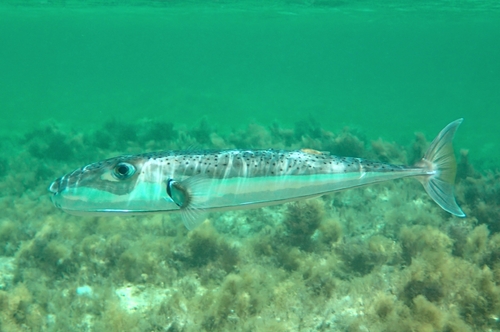
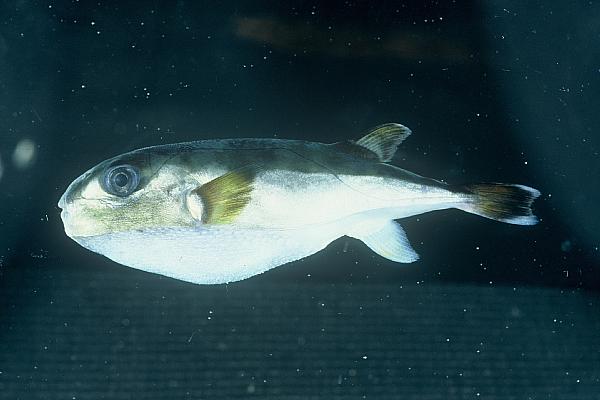
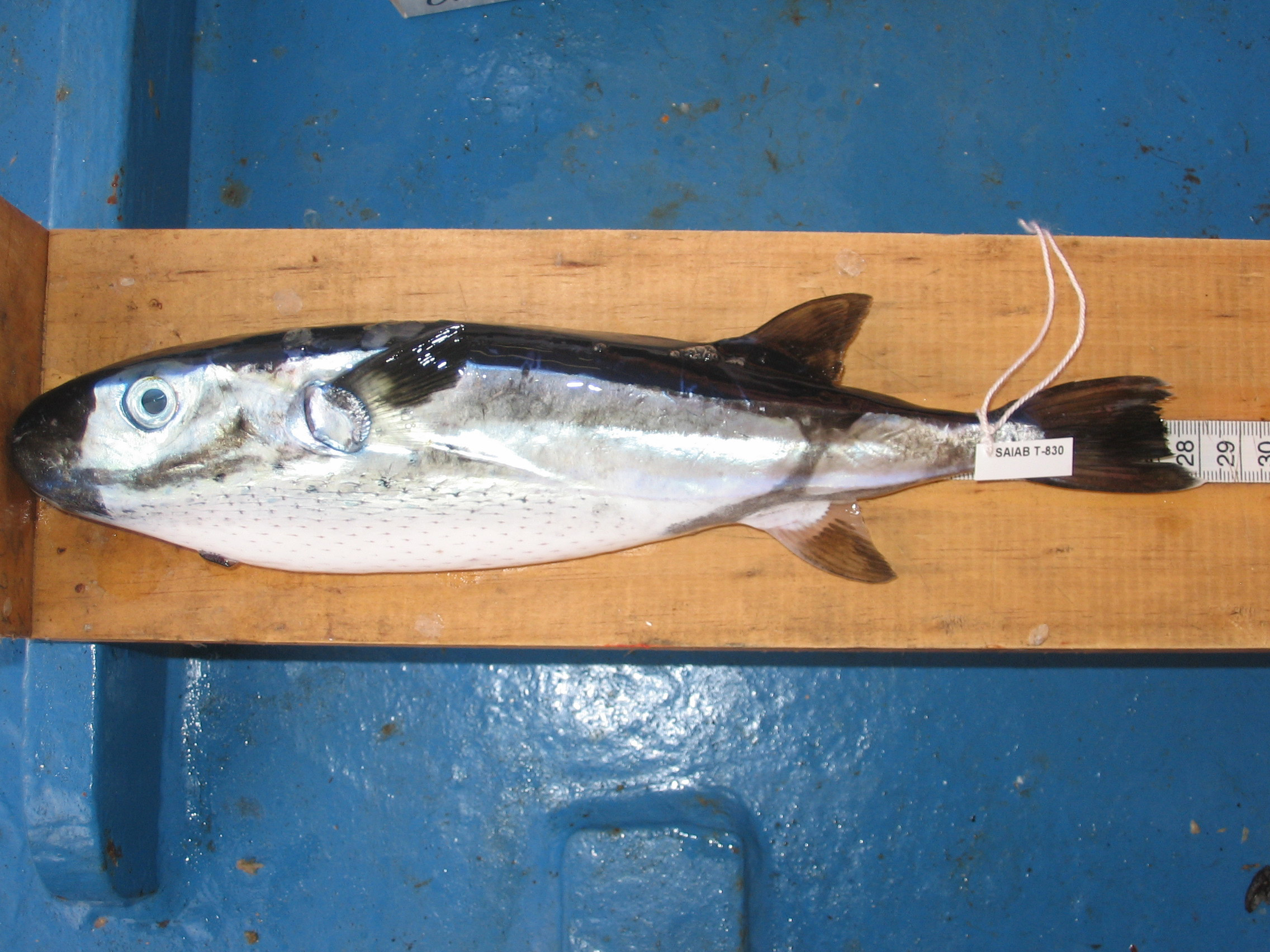
The oceanic puffer is a streamlined, pelagic pufferfish of the family Tetraodontidae reaching about 61 cm - far slimmer and faster than most bottom-dwelling puffers. The back is dark steel-blue, the belly white; the tail is crescent-shaped. The beak-like mouth consists of four fused tooth plates with which the fish crushes squid, crustaceans and small fish. The species lives in open water of warm and temperate seas worldwide and sometimes wanders far north, to the British Isles and into the Mediterranean. Like other puffers it can inflate itself, and its organs and flesh contain the deadly poison tetrodotoxin; it must therefore not be eaten.

Frequently asked questions

How do you recognise the Oceanic puffer?

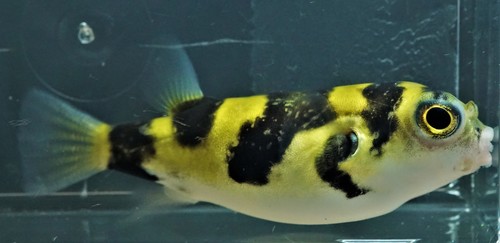
The Oceanic puffer has a torpedo-shaped body, is mainly blue and shows a plain pattern. Streamlined, pelagic pufferfish with a dark blue back and white belly; a beak-like mouth and highly poisonous flesh (tetrodotoxin).

Where does the Oceanic puffer live?

The Oceanic puffer lives in the sea (marine waters) and is mostly found around open water. Open water of warm and temperate seas worldwide, straying into the northeast Atlantic (as far as the British Isles) and the Mediterranean Sea.

How big does the Oceanic puffer get?

The Oceanic puffer grows to a maximum of about 61 cm.

Is the Oceanic puffer dangerous to humans?

The Oceanic puffer is venomous — handle spines with care and seek medical help after a sting if needed. The internal organs and flesh contain the deadly poison tetrodotoxin: this fish must NOT be eaten. In case of suspected poisoning (tingling, paralysis) seek medical help immediately.

Is the Oceanic puffer edible?

The Oceanic puffer is not usually eaten.

More photos
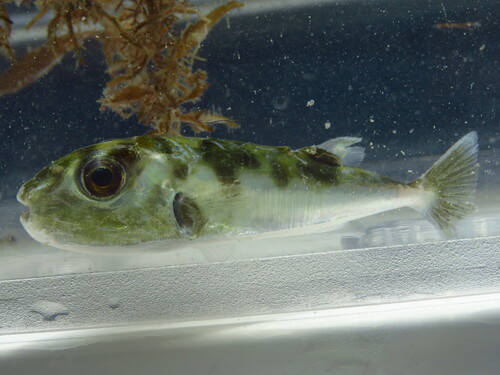
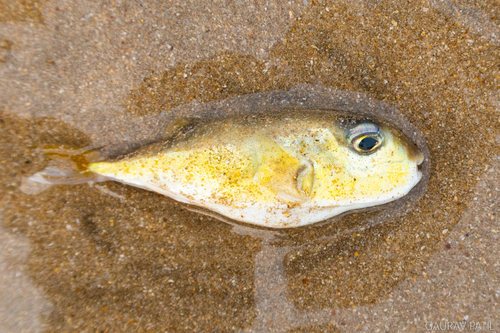
Oceanic puffer (Lagocephalus lagocephalus) — Tetraodontidae — 2
SAIAB (CC BY 4.0) via GBIF — SAIAB
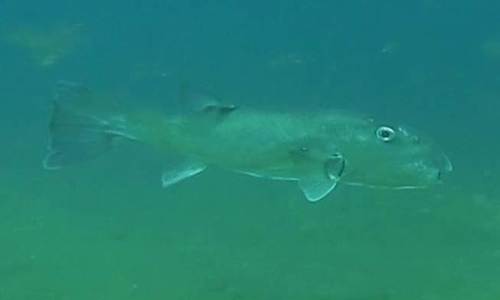
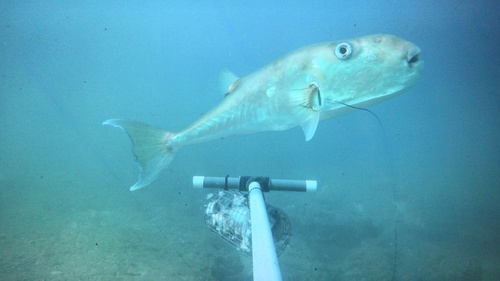
Oceanic puffer (Lagocephalus lagocephalus) — Tetraodontidae — 3
Wikimedia Commons — Salvatore Inzerillo (CC BY-SA 3.0)
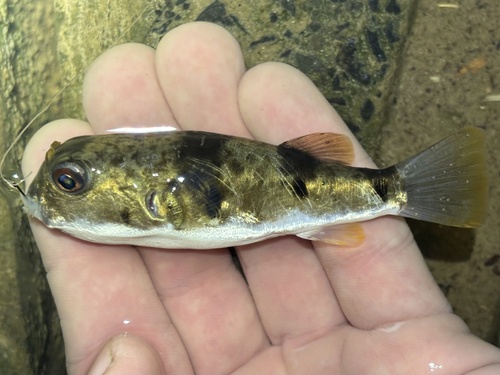
Oceanic puffer (Lagocephalus lagocephalus) — Tetraodontidae — 4
Wikimedia Commons — Jonathan Couch (Public domain)
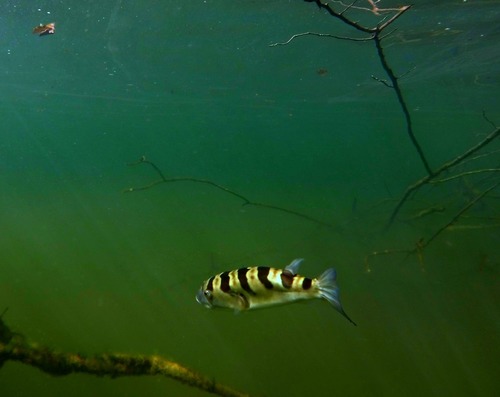
Oceanic puffer (Lagocephalus lagocephalus) — Tetraodontidae — 5
Wikimedia Commons — Hamid Badar Osmany (CC BY 4.0)

Easily confused with

These species look like the Oceanic puffer and live in the same waters.
Fin

Want the complete picture on the Oceanic puffer?

Point your camera at the fish and Fin names the species in seconds. Free, and the Oceanic puffer is one of 12,519 species in the app.

Get the app →

All data

Identification

English name
Oceanic puffer verified
Scientific name
Lagocephalus lagocephalus
Family
Tetraodontidae
Other names
Oceanic blaasop; Oceanic Puffer; Oceanic puffer; Puffer; Pufferfish; Blue blaasop; Rabbit puffer verified

Appearance

Size class
Large verified
Max length (cm)
61 verified
Body shape
Torpedo-shaped verified
Dominant colour
Blue sourced
Pattern
Plain sourced
Tail shape
Crescent (lunate) inferred
Mouth position
Terminal inferred
Lips
Thick / fleshy inferred
Barbels
No verified
Dorsal fins
One continuous sourced
Dorsal spines
No verified

Habitat & distribution

Water type
Saltwater verified
Substrate
Open water verified
Min depth (m)
10.0 verified
Max depth (m)
476.0 verified
Natural range
Open water of warm and temperate seas worldwide, straying into the northeast Atlantic (as far as the British Isles) and the Mediterranean Sea. verified
Origin
Native verified

Behaviour & biology

Diet
Carnivore verified
Diet (detail)
Squid, crustaceans and small fishes, crushed with the tooth plates sourced
Social behaviour
Solitary verified
Territorial
No verified
Activity
Diurnal inferred
Reproduction
Separate sexes verified
Sexual dimorphism
No verified
Seasonality
Fast, roaming open-water dweller; sometimes strays far north in warm summers. sourced
Special features
Streamlined, pelagic pufferfish with a dark blue back and white belly; a beak-like mouth and highly poisonous flesh (tetrodotoxin). sourced

For anglers

Edibility
Not eaten sourced
Fishing method
Angling with lures or (dead/live) baitfish by trolling, casting or drift fishing in open water. inferred
Regulations source
FishBase ↗ inferred

Safety

Danger to humans
Venomous / poisonous verified
First aid
The internal organs and flesh contain the deadly poison tetrodotoxin: this fish must NOT be eaten. In case of suspected poisoning (tingling, paralysis) seek medical help immediately. sourced

Status & sources

Sources
FishBase via GBIF (DwC-A), CC-BY-NC 4.0

Same genus Lagocephalus

More from the family Tetraodontidae
Fin

Want the complete picture on the Oceanic puffer?

Point your camera at the fish and Fin names the species in seconds. Free, and the Oceanic puffer is one of 12,519 species in the app.

Get the app →
Is this the Oceanic puffer? Get the app