 Fin's Fish Guide
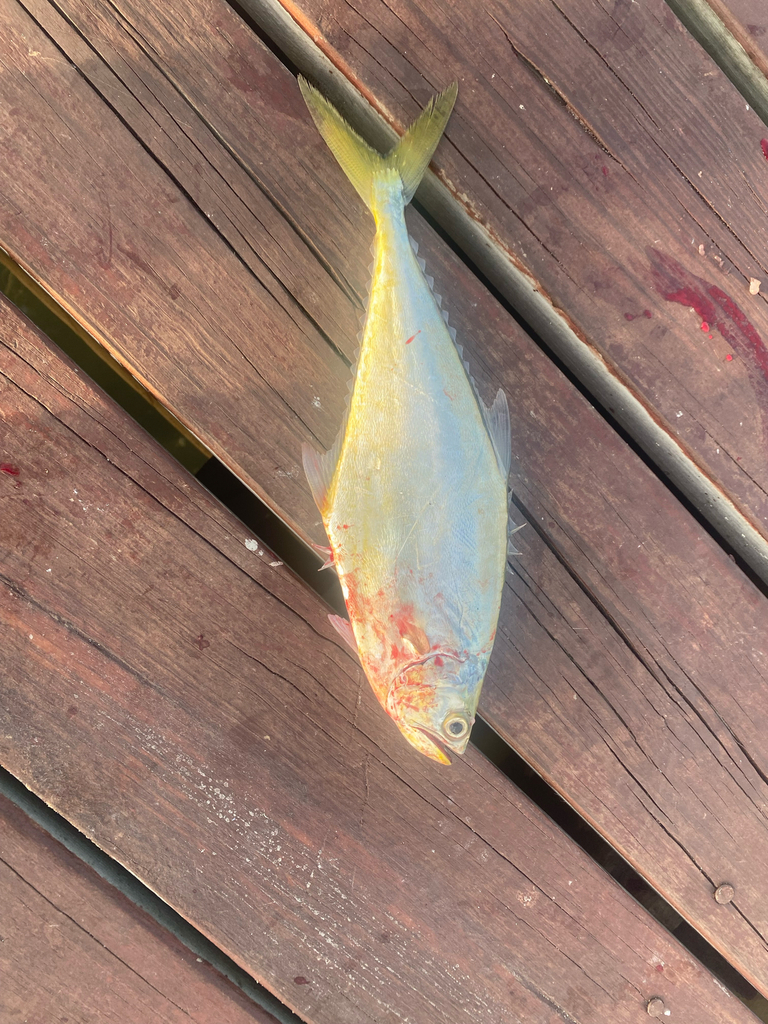
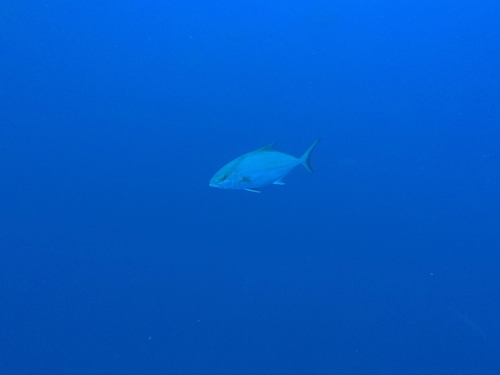
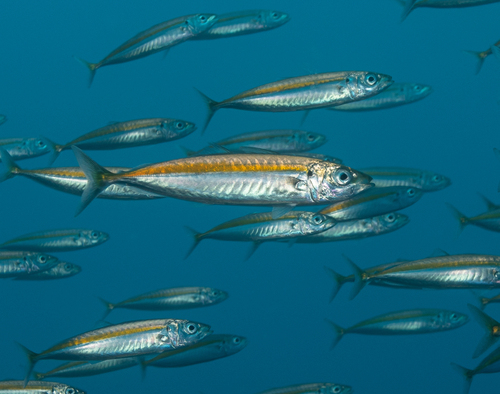
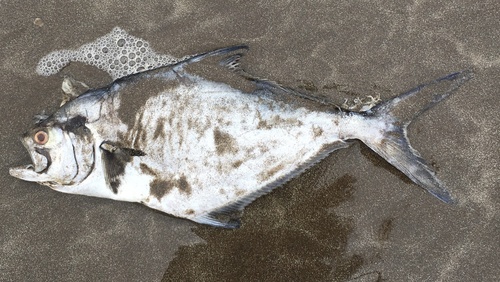
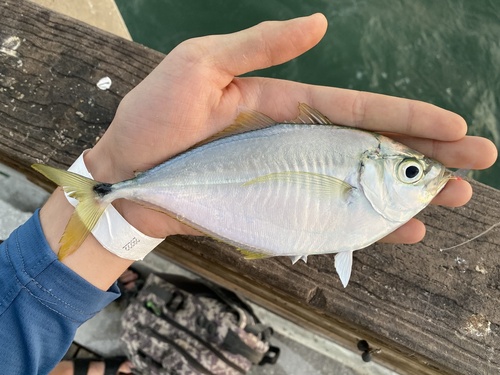
The Jack (Oligoplites palometa) is a fish that lives in both fresh and salt water of the family Carangidae that grows up to 50 cm.
Description
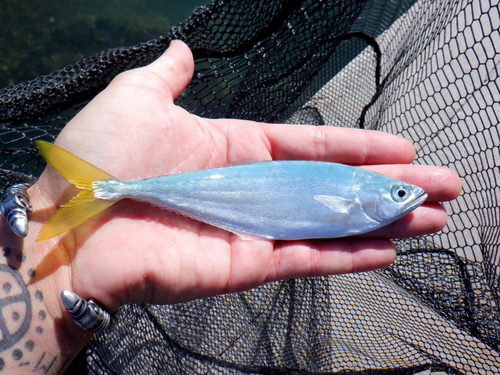
The castin leatherjacket is a jack (leatherjacket) from the western Atlantic, along the coasts of Central and South America. The species grows to about 50 cm and has a slender, strongly compressed, silvery body with tough, leathery skin. In the dorsal and anal fins it bears separate spines linked to weak venom glands that can cause a painful reaction when they prick. As a fast hunter it schools in shallow coastal and estuarine water and hunts small fish and shrimp. The IUCN assesses the species as Least Concern (LC).
Frequently asked questions
How do you recognise the Jack?
The Jack has a torpedo-shaped body, is mainly silver-grey and shows a plain pattern. Tough leathery skin and free fin spines with weak venom; fast schooling hunter
Where does the Jack live?
The Jack lives in both fresh and salt water and is mostly found around mixed bottom. Western Atlantic
How big does the Jack get?
The Jack grows to a maximum of about 50 cm. On average the species is around 35 cm.
Is the Jack dangerous to humans?
The Jack is venomous — handle spines with care and seek medical help after a sting if needed. If stung by the fin spines: immerse the affected part in water as hot as tolerable (about 45 C) for 30-90 minutes to break down the venom, and seek medical help for severe pain or swelling.
Is the Jack edible?
The Jack is rarely eaten.

Want the complete picture on the Jack?
Point your camera at the fish and Fin names the species in seconds. Free, and the Jack is one of 12,519 species in the app.
All data
Identification
Appearance
Habitat & distribution
Behaviour & biology
For anglers
Safety
Status & sources
Same genus Oligoplites

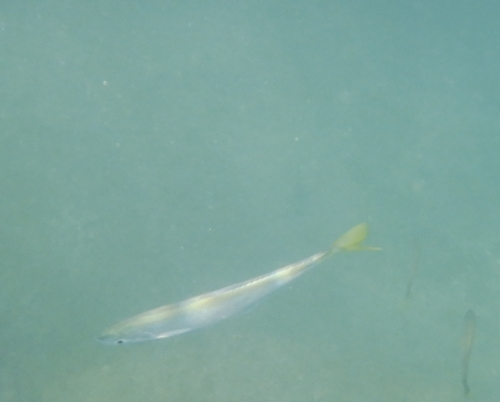

More from the family Carangidae
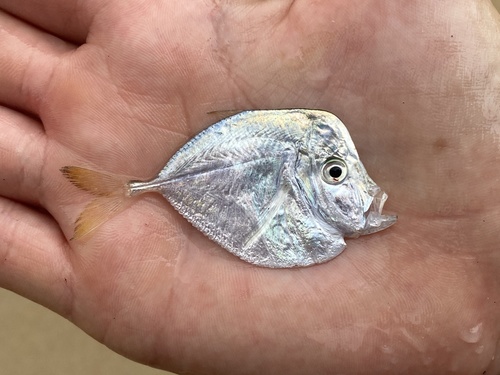

Want the complete picture on the Jack?
Point your camera at the fish and Fin names the species in seconds. Free, and the Jack is one of 12,519 species in the app.