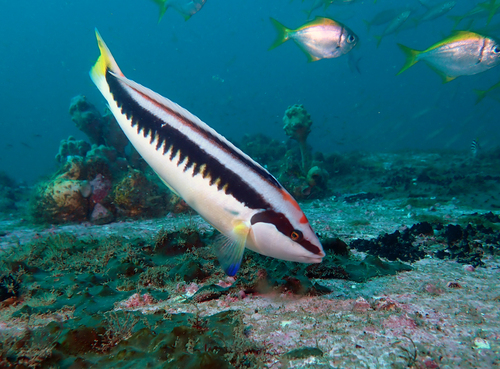
Home · Labridae · Humphead wrasse
Humphead wrasse (Cheilinus undulatus) — Labridae

Humphead wrasse

Cheilinus undulatus
Family: Labridae
EN · Endangered

The Humphead wrasse (Cheilinus undulatus) is a saltwater fish of the family Labridae that grows up to 229 cm.

Length
229 cm
Water
Saltwater
Depth
0.0–100.0 m
Diet
Carnivore
Behaviour
Solitary
Activity
Diurnal
Body shape
Torpedo-shaped
Substrate
Stone or rock
Danger
Venomous / poisonous
Range
Indo-Pacific
Edibility
Highly prized

Want the complete picture on the Humphead wrasse?

Get the app

Description

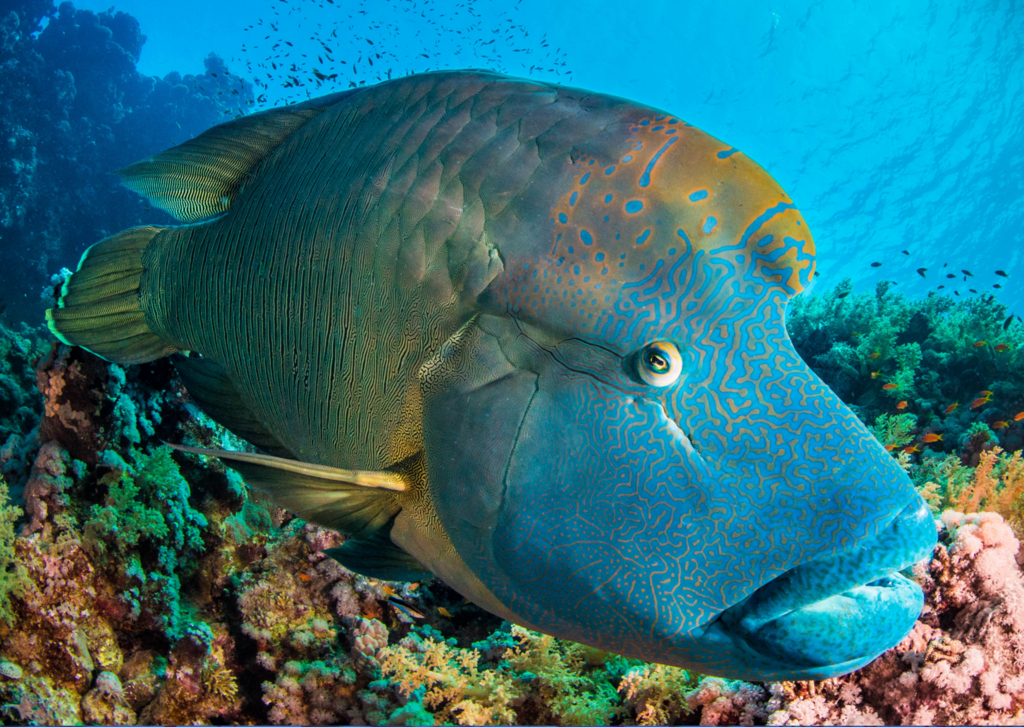
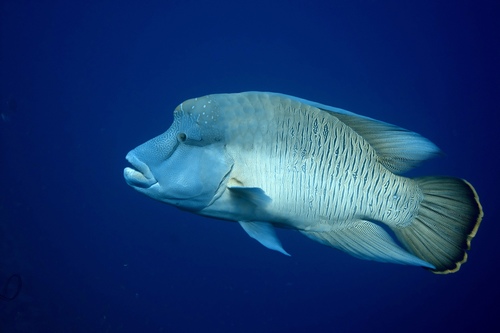
The humphead wrasse is the largest wrasse in the world and occurs in the Indo-Pacific, from the Red Sea and East Africa to the Tuamotu Islands. It can grow to over 2 metres and live some thirty years. Adults are olive-green to blue-green with fine wavy lines on the head and body, thick lips and a prominent hump on the forehead. It lives on steep outer reefs down to 100 metres and eats hard-shelled prey, including toxic animals such as sea hares, pufferfish and crown-of-thorns starfish. The species is a protogynous hermaphrodite and, because of overfishing, is listed as Endangered (EN) on the IUCN Red List; it is covered by CITES Appendix II. Its flesh may carry ciguatera.

Frequently asked questions

How do you recognise the Humphead wrasse?

The Humphead wrasse has a torpedo-shaped body, is mainly green and shows a marbled pattern. Largest wrasse in the world; hump on the forehead and thick lips; eats poisonous prey; CITES Appendix II Note: in tropical areas this species can cause ciguatera poisoning when eaten; large specimens of coral reef predators can accumulate the toxin. Eat with caution or avoid in risk areas.

Where does the Humphead wrasse live?

The Humphead wrasse lives in the sea (marine waters) and is mostly found around stony or rocky ground. Indo-Pacific

How big does the Humphead wrasse get?

The Humphead wrasse grows to a maximum of about 229 cm. On average the species is around 60 cm.

Is the Humphead wrasse dangerous to humans?

The Humphead wrasse is venomous — handle spines with care and seek medical help after a sting if needed. The fish does not bite, but its flesh may carry ciguatera: after eating it, seek medical help if tingling, gastrointestinal symptoms or muscle pain appear; preferably avoid eating large reef fish from risk areas.

Is the Humphead wrasse edible?

Yes, the Humphead wrasse is a highly prized food fish.

More photos
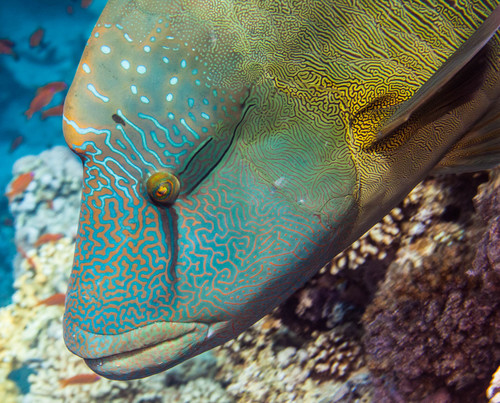
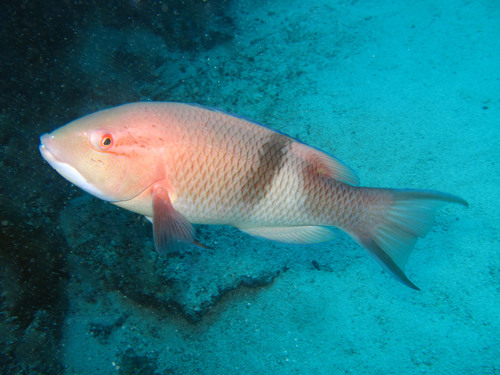
Humphead wrasse (Cheilinus undulatus) — Labridae — 2
iNaturalist ((c) David Roche, some rights reserved (CC BY-NC))
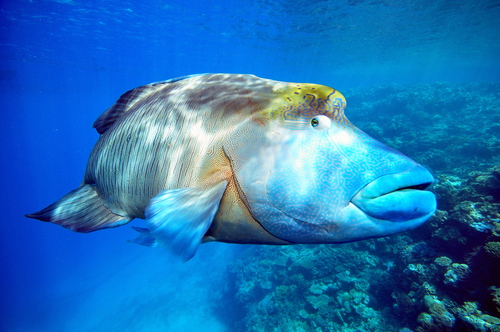
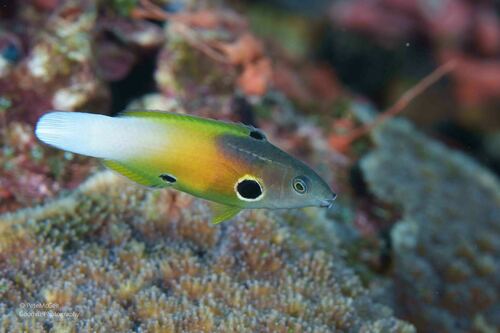
Humphead wrasse (Cheilinus undulatus) — Labridae — 3
iNaturalist ((c) Bernat Garrigós, some rights reserved (CC BY-NC))
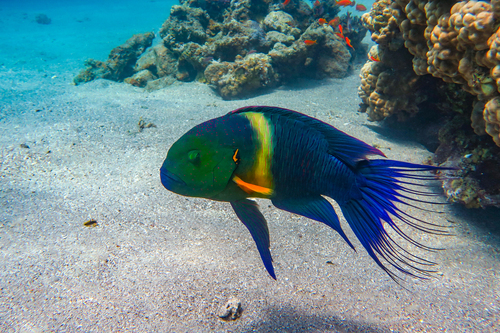
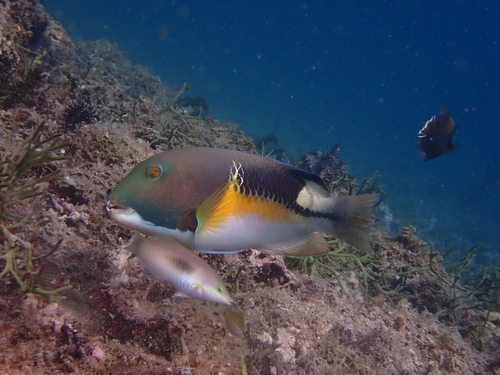
Humphead wrasse (Cheilinus undulatus) — Labridae — 4
iNaturalist ((c) Michael Long, some rights reserved (CC BY-NC))
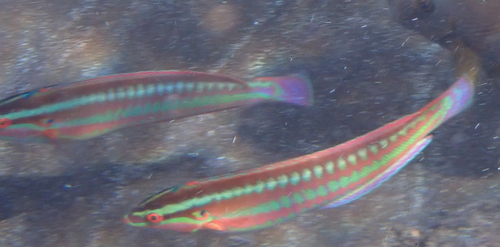
Humphead wrasse (Cheilinus undulatus) — Labridae — 5
Wikimedia Commons — Taro Taylor from Sydney, Australia (CC BY 2.0)
Fin

Want the complete picture on the Humphead wrasse?

Point your camera at the fish and Fin names the species in seconds. Free, and the Humphead wrasse is one of 12,519 species in the app.

Get the app →

All data

Identification

English name
Humphead wrasse verified
Scientific name
Cheilinus undulatus
Family
Labridae
Other names
Double-headed Maori wrasse; Double-headed maori wrasse; Double-headed parrot-fish; Double-headed wrasse; Giant Maori wrasse; Humphead Maori wrasse; Napoleon wrasse; Maori wrasse; Blue-tooth groper; Giant humphead wrasse; Giant wrasse; Humhead wrasse verified

Appearance

Size class
Extra large verified
Max length (cm)
229.0 verified
Average length (cm)
60.0 verified
Body shape
Torpedo-shaped sourced
Dominant colour
Green sourced
Pattern
Marbled sourced
Tail shape
Rounded inferred
Mouth position
Terminal sourced
Lips
Thick / fleshy sourced
Barbels
No sourced
Dorsal fins
One continuous sourced
Dorsal spines
Yes sourced

Habitat & distribution

Water type
Saltwater sourced
Substrate
Stone or rock sourced
Min depth (m)
0.0 verified
Max depth (m)
100.0 verified
Natural range
Indo-Pacific verified
Origin
Native verified

Behaviour & biology

Diet
Carnivore sourced
Diet (detail)
Shellfish, crustaceans, sea urchins and fishes, including poisonous species sourced
Social behaviour
Solitary inferred
Territorial
No sourced
Activity
Diurnal sourced
Reproduction
Protogynous (female first) sourced
Sexual dimorphism
Yes sourced
levensduur_max_jaar
32.0 verified
Seasonality
Long-lived reef fish; protogynous hermaphrodite, present year-round. sourced
Special features
Largest wrasse in the world; hump on the forehead and thick lips; eats poisonous prey; CITES Appendix II Note: in tropical areas this species can cause ciguatera poisoning when eaten; large specimens of coral reef predators can accumulate the toxin. Eat with caution or avoid in risk areas. verified

For anglers

Edibility
Highly prized sourced
Fishing method
Fishing with natural bait (fish, shrimp, worm) or lures close to reef and rock structures. inferred
Regulations source
FishBase ↗ inferred

Safety

Danger to humans
Venomous / poisonous sourced
First aid
The fish does not bite, but its flesh may carry ciguatera: after eating it, seek medical help if tingling, gastrointestinal symptoms or muscle pain appear; preferably avoid eating large reef fish from risk areas. sourced

Status & sources

Sources
FishBase via GBIF (DwC-A), CC-BY-NC 4.0

Same genus Cheilinus

More from the family Labridae

Fin

Want the complete picture on the Humphead wrasse?

Point your camera at the fish and Fin names the species in seconds. Free, and the Humphead wrasse is one of 12,519 species in the app.

Get the app →
Is this the Humphead wrasse? Get the app