 Fin's Fish Guide

The Black-headed blenny (Microlipophrys nigriceps) is a saltwater fish of the family Blenniidae that grows up to 4 cm.
Mediterranean Sea and the adjacent eastern Atlantic, on shallow, shady rocky shores and in caves.
Description
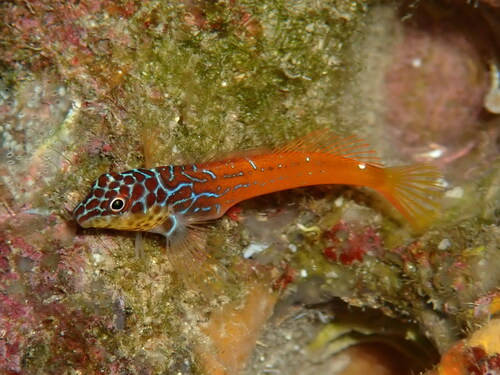
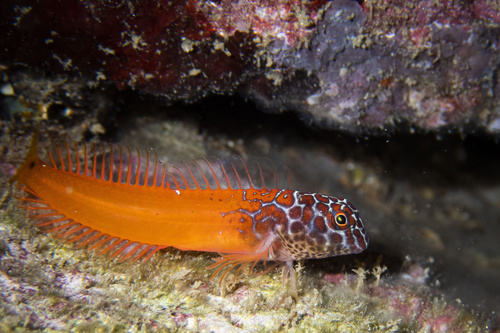
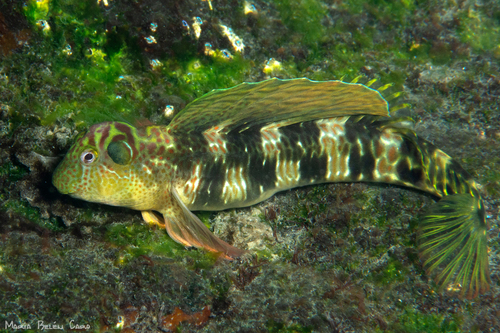
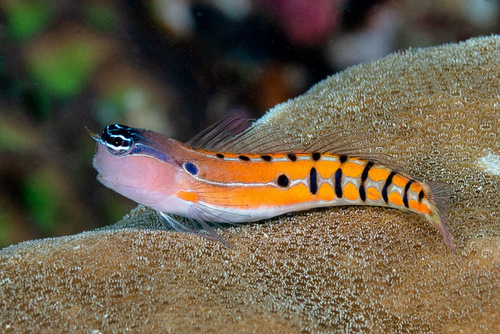
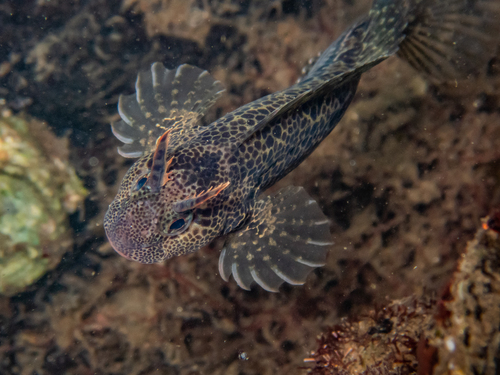
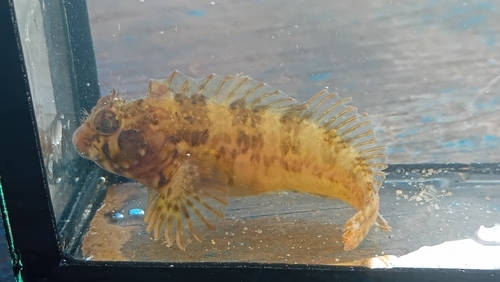
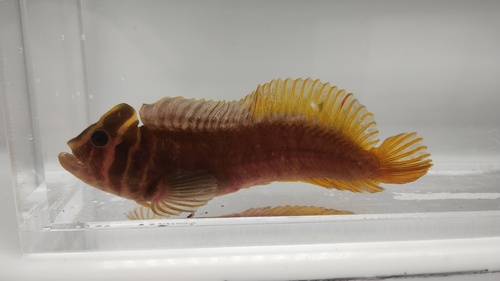
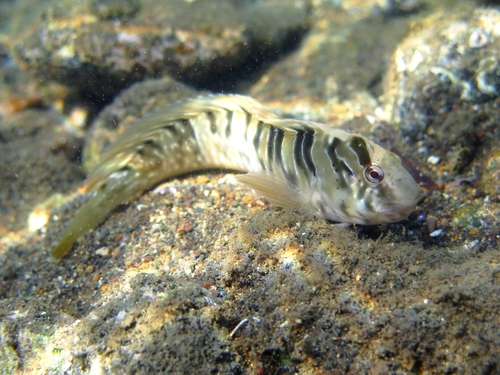
The black-headed blenny is a very small, scaleless rock fish of the family Blenniidae reaching about 4 cm. The red-orange body is strikingly coloured: breeding males have a jet-black head that contrasts sharply with the rest of the body, while females are more subdued. The species lives on shallow, shaded rocky shores and in caves and crevices of the Mediterranean and the adjacent eastern Atlantic, often on dark, overhanging rock faces. As a bottom-dweller it hunts small crustaceans and invertebrates. The male defends a cavity and guards the eggs laid in it until they hatch. Because of its small size it has no fishery importance, but it is a favourite subject for underwater photographers.
Frequently asked questions
How do you recognise the Black-headed blenny?
The Black-headed blenny has an elongate, eel-like body, is mainly red-orange and shows a plain pattern. Very small rock blenny; males in spawning condition have a jet-black head that contrasts sharply with the orange-red body.
Where does the Black-headed blenny live?
The Black-headed blenny lives in the sea (marine waters) and is mostly found around sand or mud bottom. Mediterranean Sea and the adjacent eastern Atlantic, on shallow, shady rocky shores and in caves.
How big does the Black-headed blenny get?
The Black-headed blenny grows to a maximum of about 4 cm.
Is the Black-headed blenny dangerous to humans?
No, the Black-headed blenny is harmless to humans. None required: this species is harmless to humans.
Is the Black-headed blenny edible?
The Black-headed blenny is not usually eaten.
More photos


Easily confused with
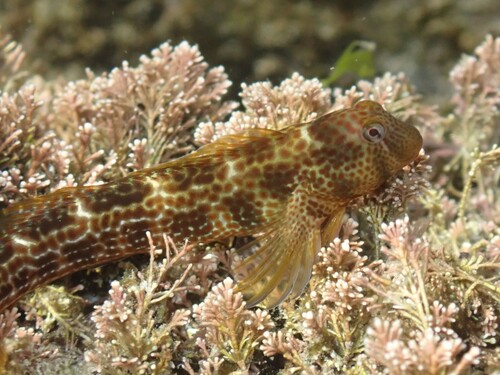
These species look like the Black-headed blenny and live in the same waters.



Want the complete picture on the Black-headed blenny?
Point your camera at the fish and Fin names the species in seconds. Free, and the Black-headed blenny is one of 12,519 species in the app.
All data
Identification
Appearance
Habitat & distribution
Behaviour & biology
For anglers
Safety
Status & sources
Same genus Microlipophrys
More from the family Blenniidae
Want the complete picture on the Black-headed blenny?
Point your camera at the fish and Fin names the species in seconds. Free, and the Black-headed blenny is one of 12,519 species in the app.