 Fin's Fish Guide
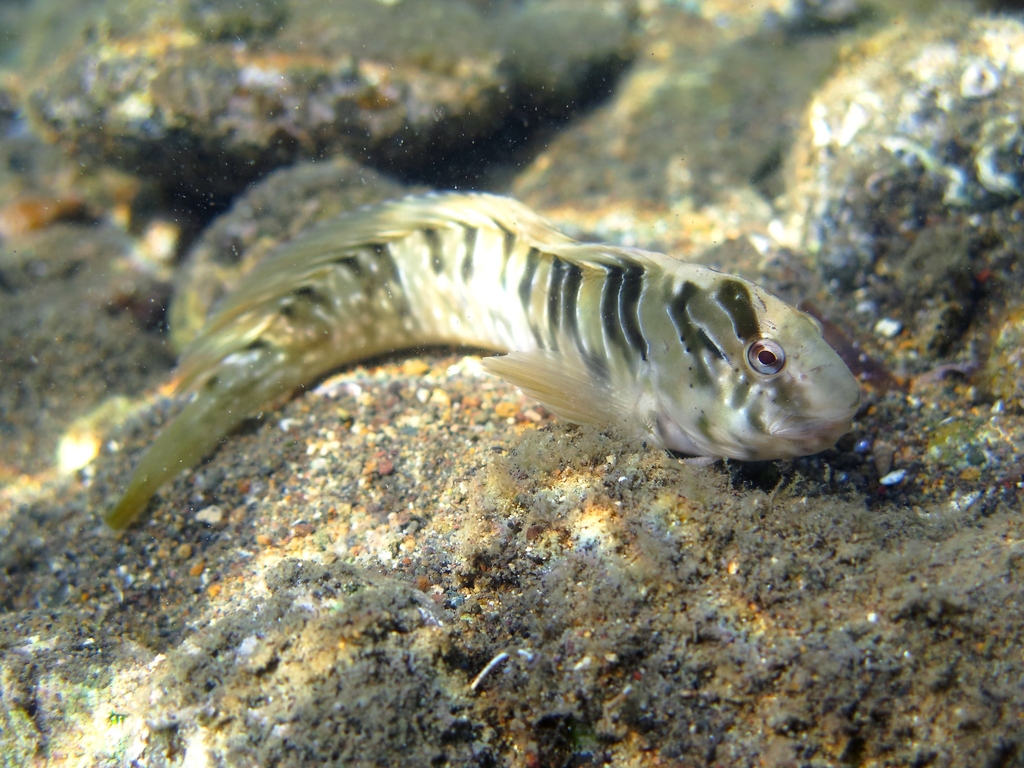
The Basilisk blenny (Salaria basilisca) is a saltwater fish of the family Blenniidae that grows up to 18 cm.
Mediterranean Sea, on shallow sandy and seagrass bottoms and in brackish coastal lagoons.
Description
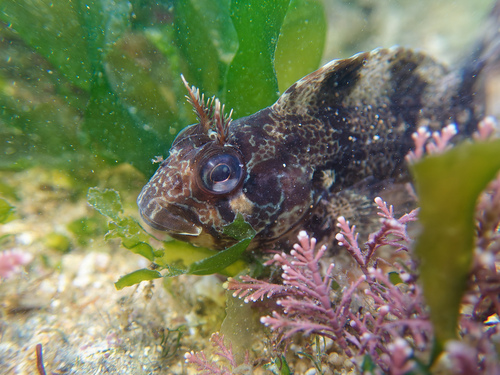
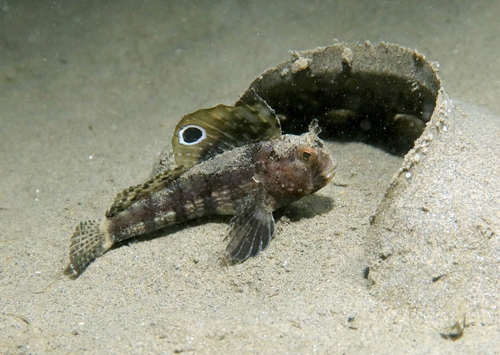
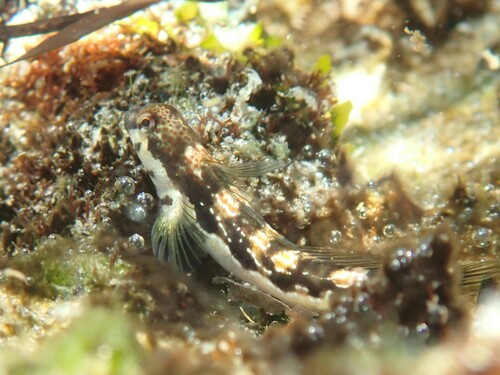
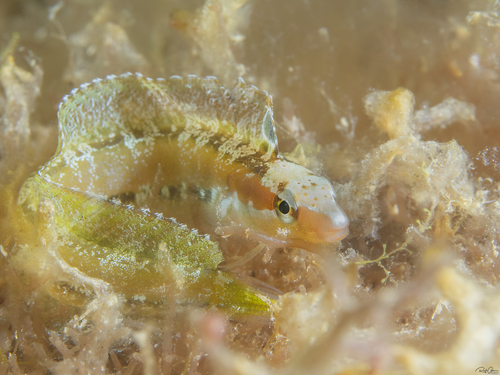
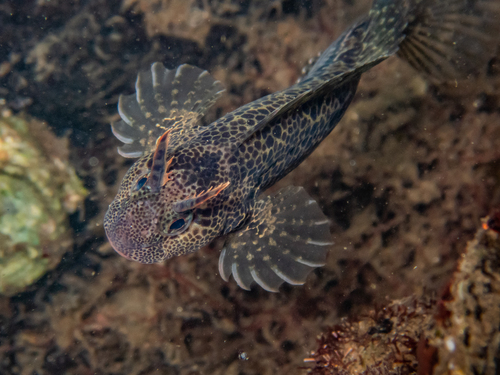
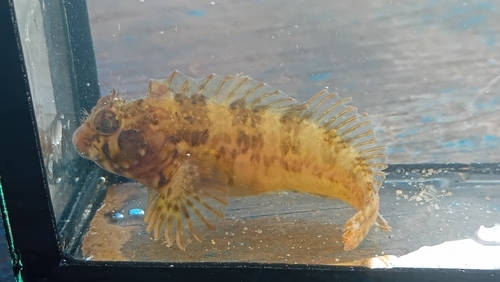
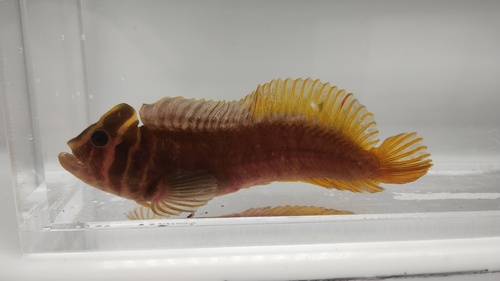
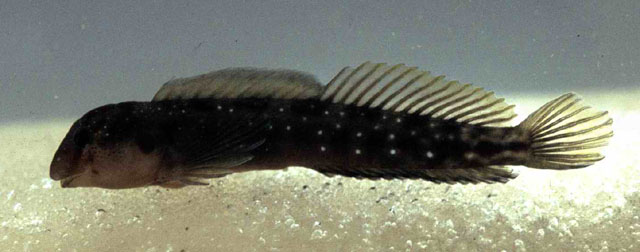
The basilisk blenny is a colourful, scaleless blenny of the family Blenniidae reaching about 18 cm. The greenish to brown body bears a few dark cross-bars, and the male has a conspicuous crest on the steep head. The species lives on shallow sand and seagrass bottoms and in brackish coastal lagoons of the Mediterranean, often in environments with varying salinity where few other fish thrive. As an omnivore it grazes algae and seeks small crustaceans, worms and molluscs. Breeding males defend a cavity or empty shell, in which they guard the clutch laid by the female until it hatches. Because of its small size it has no fishery importance, but it is typical of seagrass and lagoon environments.
Frequently asked questions
How do you recognise the Basilisk blenny?
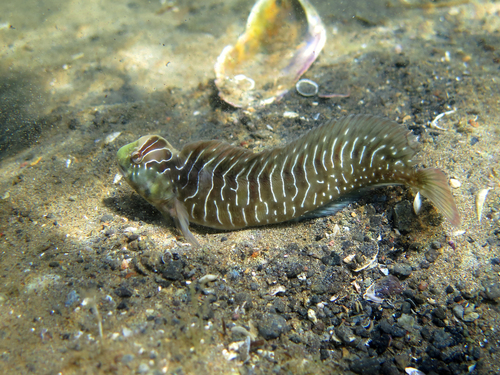
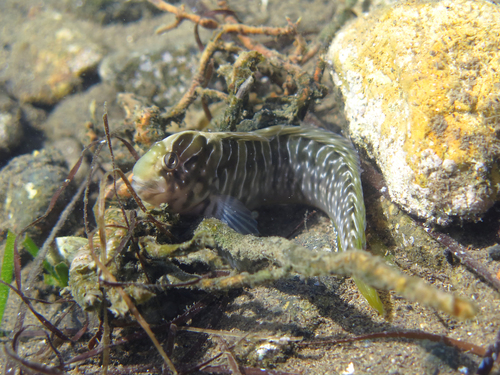
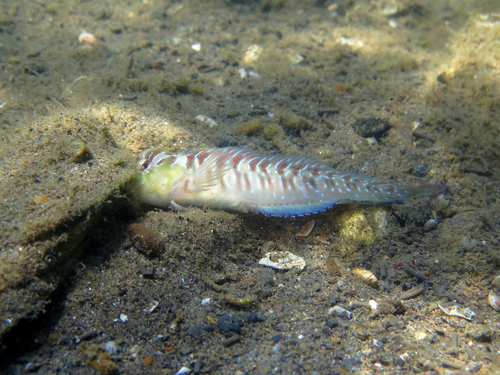
The Basilisk blenny has a torpedo-shaped body, is mainly green and shows a vertical stripes pattern. Colourful blenny with a steep head; the male has a crest on the head and bears a few dark vertical bars across the flank.
Where does the Basilisk blenny live?
The Basilisk blenny lives in the sea (marine waters) and is mostly found around algae or seagrass beds. Mediterranean Sea, on shallow sandy and seagrass bottoms and in brackish coastal lagoons.
How big does the Basilisk blenny get?
The Basilisk blenny grows to a maximum of about 18 cm.
Is the Basilisk blenny dangerous to humans?
No, the Basilisk blenny is harmless to humans. None required: this species is harmless to humans.
Is the Basilisk blenny edible?
The Basilisk blenny is not usually eaten.
More photos
Easily confused with
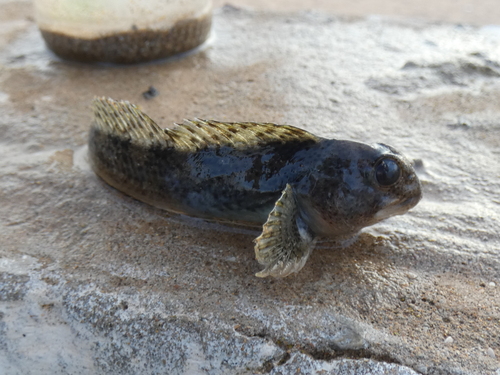
These species look like the Basilisk blenny and live in the same waters.



Want the complete picture on the Basilisk blenny?
Point your camera at the fish and Fin names the species in seconds. Free, and the Basilisk blenny is one of 12,519 species in the app.
All data
Identification
Appearance
Habitat & distribution
Behaviour & biology
For anglers
Safety
Status & sources
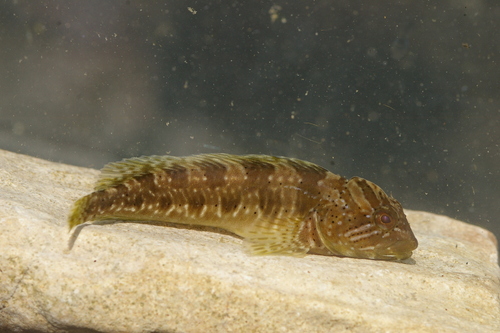
Same genus Salaria


More from the family Blenniidae
Want the complete picture on the Basilisk blenny?
Point your camera at the fish and Fin names the species in seconds. Free, and the Basilisk blenny is one of 12,519 species in the app.