Home · Gasterosteidae · Barnstickle
Barnstickle (Pungitius pungitius) — Gasterosteidae

Barnstickle

Pungitius pungitius
LC · Least Concern
NativeIntroduced

The Barnstickle (Pungitius pungitius) is a fish that lives in both fresh and salt water of the family Gasterosteidae that grows up to 9 cm.

Length
9 cm
Water
Euryhaline
Depth
0.0–110.0 m
Diet
Carnivore
Behaviour
Small groups
Activity
Diurnal
Body shape
Elongated (eel-like)
Substrate
Mixed bottom
Danger
Harmless
Range
Widespread in the northern hemisphere in fresh and brackish water of Europe, North Asia and North America.
Edibility
Not eaten

Want the complete picture on the Barnstickle?

Get the app

Description

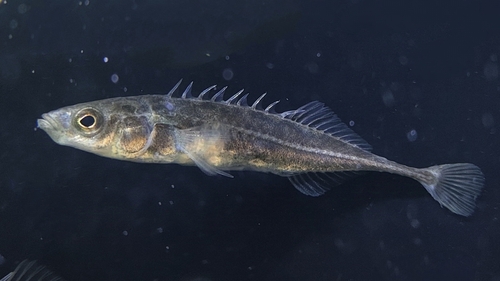
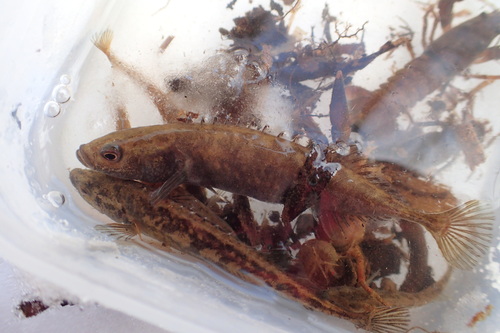
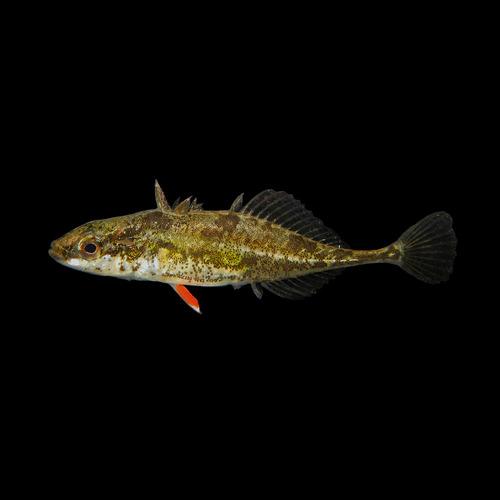
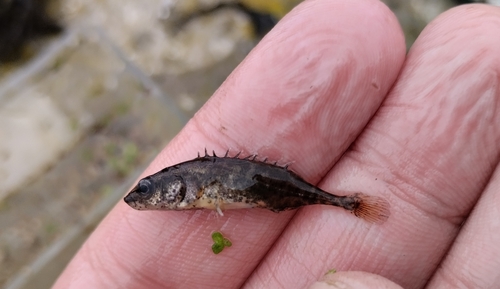
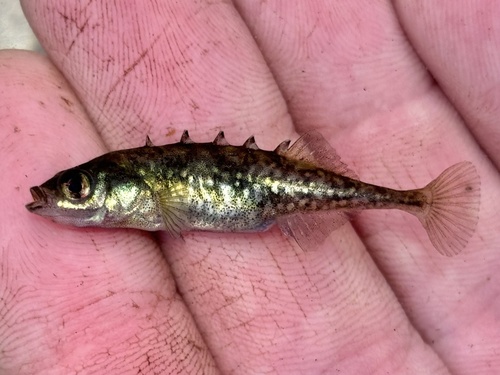
The ninespine stickleback is a small fish of the family Gasterosteidae reaching about 9 cm. It is characterised by the seven to twelve short, free spines in front of the dorsal fin and the slender, brownish mottled body without true scales. The species lives in densely vegetated fresh and brackish water across the northern hemisphere, often among water plants. It hunts small invertebrates such as water fleas and mosquito larvae. In spring the male builds a small nest from plant material, glued together with a kidney secretion; he lures females to it and then guards the eggs and young. Like its relative the three-spined stickleback it is a popular study subject.

Frequently asked questions

How do you recognise the Barnstickle?

The Barnstickle has an elongate, eel-like body, is mainly brown and shows a marbled pattern. Small fish with seven to twelve separate dorsal spines; males build a small nest of plant material and tend the brood.

Where does the Barnstickle live?

The Barnstickle lives in both fresh and salt water and is mostly found around mixed bottom. Widespread in the northern hemisphere in fresh and brackish water of Europe, North Asia and North America.

How big does the Barnstickle get?

The Barnstickle grows to a maximum of about 9 cm. On average the species is around 7 cm.

Is the Barnstickle dangerous to humans?

No, the Barnstickle is harmless to humans. None required: this species is harmless to humans.

Is the Barnstickle edible?

The Barnstickle is not usually eaten.

More photos
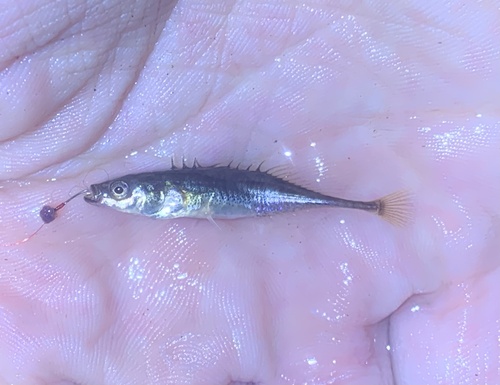
Barnstickle (Pungitius pungitius) — Gasterosteidae — 2
iNaturalist ((c) Hunter Jordhamo, some rights reserved (CC BY-NC))
Barnstickle (Pungitius pungitius) — Gasterosteidae — 3
iNaturalist ((c) Tomas Järnetun, some rights reserved (CC BY-NC))

Easily confused with

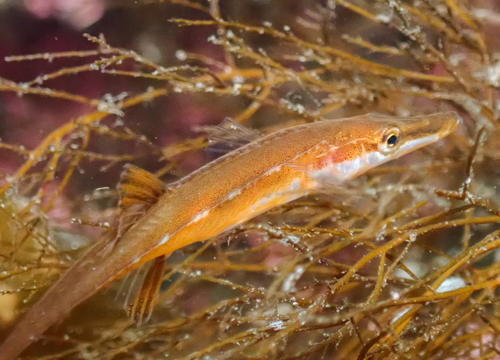
These species look like the Barnstickle and live in the same waters.

Fin

Want the complete picture on the Barnstickle?

Point your camera at the fish and Fin names the species in seconds. Free, and the Barnstickle is one of 12,519 species in the app.

Get the app →

All data

Identification

English name
Barnstickle verified
Scientific name
Pungitius pungitius
Family
Gasterosteidae
Other names
Barnystickle; Barnytickle; Branchy; Branstickle; Doctor; Ninespine stickleback; Nine-spined stickleback; Pinfish; Prickley; Prickly; Prickly back; Spanicle verified

Appearance

Size class
Small verified
Max length (cm)
9.0 verified
Average length (cm)
6.5 verified
Body shape
Elongated (eel-like) sourced
Dominant colour
Brown sourced
Pattern
Marbled sourced
Tail shape
Straight inferred
Mouth position
Superior (upward) inferred
Lips
Thin inferred
Barbels
No verified
Dorsal fins
Two separate sourced
Dorsal spines
Yes verified

Habitat & distribution

Water type
Euryhaline sourced
Substrate
Mixed bottom sourced
Min depth (m)
0.0 verified
Max depth (m)
110.0 verified
Natural range
Widespread in the northern hemisphere in fresh and brackish water of Europe, North Asia and North America. verified
Origin
Native verified

Behaviour & biology

Diet
Carnivore verified
Diet (detail)
Worms, crustaceans, molluscs and benthic invertebrates inferred
Social behaviour
Small groups verified
Territorial
Yes verified
Activity
Diurnal inferred
Reproduction
Separate sexes verified
Sexual dimorphism
Yes verified
levensduur_max_jaar
5.0 verified
Seasonality
Spawns in spring and summer; the male builds a small nest, attracts females and guards the eggs and juveniles. sourced
Special features
Small fish with seven to twelve separate dorsal spines; males build a small nest of plant material and tend the brood. sourced

For anglers

Edibility
Not eaten verified
Fishing method
Not a target species for angling; at most an incidental catch or usable as baitfish. inferred
Regulations source
FishBase ↗ inferred

Safety

Danger to humans
Harmless sourced
First aid
None required: this species is harmless to humans. sourced

Status & sources

Sources
FishBase via GBIF (DwC-A), CC-BY-NC 4.0

Same genus Pungitius

More from the family Gasterosteidae
Fin

Want the complete picture on the Barnstickle?

Point your camera at the fish and Fin names the species in seconds. Free, and the Barnstickle is one of 12,519 species in the app.

Get the app →
Is this the Barnstickle? Get the app