Home · Clupeidae · Atlantic herring
Atlantic herring (Clupea harengus) — Clupeidae

Atlantic herring

Clupea harengus
Family: Clupeidae
LC · Least Concern

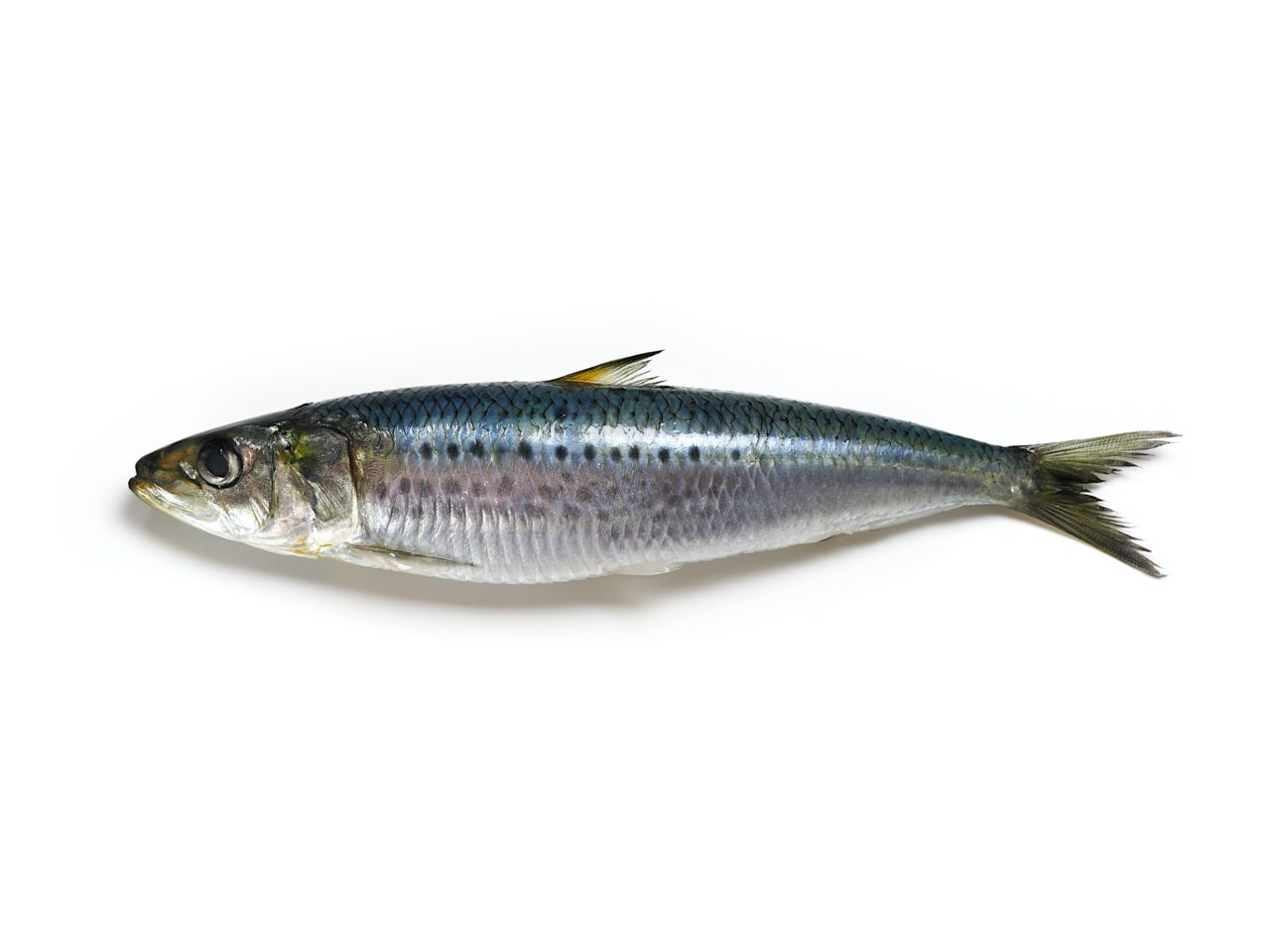
The Atlantic herring (Clupea harengus) is a brackish-water fish of the family Clupeidae that grows up to 45 cm.

Length
45 cm
Water
Brackish
Depth
0.0–364.0 m
Diet
Carnivore
Behaviour
Schooling
Activity
Diurnal
Body shape
Torpedo-shaped
Substrate
Mixed bottom
Danger
Harmless
Range
North Atlantic: from southwest Greenland and Labrador to South Carolina; Iceland and Greenland to the Bay of Biscay, eastward to Svalbard, Novaya Zemlya and the Baltic Sea.
Edibility
Highly prized

Want the complete picture on the Atlantic herring?

Get the app

Description

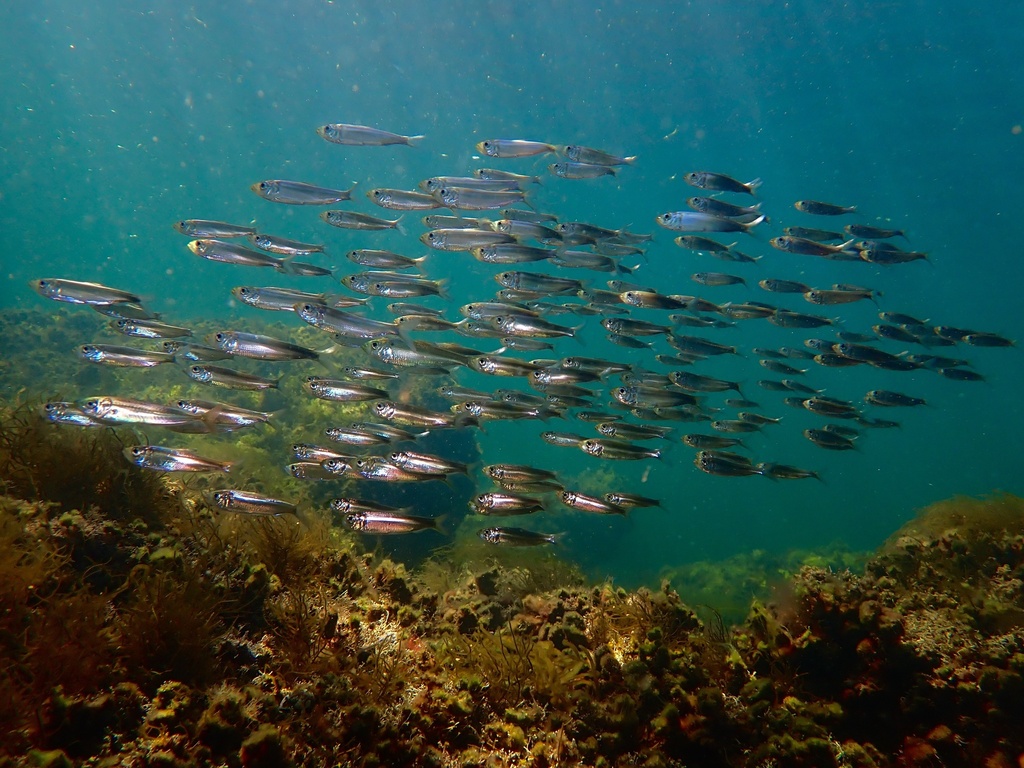
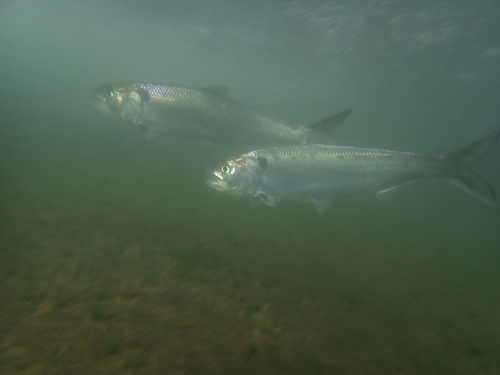
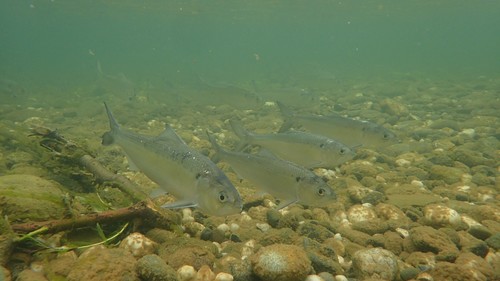
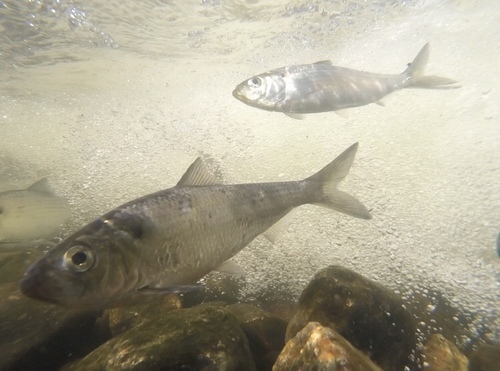
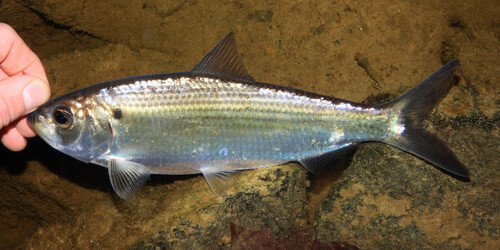
Atlantic herring is a slender, silvery schooling fish of the family Clupeidae, with a blue-green back and a streamlined body reaching 45 cm. It has a single spineless dorsal fin, a deeply forked tail and a slightly upturned mouth. The species lives pelagically across the northern Atlantic, the North Sea and the Baltic, feeding mainly on zooplankton such as copepods that it locates by sight. Herring form vast schools and spawn in spring, summer or autumn depending on the population, laying sticky eggs on the seabed. It is among the most commercially important fish in the world.

Frequently asked questions

How do you recognise the Atlantic herring?

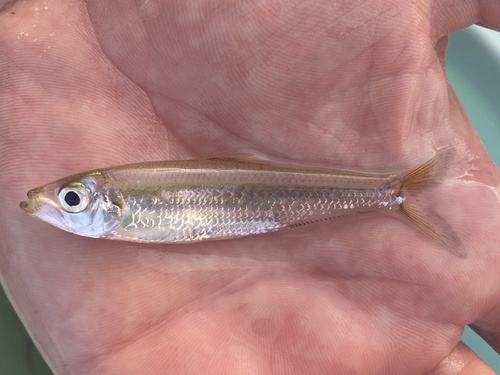
The Atlantic herring has a torpedo-shaped body, is mainly silver-grey and shows a plain pattern. Silvery flanks, projecting lower jaw and keeled ventral scales; sharp hearing and a very fast escape response as protection against predators.

Where does the Atlantic herring live?

The Atlantic herring lives in brackish water and is mostly found around mixed bottom. North Atlantic: from southwest Greenland and Labrador to South Carolina; Iceland and Greenland to the Bay of Biscay, eastward to Svalbard, Novaya Zemlya and the Baltic Sea.

How big does the Atlantic herring get?

The Atlantic herring grows to a maximum of about 45 cm. On average the species is around 30 cm.

Is the Atlantic herring dangerous to humans?

No, the Atlantic herring is harmless to humans. None required: this species is harmless to humans.

Is the Atlantic herring edible?

Yes, the Atlantic herring is a highly prized food fish.

More photos
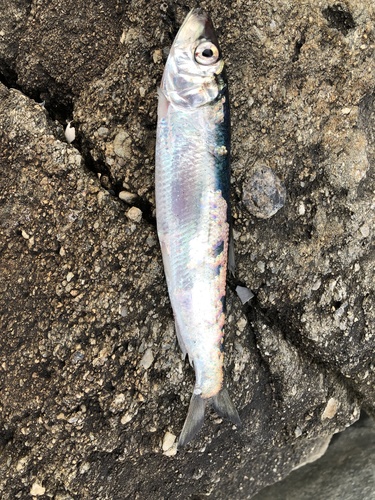
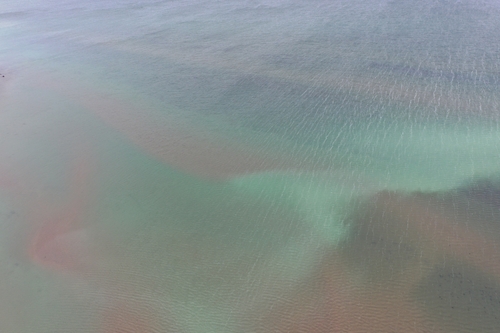
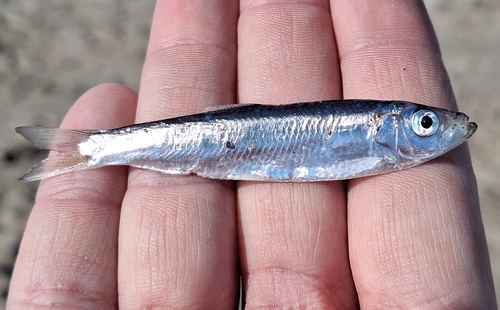
Atlantic herring (Clupea harengus) — Clupeidae — 2
iNaturalist ((c) canieatthat1, some rights reserved (CC BY-NC))
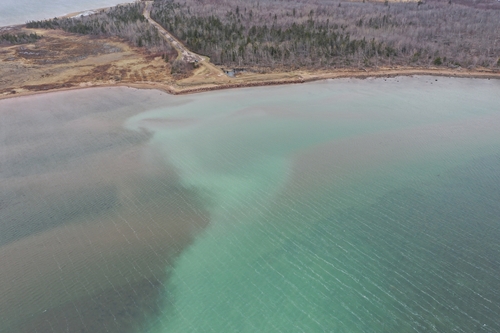
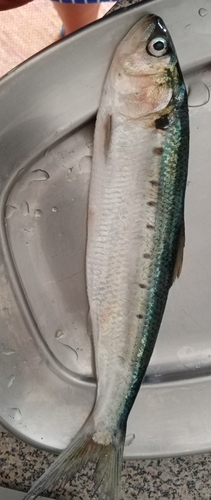
Atlantic herring (Clupea harengus) — Clupeidae — 3
iNaturalist ((c) jacobburbank, some rights reserved (CC BY-NC))
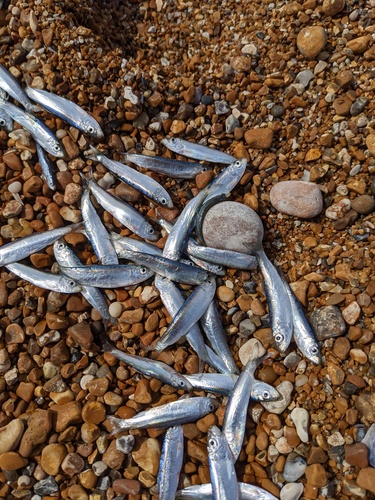
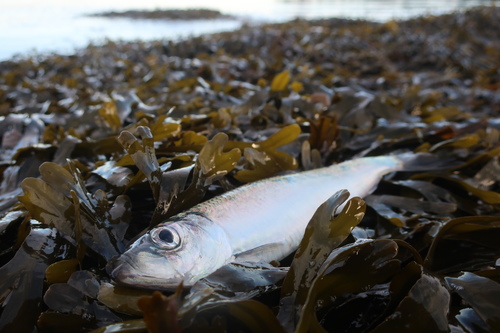
Atlantic herring (Clupea harengus) — Clupeidae — 4
iNaturalist ((c) jacobburbank, some rights reserved (CC BY-NC))
Atlantic herring (Clupea harengus) — Clupeidae — 5
iNaturalist ((c) Jacques Turner-Moss, some rights reserved (CC BY-NC))

Easily confused with

These species look like the Atlantic herring and live in the same waters.
Fin

Want the complete picture on the Atlantic herring?

Point your camera at the fish and Fin names the species in seconds. Free, and the Atlantic herring is one of 12,519 species in the app.

Get the app →

All data

Identification

English name
Atlantic herring verified
Scientific name
Clupea harengus
Family
Clupeidae
Other names
Atlantic herring; Baltic herring; Herring; Sea herring; Bank herring; Bismark herring; Cleanplate herring; Cut spiced herring; Fall herring; Hern; Herning; Herron verified

Appearance

Size class
Large verified
Max length (cm)
45.0 verified
Average length (cm)
30.0 verified
Body shape
Torpedo-shaped sourced
Dominant colour
Silver / grey sourced
Pattern
Plain sourced
Tail shape
Forked sourced
Mouth position
Superior (upward) inferred
Lips
Thin inferred
Barbels
No verified
Dorsal fins
One continuous sourced
Dorsal spines
No verified

Habitat & distribution

Water type
Brackish sourced
Substrate
Mixed bottom sourced
Min depth (m)
0.0 verified
Max depth (m)
364.0 verified
Natural range
North Atlantic: from southwest Greenland and Labrador to South Carolina; Iceland and Greenland to the Bay of Biscay, eastward to Svalbard, Novaya Zemlya and the Baltic Sea. verified
Origin
Native verified

Behaviour & biology

Diet
Carnivore verified
Diet (detail)
Worms, crustaceans, molluscs and benthic invertebrates inferred
Social behaviour
Schooling verified
Territorial
No verified
Activity
Diurnal sourced
Reproduction
Separate sexes verified
Sexual dimorphism
No verified
levensduur_max_jaar
25.0 verified
Seasonality
Migrates seasonally to fixed spawning grounds; depending on the population it spawns in spring, summer or autumn. sourced
Special features
Silvery flanks, projecting lower jaw and keeled ventral scales; sharp hearing and a very fast escape response as protection against predators. sourced

For anglers

Edibility
Highly prized verified
Fishing method
Bottom fishing with natural bait (worm, shrimp or fish) on or just above the seabed. inferred
Regulations source
FishBase ↗ inferred

Safety

Danger to humans
Harmless sourced
First aid
None required: this species is harmless to humans. sourced

Status & sources

Sources
FishBase via GBIF (DwC-A), CC-BY-NC 4.0

Same genus Clupea

More from the family Clupeidae
Fin

Want the complete picture on the Atlantic herring?

Point your camera at the fish and Fin names the species in seconds. Free, and the Atlantic herring is one of 12,519 species in the app.

Get the app →
Is this the Atlantic herring? Get the app