 Fin's Fish Guide
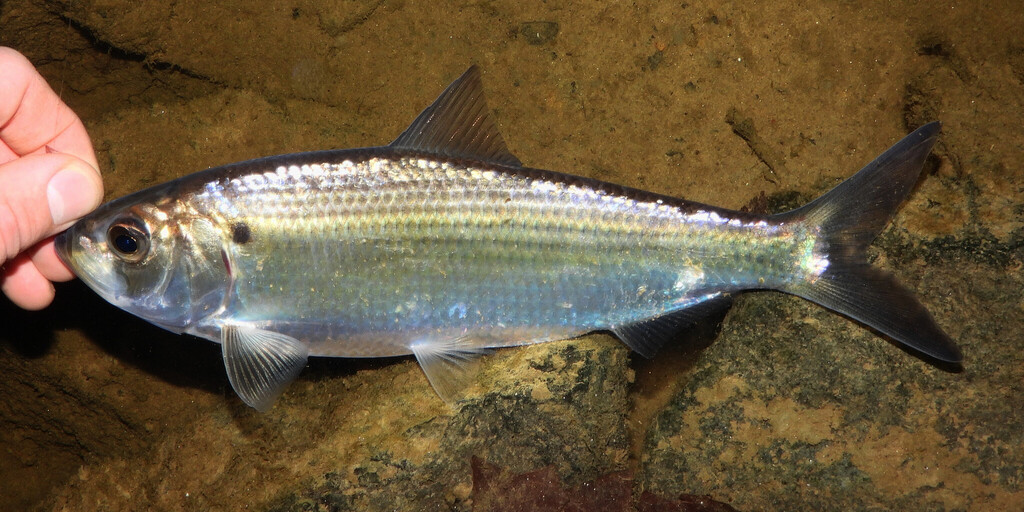
The Allis shad (Alosa alosa) is a fish that lives in both fresh and salt water of the family Clupeidae that grows up to 69 cm.
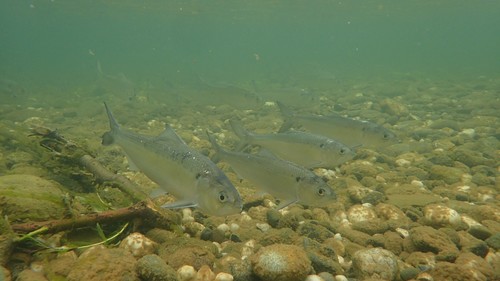
Eastern Atlantic; an anadromous migratory fish that grows up at sea and ascends the large rivers in spring to spawn in fresh water.
Description
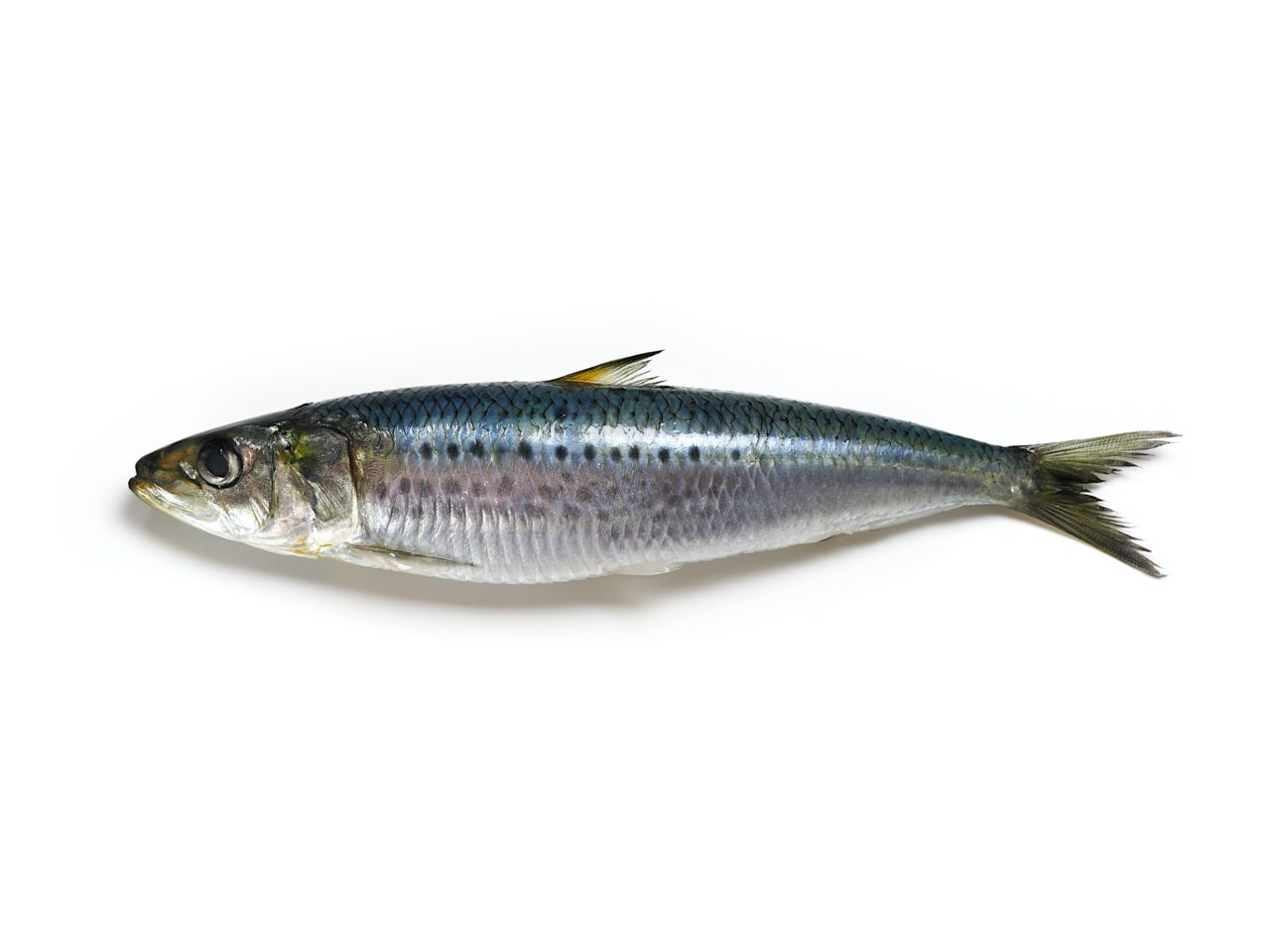
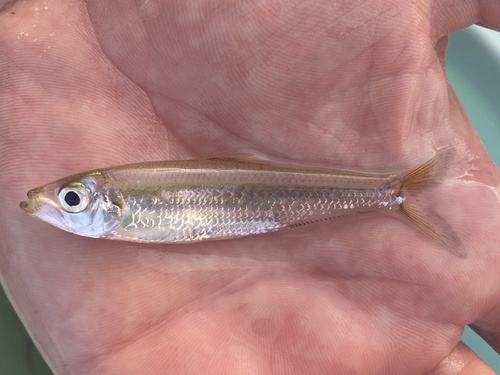
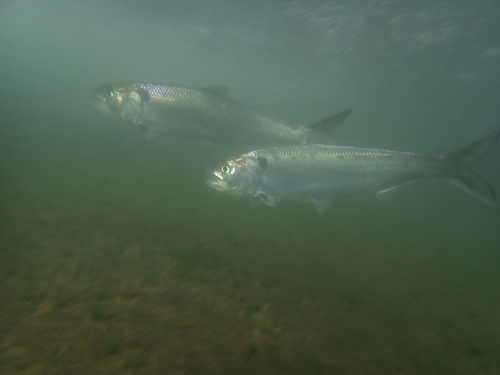
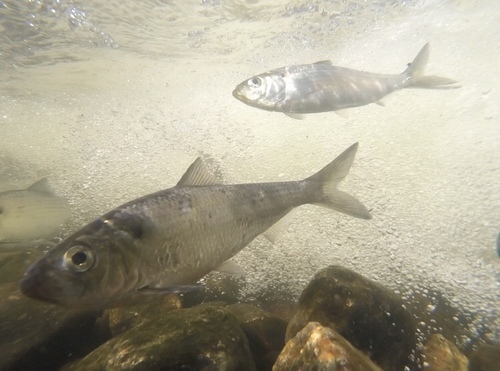
The allis shad is a large, herring-like migratory fish of the family Clupeidae reaching about 70 cm. The silvery, laterally compressed body has a blue-green back and usually bears one dark shoulder spot just behind the gill cover. The allis shad is anadromous: it grows up at sea along the eastern Atlantic coast and in spring, around May, ascends the great rivers in schools to spawn on gravel banks in fresh water. At sea it feeds on zooplankton and small fish. Through river barriers, pollution and overfishing the species has declined sharply and is assessed as Critically Endangered (CR); it is now strictly protected.
Frequently asked questions
How do you recognise the Allis shad?
The Allis shad has a torpedo-shaped body, is mainly silver-grey and shows a plain pattern. Large, herring-like migratory fish with a silvery, laterally flattened body and usually one dark shoulder blotch behind the gill.
Where does the Allis shad live?
The Allis shad lives in both fresh and salt water and is mostly found around open water. Eastern Atlantic; an anadromous migratory fish that grows up at sea and ascends the large rivers in spring to spawn in fresh water.
How big does the Allis shad get?
The Allis shad grows to a maximum of about 69 cm. On average the species is around 40 cm.
Is the Allis shad dangerous to humans?
No, the Allis shad is harmless to humans. None required: this species is harmless to humans.
Is the Allis shad edible?
The Allis shad is rarely eaten.
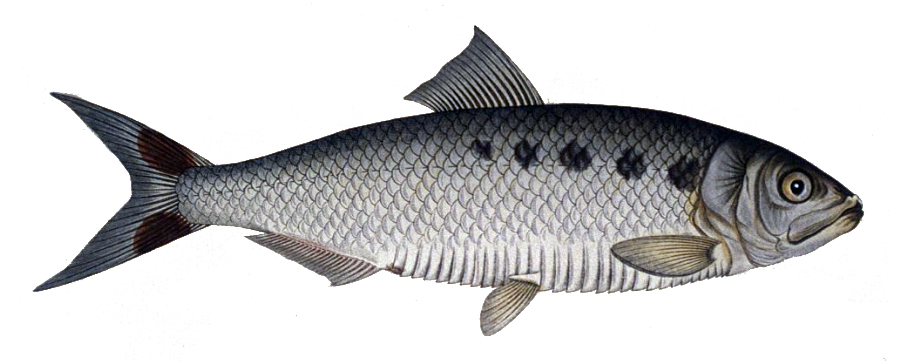
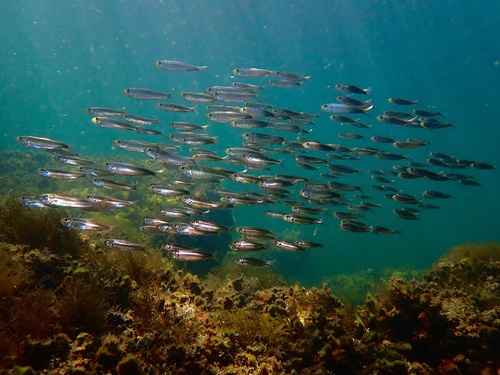
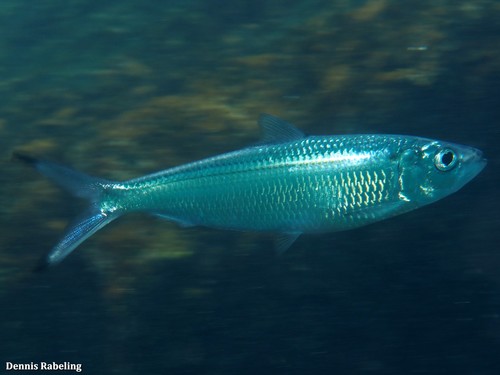
More photos

Easily confused with
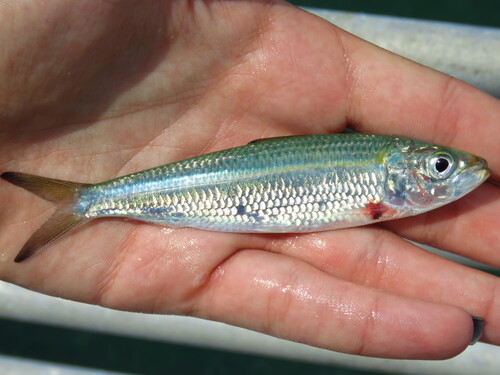
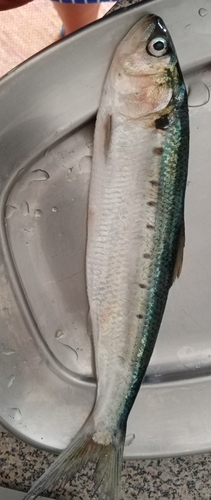
These species look like the Allis shad and live in the same waters.

Want the complete picture on the Allis shad?
Point your camera at the fish and Fin names the species in seconds. Free, and the Allis shad is one of 12,519 species in the app.
All data
Identification
Appearance
Habitat & distribution
Behaviour & biology
For anglers
Safety
Status & sources
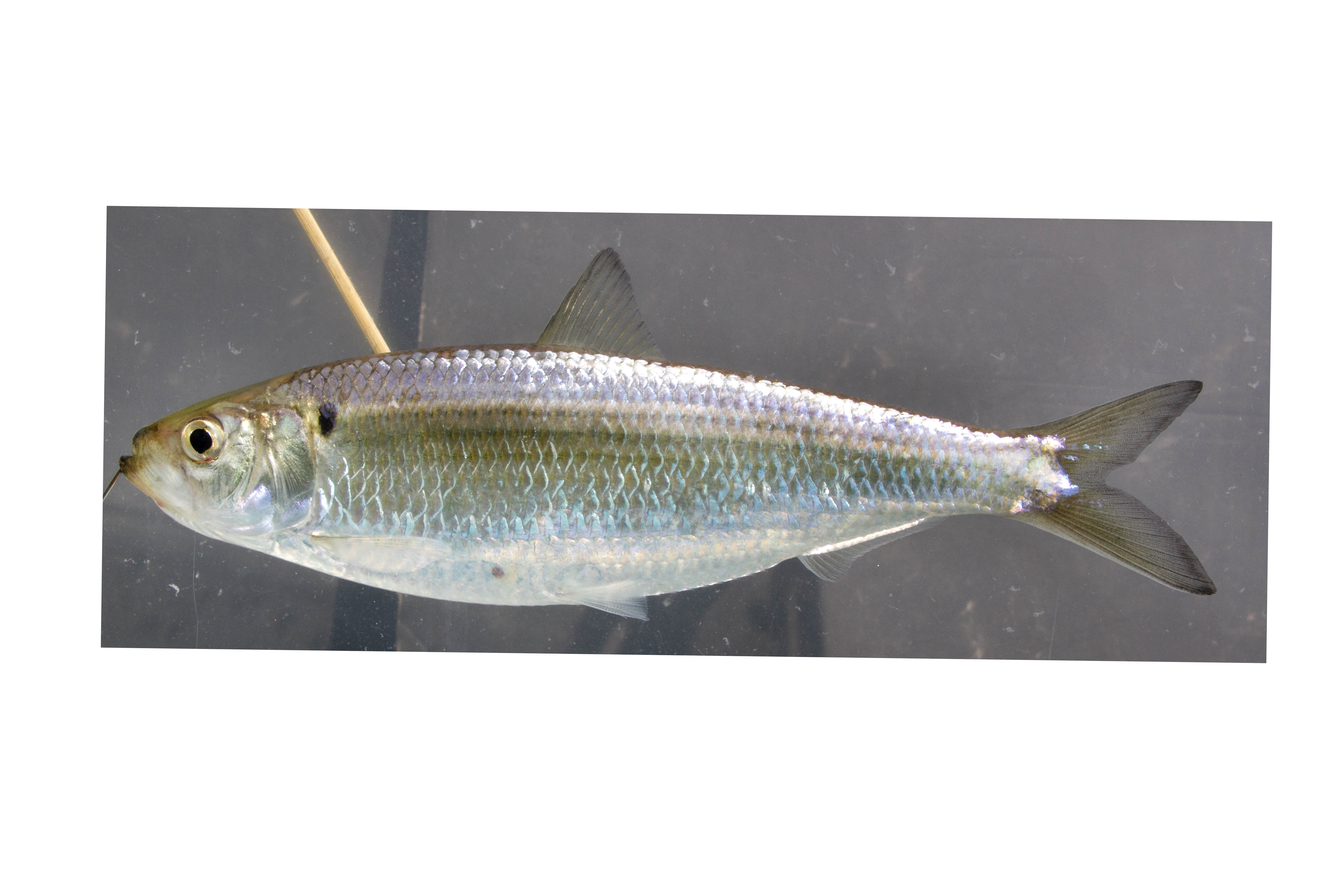
Same genus Alosa

More from the family Clupeidae




Want the complete picture on the Allis shad?
Point your camera at the fish and Fin names the species in seconds. Free, and the Allis shad is one of 12,519 species in the app.