 Fin's Fish Guide
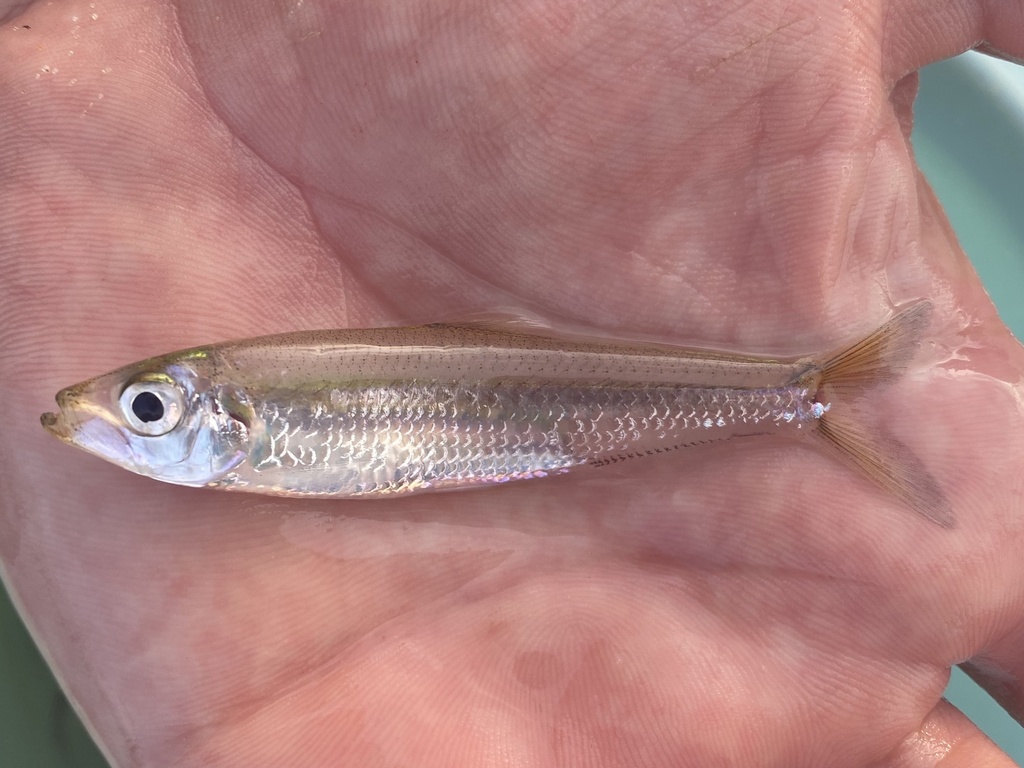
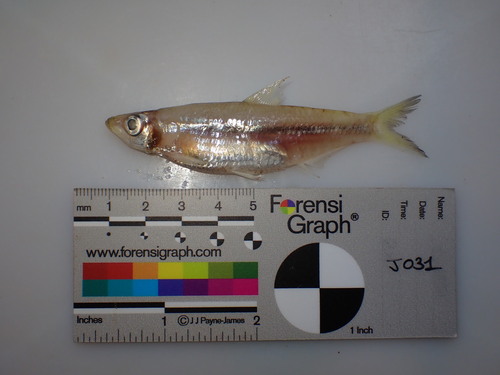
The Pellonula (Pellonula vorax) is a freshwater fish of the family Clupeidae that grows up to 12 cm.
Fresh water of West and Central Africa, in large rivers, lakes and swamps.
Description
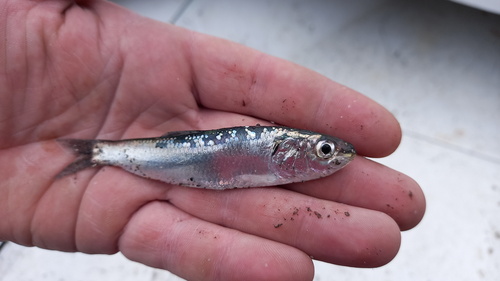
The African freshwater sardine is a small, slender herring-like fish of the family Clupeidae reaching about 12 cm. The strongly silvery, laterally compressed body has a sawtoothed belly edge and an upturned mouth. The species forms large schools in open water of large rivers, lakes and swamps in West and Central Africa. It eats zooplankton, insects and fish larvae, taken in the water column. Through its enormous numbers it is an indispensable prey fish for larger predators and waterbirds and the basis of an important small-scale fishery; dried, it is a cheap, protein-rich food source for local people.
Frequently asked questions
How do you recognise the Pellonula?
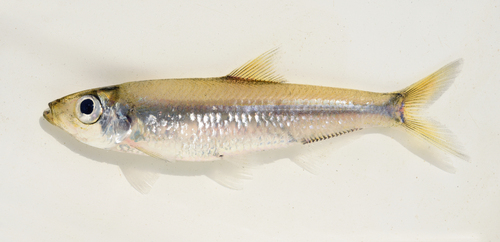
The Pellonula has a torpedo-shaped body, is mainly silver-grey and shows a plain pattern. Small, slender, strongly silver-shining herring-like fish with a serrated ventral edge; forms large shoals in open water.
Where does the Pellonula live?
The Pellonula lives in fresh water and is mostly found around open water. Fresh water of West and Central Africa, in large rivers, lakes and swamps.
How big does the Pellonula get?
The Pellonula grows to a maximum of about 12 cm.
Is the Pellonula dangerous to humans?
No, the Pellonula is harmless to humans. None required: this species is harmless to humans.
Is the Pellonula edible?
Yes, the Pellonula is commonly eaten.
More photos
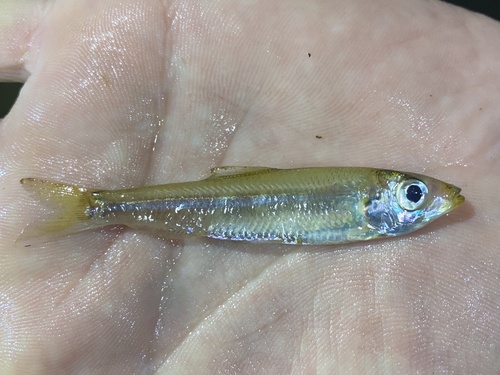

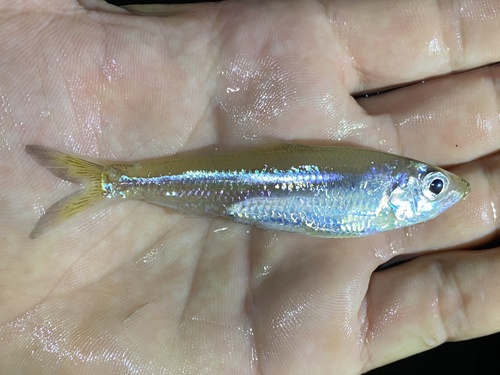

Want the complete picture on the Pellonula?
Point your camera at the fish and Fin names the species in seconds. Free, and the Pellonula is one of 12,519 species in the app.
All data
Identification
Appearance
Habitat & distribution
Behaviour & biology
For anglers
Safety
Status & sources
Same genus Pellonula
More from the family Clupeidae




Want the complete picture on the Pellonula?
Point your camera at the fish and Fin names the species in seconds. Free, and the Pellonula is one of 12,519 species in the app.