 Fin's Fish Guide
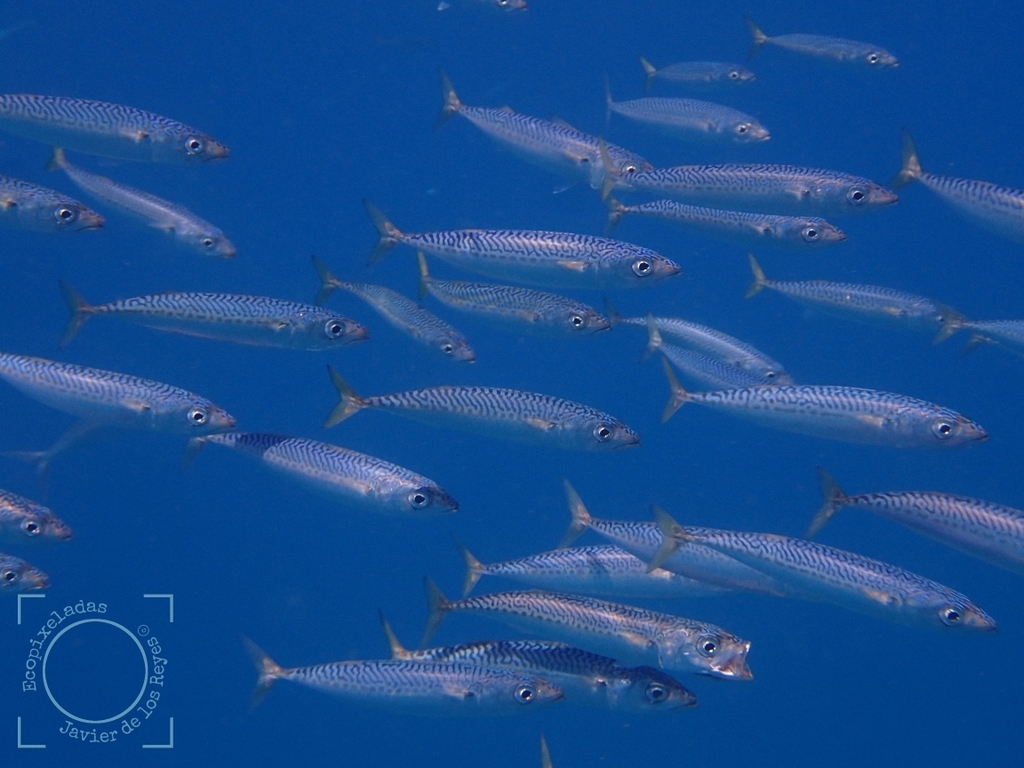
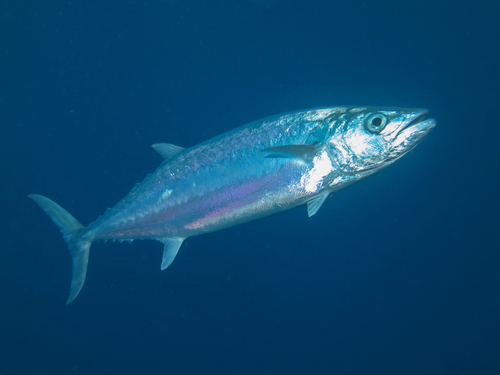
The Atlantic chub mackerel (Scomber colias) is a saltwater fish of the family Scombridae that grows up to 55 cm.
Eastern Atlantic and the Mediterranean Sea, in surface and coastal waters; pelagic.
Description
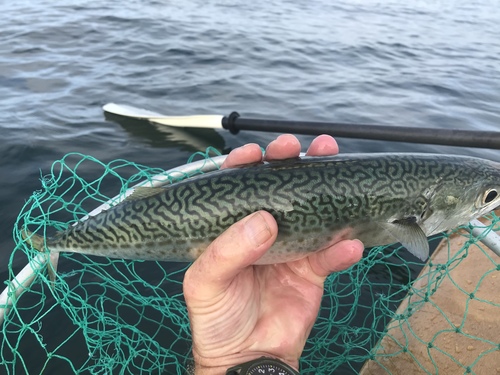
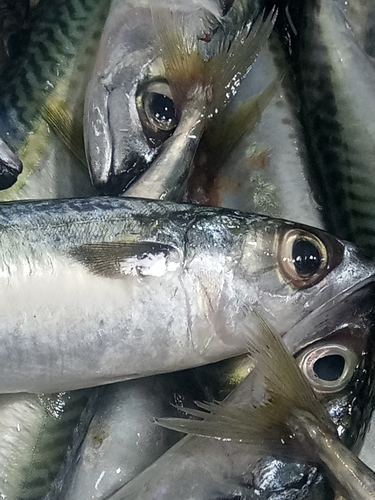
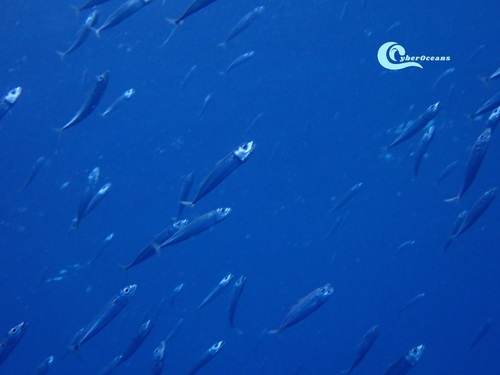
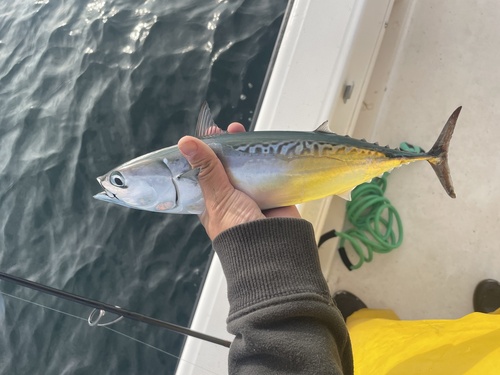
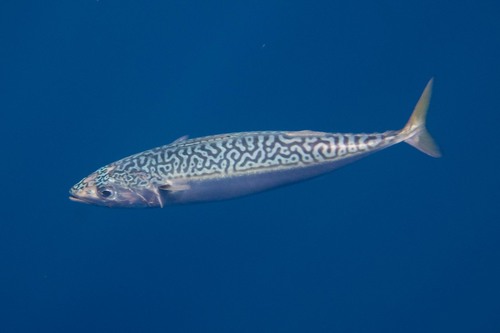
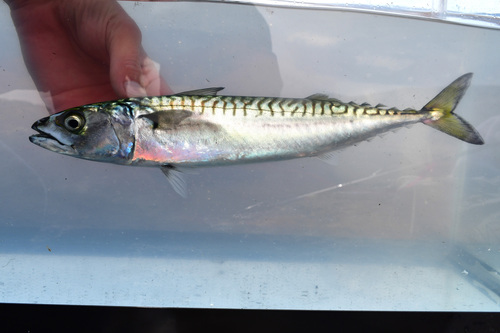
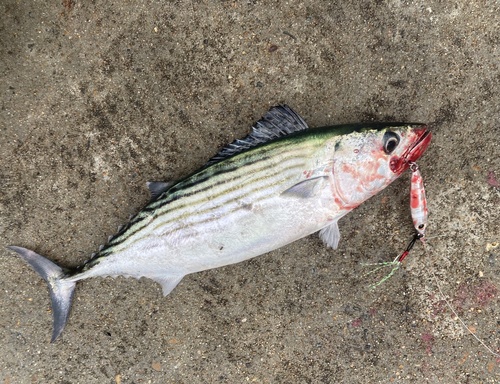
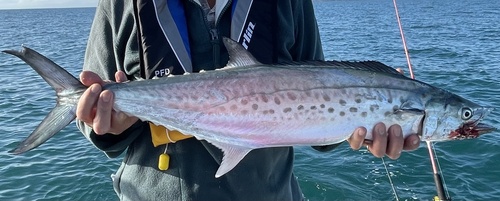
The Atlantic chub mackerel is a slender mackerel of the family Scombridae reaching about 55 cm. The torpedo-shaped body has a blue-green back with narrow wavy stripes, a silvery belly with fine grey spots and, like other mackerels, a row of small separate finlets before the sickle-shaped tail; the eyes are notably large. The species lives pelagically in surface and coastal waters of the eastern Atlantic and the Mediterranean and forms large, fast-moving schools. It hunts zooplankton, small fish and crustaceans. The chub mackerel resembles the Atlantic mackerel but can be told apart by its spotted belly and larger eyes. It is an important commercial and sport fish.
Frequently asked questions
How do you recognise the Atlantic chub mackerel?
The Atlantic chub mackerel has a torpedo-shaped body, is mainly blue and shows a flame-patterned pattern. Slender mackerel with blue-green wavy stripes on the back, fine spots on the silvery belly and a row of finlets before the tail; large eyes.
Where does the Atlantic chub mackerel live?
The Atlantic chub mackerel lives in the sea (marine waters) and is mostly found around open water. Eastern Atlantic and the Mediterranean Sea, in surface and coastal waters; pelagic.
How big does the Atlantic chub mackerel get?
The Atlantic chub mackerel grows to a maximum of about 55 cm.
Is the Atlantic chub mackerel dangerous to humans?
No, the Atlantic chub mackerel is harmless to humans. None required: this species is harmless to humans.
Is the Atlantic chub mackerel edible?
Yes, the Atlantic chub mackerel is commonly eaten.
More photos
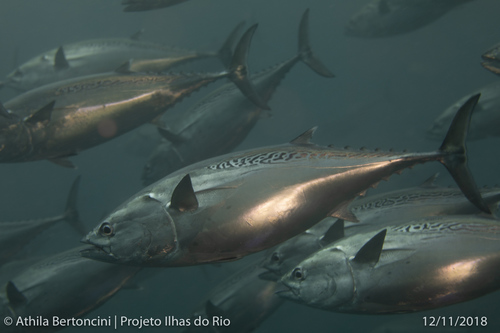
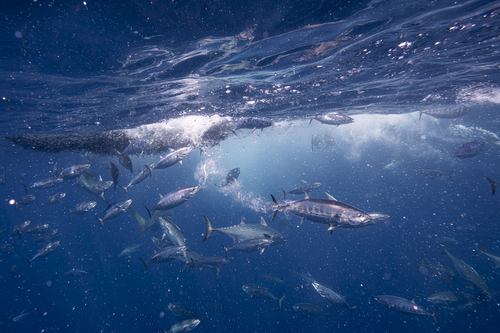
Easily confused with
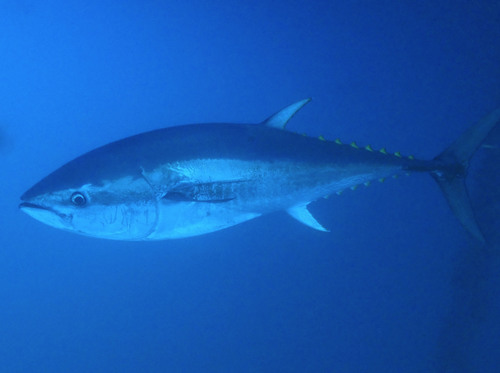
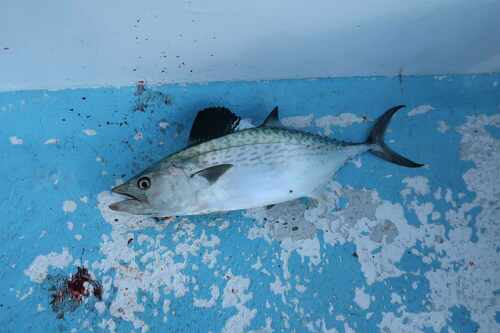
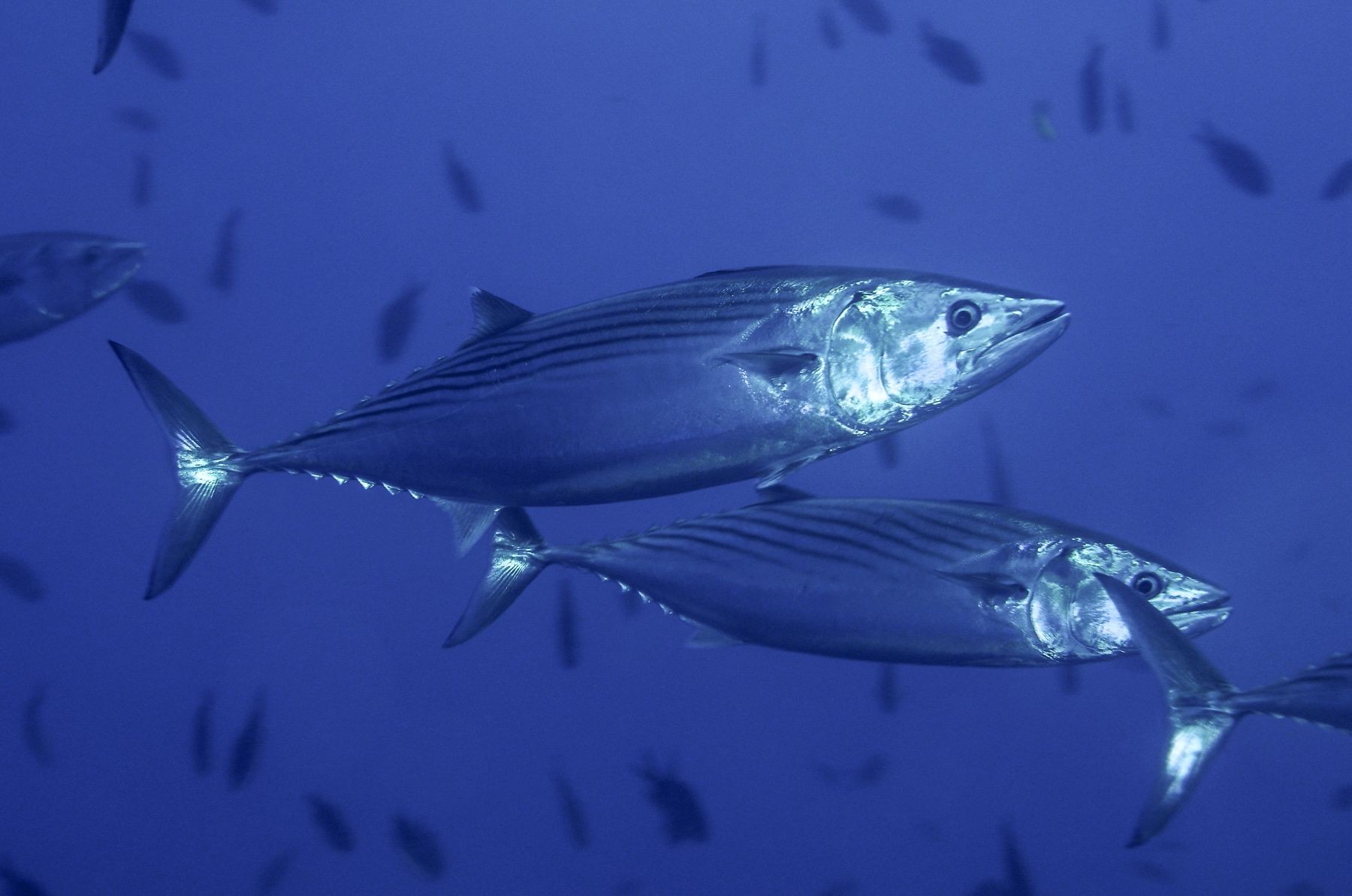
These species look like the Atlantic chub mackerel and live in the same waters.

Want the complete picture on the Atlantic chub mackerel?
Point your camera at the fish and Fin names the species in seconds. Free, and the Atlantic chub mackerel is one of 12,519 species in the app.
All data
Identification
Appearance
Habitat & distribution
Behaviour & biology
For anglers
Safety
Status & sources
Same genus Scomber
More from the family Scombridae


Want the complete picture on the Atlantic chub mackerel?
Point your camera at the fish and Fin names the species in seconds. Free, and the Atlantic chub mackerel is one of 12,519 species in the app.