 Fin's Fish Guide
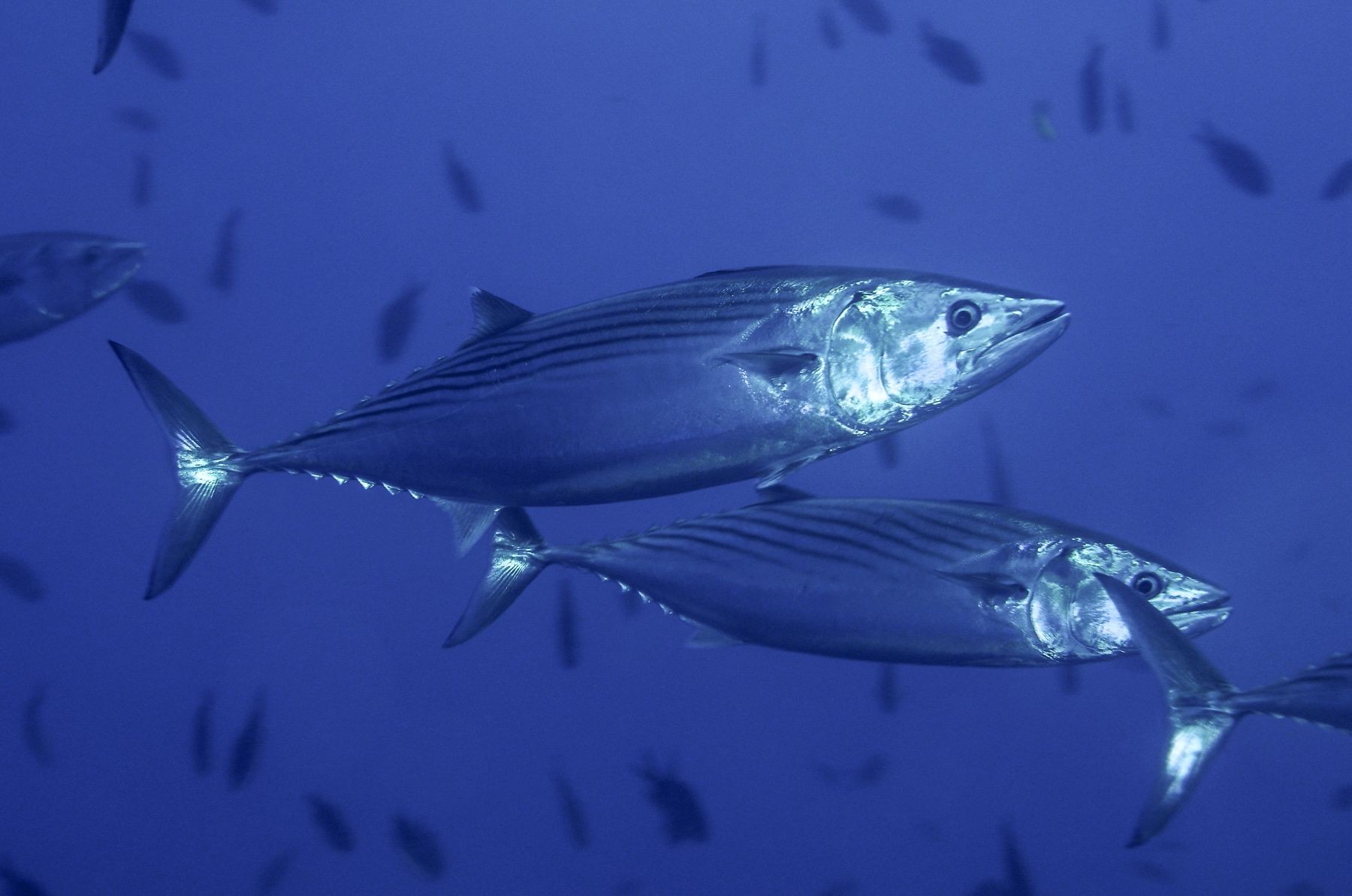
The Atlantic Bonito (Sarda sarda) is a brackish-water fish of the family Scombridae that grows up to 91 cm.
Eastern Atlantic from Norway to South Africa; Mediterranean Sea and Black Sea; western Atlantic from Nova Scotia to Argentina.
Description
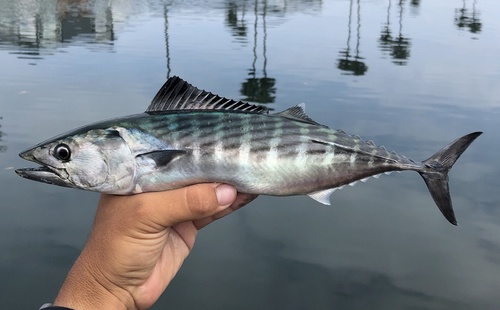
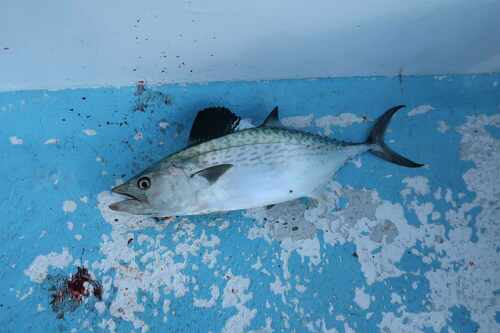
The Atlantic bonito is a streamlined, fast schooling fish of the family Scombridae reaching over 90 cm. The torpedo-shaped body is steel-blue on the back with oblique dark stripes and silvery-white on the flanks, with a row of small finlets before the forked tail. The species lives pelagically across the eastern and western Atlantic, the Mediterranean and the Black Sea, tolerating wide ranges of temperature and salinity. As a fast predator the bonito hunts small fish, squid and shrimp in schools and is even cannibalistic. The Atlantic bonito is a highly prized sport and food fish.
Frequently asked questions
How do you recognise the Atlantic Bonito?
The Atlantic Bonito has a torpedo-shaped body, is mainly blue and shows a horizontal stripes pattern. Streamlined mackerel with oblique dark stripes over the back and a row of small fins (finlets) before the forked tail. Note: in tropical areas this species can cause ciguatera poisoning when eaten; large specimens of coral reef predators can accumulate the toxin. Eat with care or avoid in risk areas.
Where does the Atlantic Bonito live?
The Atlantic Bonito lives in brackish water and is mostly found around open water. Eastern Atlantic from Norway to South Africa; Mediterranean Sea and Black Sea; western Atlantic from Nova Scotia to Argentina.
How big does the Atlantic Bonito get?
The Atlantic Bonito grows to a maximum of about 91 cm. On average the species is around 50 cm.
Is the Atlantic Bonito dangerous to humans?
The Atlantic Bonito is venomous — handle spines with care and seek medical help after a sting if needed. Harmless to handle, but may cause ciguatera poisoning if eaten; seek medical help if symptoms such as nausea or tingling occur.
Is the Atlantic Bonito edible?
Yes, the Atlantic Bonito is a highly prized food fish.
Easily confused with
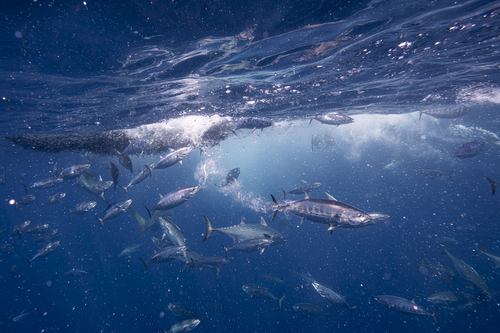
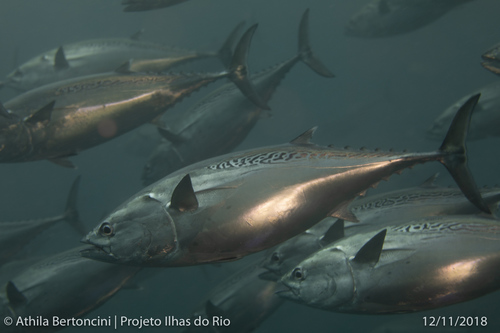
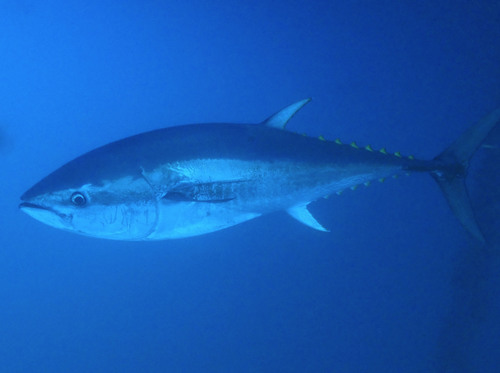
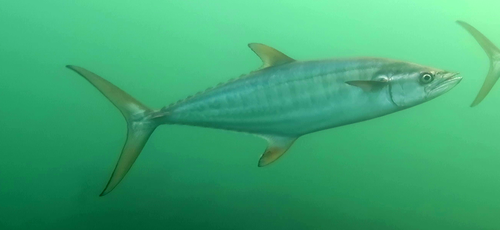
These species look like the Atlantic Bonito and live in the same waters.


Want the complete picture on the Atlantic Bonito?
Point your camera at the fish and Fin names the species in seconds. Free, and the Atlantic Bonito is one of 12,519 species in the app.
All data
Identification
Appearance
Habitat & distribution
Behaviour & biology
For anglers
Safety
Status & sources
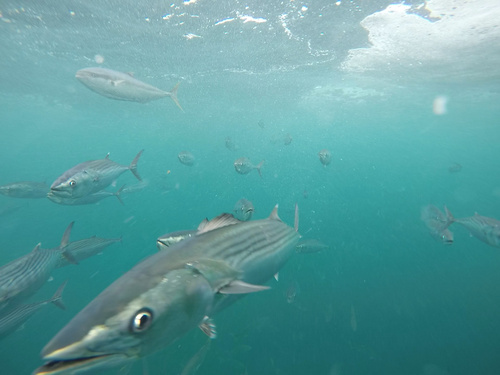
Same genus Sarda

More from the family Scombridae


Want the complete picture on the Atlantic Bonito?
Point your camera at the fish and Fin names the species in seconds. Free, and the Atlantic Bonito is one of 12,519 species in the app.