Home · Scombridae · Atlantic black skipjack
Atlantic black skipjack (Euthynnus alletteratus) — Scombridae

Atlantic black skipjack

Euthynnus alletteratus
Family: Scombridae
LC · Least Concern

The Atlantic black skipjack (Euthynnus alletteratus) is a brackish-water fish of the family Scombridae that grows up to 122 cm.

Length
122 cm
Water
Brackish
Depth
1.0–150.0 m
Diet
Carnivore
Behaviour
Schooling
Activity
Diurnal
Body shape
Torpedo-shaped
Substrate
Open water
Danger
Venomous / poisonous
Range
Warm and temperate parts of the Atlantic Ocean, the Mediterranean Sea and the Black Sea.
Edibility
Commonly eaten

Want the complete picture on the Atlantic black skipjack?

Get the app

Description

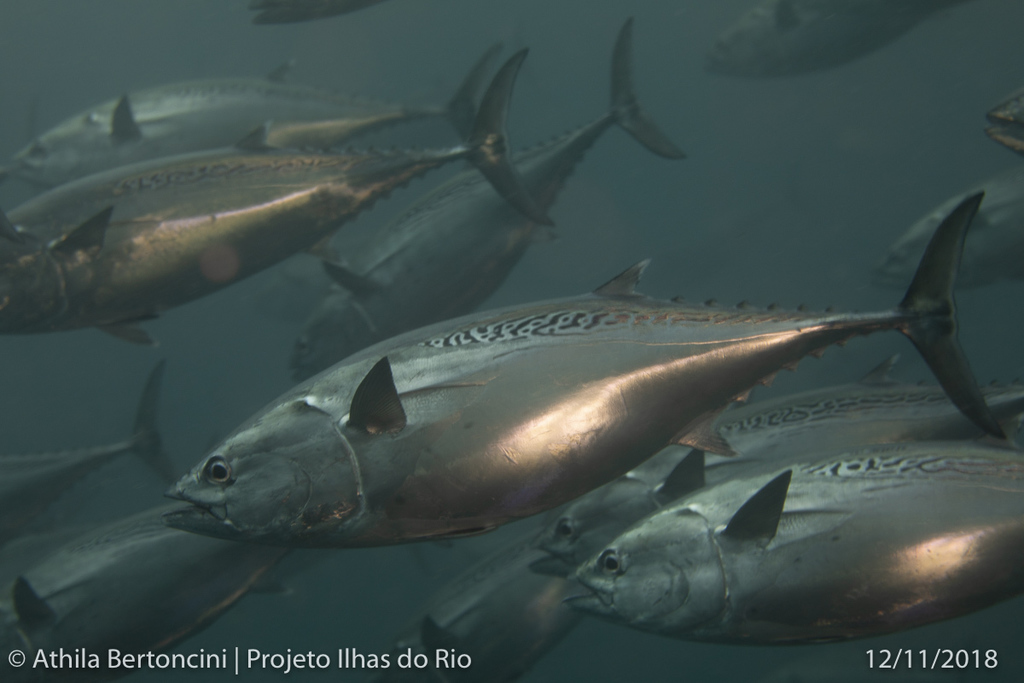
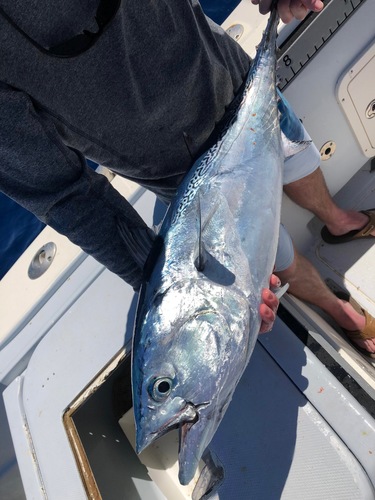
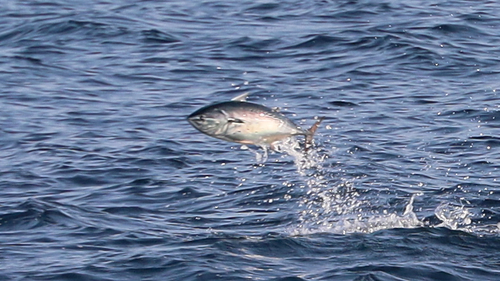
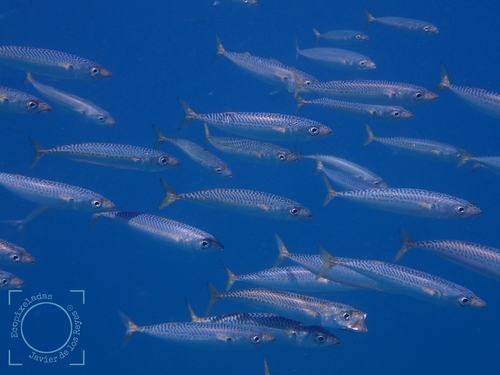
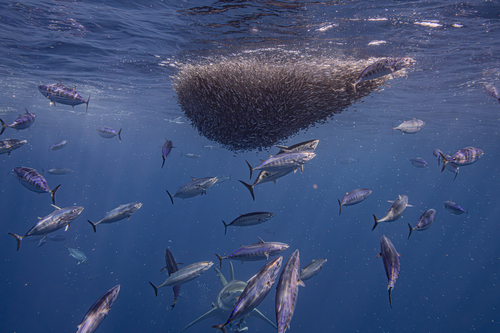
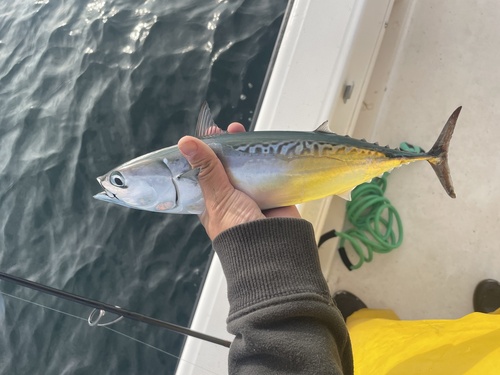
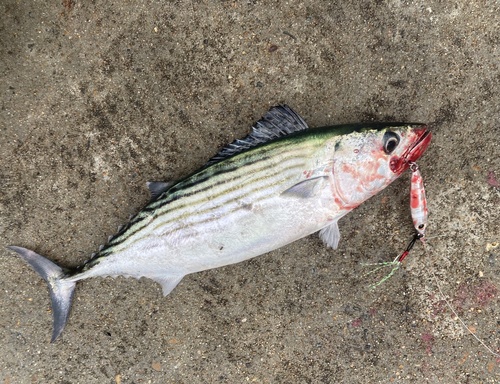
The little tunny is a fast-swimming mackerel relative of warm and temperate parts of the Atlantic and adjacent seas, including the Mediterranean. It has a torpedo-shaped, muscular body, can grow to over a metre and hunts in schools close inshore. As an opportunistic predator it eats almost anything: crustaceans, fishes (especially herring-like species), squids and tunicates. Its back bears a pattern of dark, wavy stripes and the flank a few dark spots. The species is fished commercially, although there are reports of ciguatera poisoning. It is generally harmless to humans.

Frequently asked questions

How do you recognise the Atlantic black skipjack?

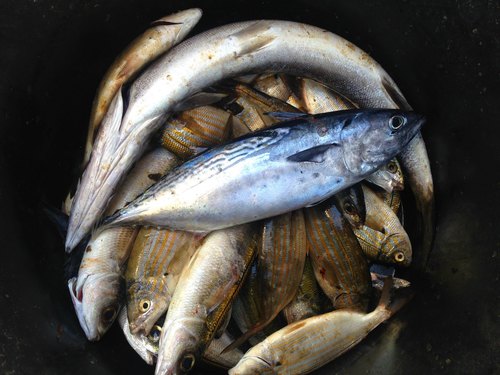
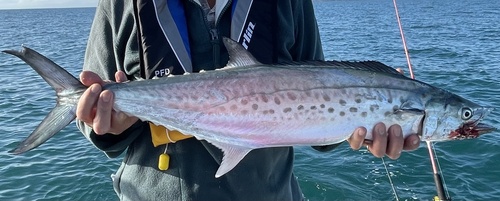
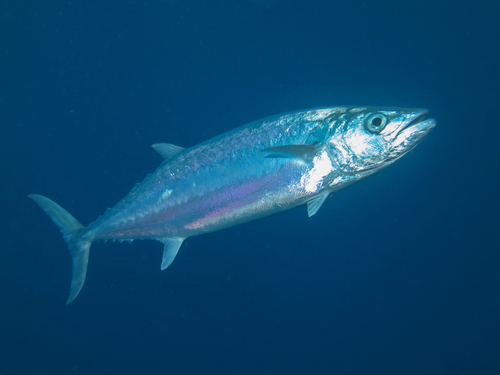
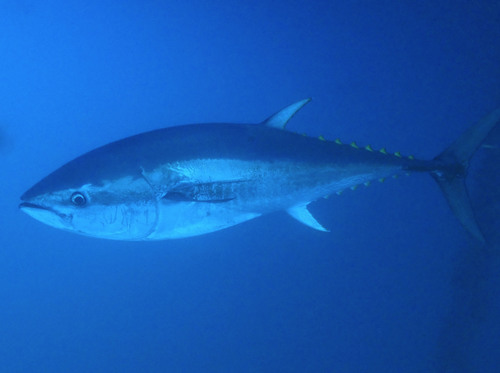
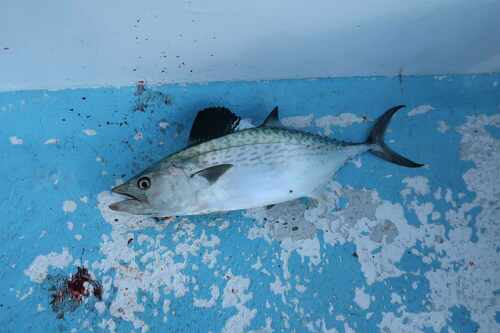
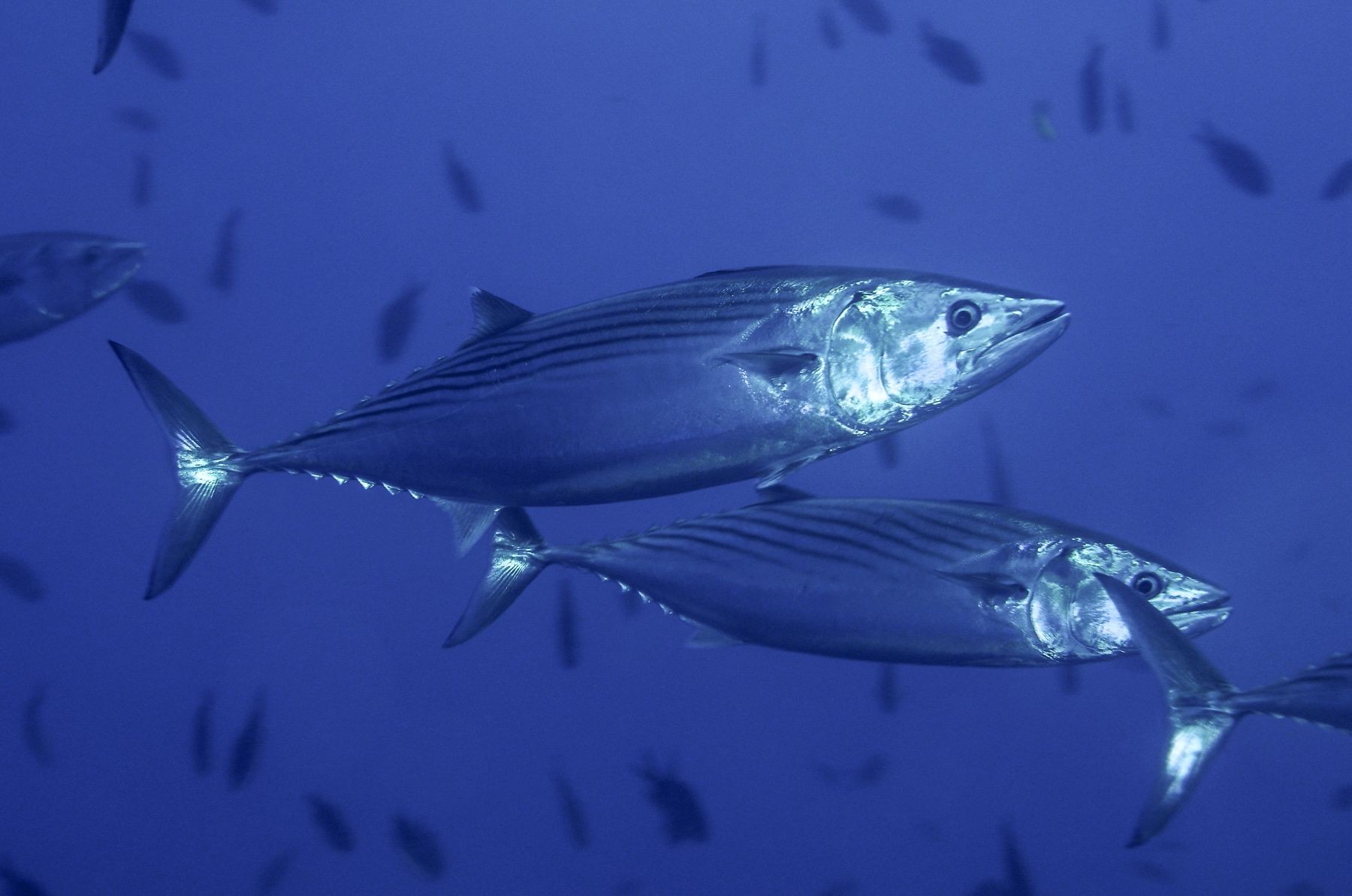
The Atlantic black skipjack has a torpedo-shaped body, is mainly blue and shows a flame-patterned pattern. Winding dark stripes on the back and a few dark blotches below the pectoral fin. Note: in tropical regions this species can cause ciguatera poisoning when eaten; large individuals of coral reef predators can accumulate the toxin. Eat with caution or avoid in risk areas.

Where does the Atlantic black skipjack live?

The Atlantic black skipjack lives in brackish water and is mostly found around open water. Warm and temperate parts of the Atlantic Ocean, the Mediterranean Sea and the Black Sea.

How big does the Atlantic black skipjack get?

The Atlantic black skipjack grows to a maximum of about 122 cm. On average the species is around 80 cm.

Is the Atlantic black skipjack dangerous to humans?

The Atlantic black skipjack is venomous — handle spines with care and seek medical help after a sting if needed. If symptoms of ciguatera poisoning appear after eating (tingling, gastrointestinal upset), seek medical help. There is no specific antidote; treatment is supportive.

Is the Atlantic black skipjack edible?

Yes, the Atlantic black skipjack is commonly eaten.

More photos
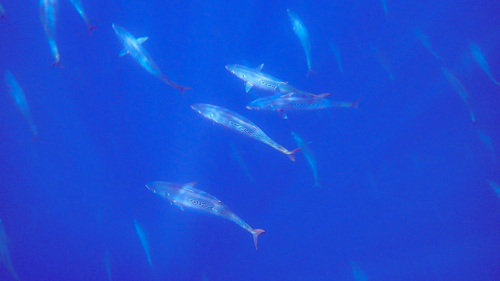
Atlantic black skipjack (Euthynnus alletteratus) — Scombridae — 2
iNaturalist ((c) Falk Viczian Solarboot-Projekte gGmbH, some rights reserved (CC BY-NC))
Atlantic black skipjack (Euthynnus alletteratus) — Scombridae — 3
iNaturalist ((c) bean-b, some rights reserved (CC BY-NC))
Atlantic black skipjack (Euthynnus alletteratus) — Scombridae — 4
iNaturalist ((c) Falk Viczian Solarboot-Projekte gGmbH, some rights reserved (CC BY-NC))
Atlantic black skipjack (Euthynnus alletteratus) — Scombridae — 5
iNaturalist ((c) Io/Es, some rights reserved (CC BY-NC))

Easily confused with

These species look like the Atlantic black skipjack and live in the same waters.
Fin

Want the complete picture on the Atlantic black skipjack?

Point your camera at the fish and Fin names the species in seconds. Free, and the Atlantic black skipjack is one of 12,519 species in the app.

Get the app →

All data

Identification

English name
Atlantic black skipjack verified
Scientific name
Euthynnus alletteratus
Family
Scombridae
Other names
Atlantic black skipjack; Atlantic little tuna; Atlantic little tunny; Bonito; Little Tunny; Little tuna; False albacore; Tuna verified

Appearance

Size class
Extra large verified
Max length (cm)
122.0 verified
Average length (cm)
80.0 verified
Body shape
Torpedo-shaped sourced
Dominant colour
Blue inferred
Pattern
Flame-patterned inferred
Tail shape
Crescent (lunate) inferred
Mouth position
Terminal inferred
Lips
Thin inferred
Barbels
No sourced
Dorsal fins
Two separate inferred
Dorsal spines
Yes sourced

Habitat & distribution

Water type
Brackish sourced
Substrate
Open water sourced
Min depth (m)
1.0 verified
Max depth (m)
150.0 verified
Natural range
Warm and temperate parts of the Atlantic Ocean, the Mediterranean Sea and the Black Sea. inferred
Origin
Native sourced

Behaviour & biology

Diet
Carnivore sourced
Diet (detail)
Crustaceans, fishes (mainly clupeids), squid and tunicates sourced
Social behaviour
Schooling inferred
Territorial
No inferred
Activity
Diurnal inferred
Reproduction
Separate sexes sourced
Sexual dimorphism
No inferred
levensduur_max_jaar
10.0 verified
Seasonality
Spawns in the warm months; several times per season with pelagic eggs. inferred
Special features
Winding dark stripes on the back and a few dark blotches below the pectoral fin. Note: in tropical regions this species can cause ciguatera poisoning when eaten; large individuals of coral reef predators can accumulate the toxin. Eat with caution or avoid in risk areas. verified

For anglers

Edibility
Commonly eaten sourced
Fishing method
Angling with lures or (dead/live) baitfish by trolling, casting or drift fishing in open water. inferred
Regulations source
FishBase ↗ inferred

Safety

Danger to humans
Venomous / poisonous sourced
First aid
If symptoms of ciguatera poisoning appear after eating (tingling, gastrointestinal upset), seek medical help. There is no specific antidote; treatment is supportive. sourced

Status & sources

Sources
FishBase via GBIF (DwC-A), CC-BY-NC 4.0

Same genus Euthynnus

More from the family Scombridae
Fin

Want the complete picture on the Atlantic black skipjack?

Point your camera at the fish and Fin names the species in seconds. Free, and the Atlantic black skipjack is one of 12,519 species in the app.

Get the app →
Is this the Atlantic black skipjack? Get the app