Home · Myliobatidae · American cownose ray
American cownose ray (Rhinoptera bonasus) — Myliobatidae

American cownose ray

Rhinoptera bonasus
Family: Myliobatidae
VU · Vulnerable

The American cownose ray (Rhinoptera bonasus) is a brackish-water fish of the family Myliobatidae that grows up to 120 cm.

Length
120 cm
Water
Brackish
Depth
0.0–22.0 m
Diet
Carnivore
Behaviour
Large groups
Body shape
Irregular
Substrate
Mixed bottom
Danger
Can cause injury
Range
Continental shelf, bays and estuaries of the western Atlantic.
Edibility
Rarely eaten

Want the complete picture on the American cownose ray?

Get the app

Description

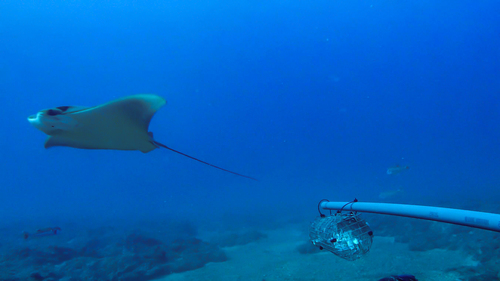
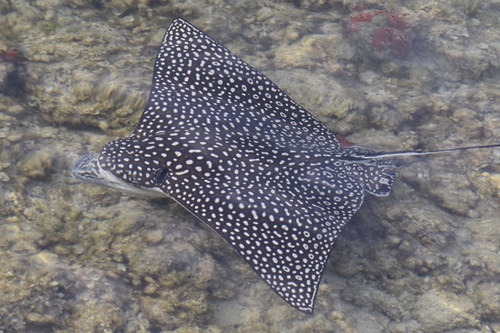
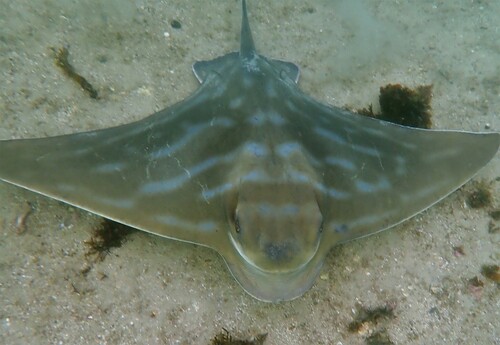
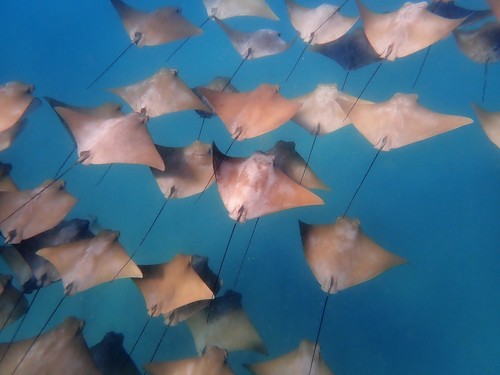
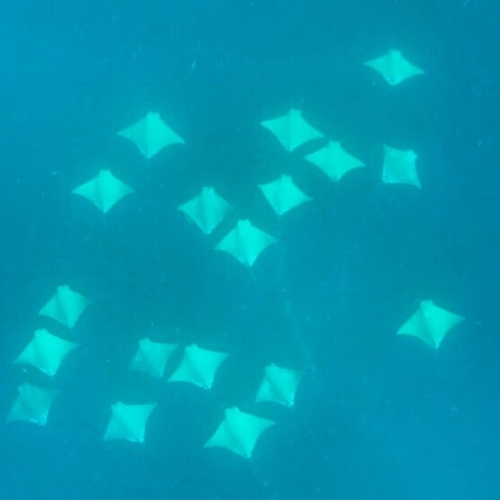
The cownose ray (Rhinoptera bonasus) is a ray of the family Myliobatidae from the western Atlantic. The species owes its name to its cleft, cow-nose-like snout and has broad, wing-like pectoral fins with which it 'flies' gracefully through the water. It lives on the continental shelf, enters bays and estuaries and sometimes forms huge schools. The diet consists mainly of benthic invertebrates and mollusks, which it crushes with flat tooth plates, sometimes damaging seagrass beds. The tail bears a spine. Owing to overfishing and slow reproduction the species is considered Vulnerable (VU). The disc reaches about 1.2 metres across.

Frequently asked questions

How do you recognise the American cownose ray?

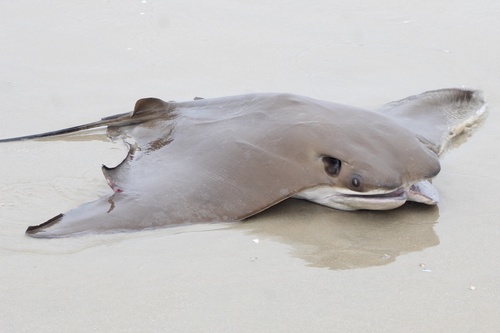
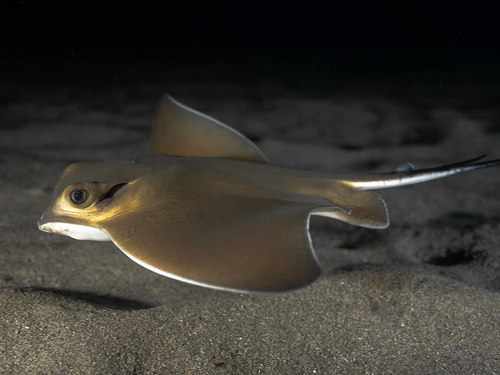
The American cownose ray has an irregular in shape body, is mainly brown and shows a plain pattern. Cleft, cownose-like snout; forms enormous shoals and crushes shellfish with its tooth plates.

Where does the American cownose ray live?

The American cownose ray lives in brackish water and is mostly found around mixed bottom. Continental shelf, bays and estuaries of the western Atlantic.

How big does the American cownose ray get?

The American cownose ray grows to a maximum of about 120 cm.

Is the American cownose ray dangerous to humans?

The American cownose ray can cause injury; handle it with care. The tail spine can cause a painful, lacerating wound. Rinse the wound with (sea)water, remove any visible material and immerse the affected part for 30-90 minutes in water as hot as can be tolerated (about 45 °C); seek medical help, especially for a deep wound or a wound to the trunk or chest.

Is the American cownose ray edible?

The American cownose ray is rarely eaten.

More photos
American cownose ray (Rhinoptera bonasus) — Myliobatidae — 2
iNaturalist ((c) Ty Smith, some rights reserved (CC BY-NC))
American cownose ray (Rhinoptera bonasus) — Myliobatidae — 3
Wikimedia Commons — Diego Delso (CC BY-SA 4.0)
American cownose ray (Rhinoptera bonasus) — Myliobatidae — 4
Wikimedia Commons — Blueag9 (CC BY-SA 3.0)
American cownose ray (Rhinoptera bonasus) — Myliobatidae — 5
Wikimedia Commons — w:User:BeckyAnne (CC BY 2.5)
Fin

Want the complete picture on the American cownose ray?

Point your camera at the fish and Fin names the species in seconds. Free, and the American cownose ray is one of 12,519 species in the app.

Get the app →

All data

Identification

English name
American cownose ray verified
Scientific name
Rhinoptera bonasus
Family
Myliobatidae
Other names
Cowfish; Cownose Ray; Cownose ray; Cownose rays; Cow-nosed ray; Manta; Skeete verified

Appearance

Size class
Extra large verified
Max length (cm)
120.0 verified
Body shape
Irregular sourced
Dominant colour
Brown inferred
Pattern
Plain inferred
Tail shape
Straight inferred
Lips
Thin inferred
Barbels
No sourced
Dorsal fins
One continuous inferred
Dorsal spines
No sourced

Habitat & distribution

Water type
Brackish sourced
Substrate
Mixed bottom sourced
Min depth (m)
0.0 verified
Max depth (m)
22.0 verified
Natural range
Continental shelf, bays and estuaries of the western Atlantic. inferred
Origin
Native sourced

Behaviour & biology

Diet
Carnivore sourced
Diet (detail)
Benthic invertebrates and molluscs sourced
Social behaviour
Large groups inferred
Territorial
No inferred
Reproduction
Separate sexes sourced
Sexual dimorphism
No inferred
Seasonality
Present year-round in its habitat; no pronounced seasonality known. inferred
Special features
Cleft, cownose-like snout; forms enormous shoals and crushes shellfish with its tooth plates. sourced

For anglers

Edibility
Rarely eaten sourced
Fishing method
Bottom fishing with natural bait (worm, shrimp or fish) on or just above the seabed. inferred
Regulations source
FishBase ↗ inferred

Safety

Danger to humans
Can cause injury sourced
First aid
The tail spine can cause a painful, lacerating wound. Rinse the wound with (sea)water, remove any visible material and immerse the affected part for 30-90 minutes in water as hot as can be tolerated (about 45 °C); seek medical help, especially for a deep wound or a wound to the trunk or chest. sourced

Status & sources

Sources
FishBase via GBIF (DwC-A), CC-BY-NC 4.0

Same genus Rhinoptera

More from the family Myliobatidae
Fin

Want the complete picture on the American cownose ray?

Point your camera at the fish and Fin names the species in seconds. Free, and the American cownose ray is one of 12,519 species in the app.

Get the app →
Is this the American cownose ray? Get the app