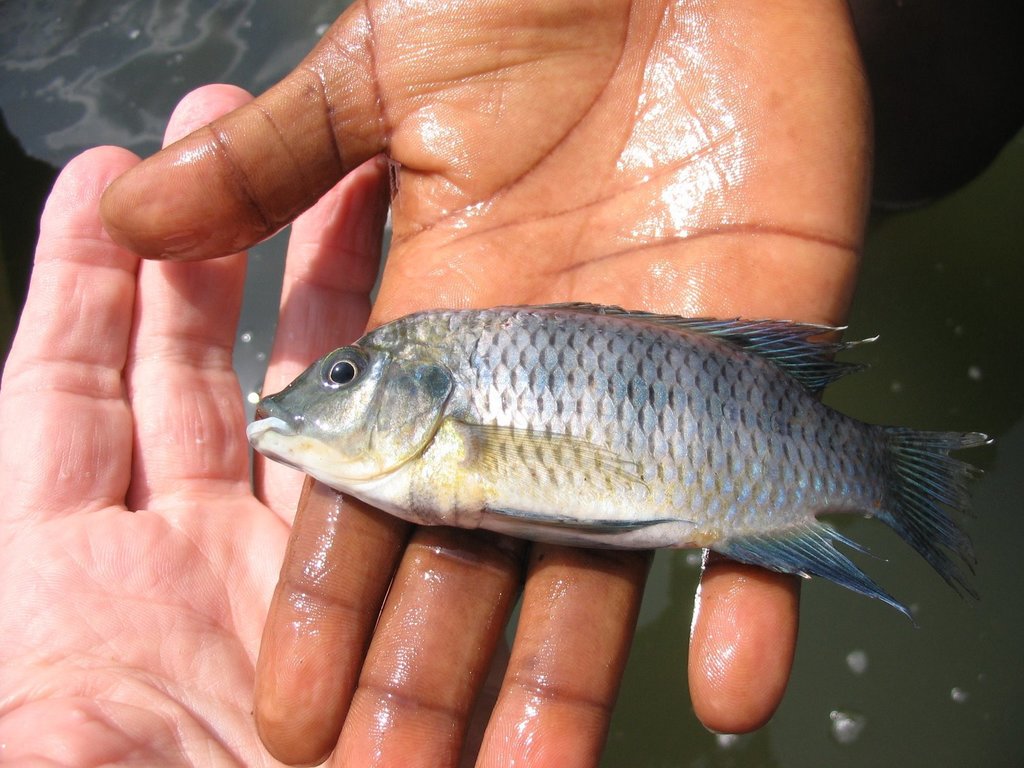
The Busuma tilapia (Tilapia busumana) is a freshwater fish of the family Cichlidae that grows up to 18 cm.
Description
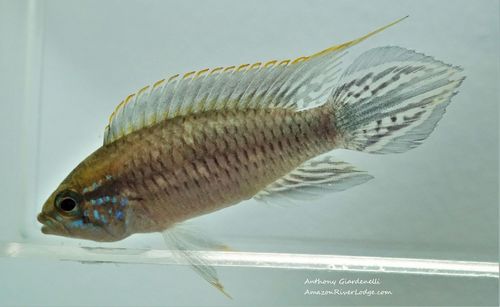
The Busuma tilapia is an African cichlid from West Africa, including Lake Bosumtwi and adjacent river systems in Ghana. The species grows to about 18 cm and has a deep, stocky body. It is adapted to life in fast-flowing rivers with rapids. As an omnivore it feeds on algae, growth, detritus and small invertebrates. Tilapias form pairs and lay their eggs on a cleaned, open substrate, guarded by both parents. The species is of local fishery importance and is harmless to humans.
Frequently asked questions
How do you recognise the Busuma tilapia?
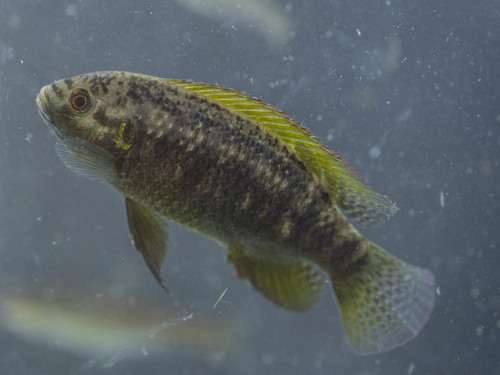
The Busuma tilapia has a torpedo-shaped body, is mainly silver-grey and shows a vertical stripes pattern.
Where does the Busuma tilapia live?
The Busuma tilapia lives in fresh water and is mostly found around sand or mud bottom.
How big does the Busuma tilapia get?
The Busuma tilapia grows to a maximum of about 18 cm.
Is the Busuma tilapia dangerous to humans?
No, the Busuma tilapia is harmless to humans.
Is the Busuma tilapia edible?
Yes, the Busuma tilapia is commonly eaten.
Download Fin's Fish Guide
Identify fish in seconds, log your catches and dives. Join the TestFlight beta.
All data
Identification
Appearance
Habitat & distribution
Behaviour & biology
For anglers
Safety
Status & sources
Same genus Tilapia

More from the family Cichlidae



Download Fin's Fish Guide
Identify fish in seconds, log your catches and dives. Join the TestFlight beta.