 Fin's Fish Guide
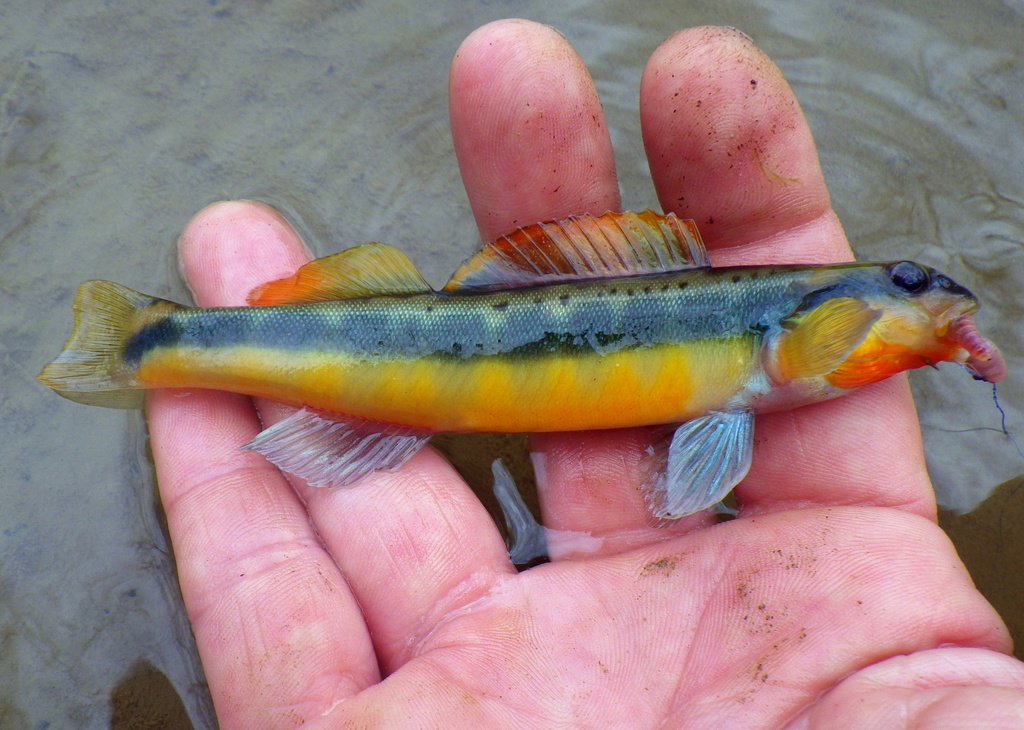
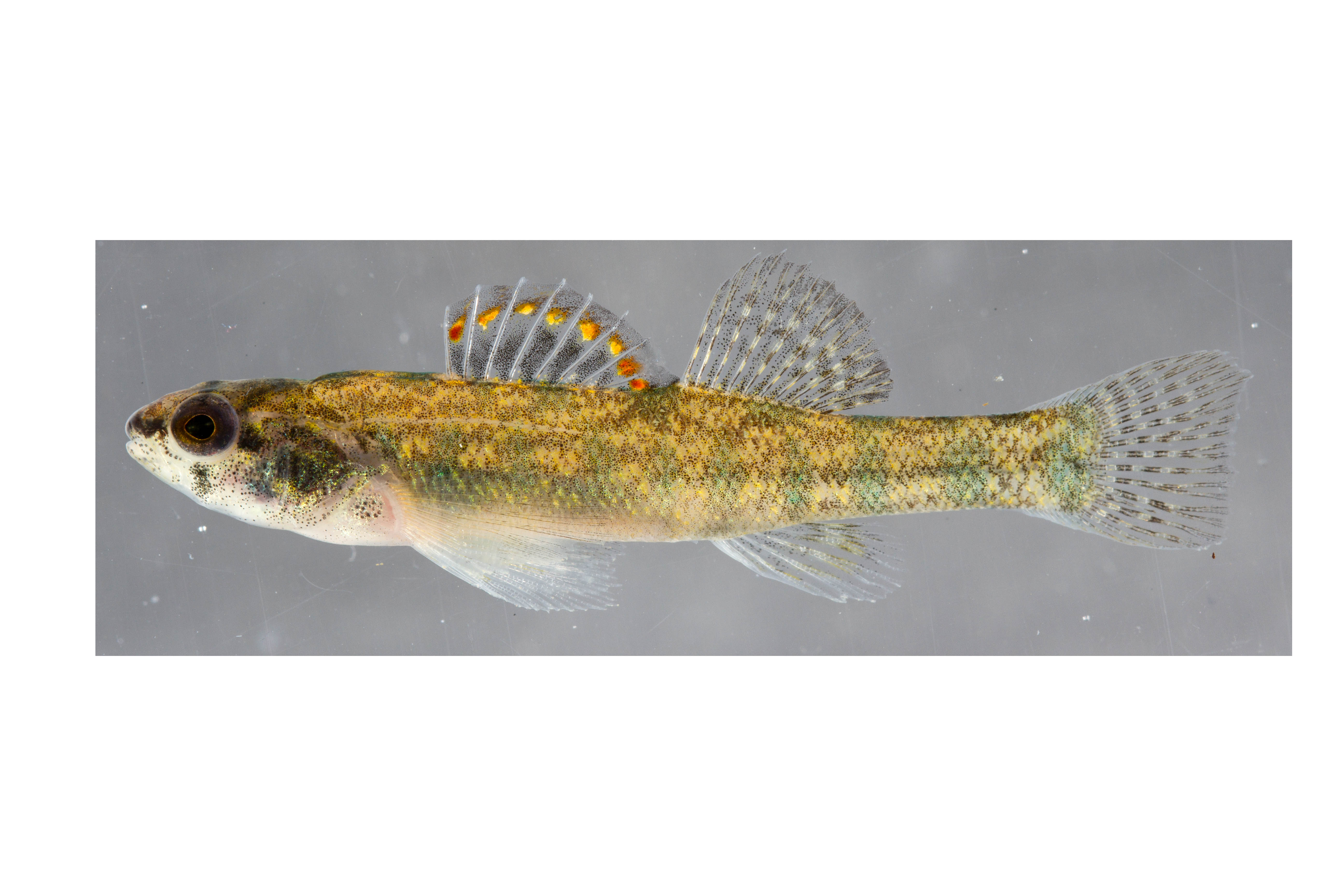
The Tangerine darter (Percina aurantiaca) is a freshwater fish of the family Percidae that grows up to 18 cm.
Eastern United States, in the upper reaches of the Tennessee river basin (southern Appalachians).
Description
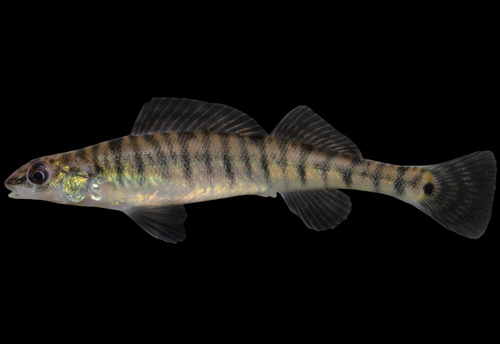
The tangerine darter is one of the largest darters (Percidae) from the eastern United States, in the upper Tennessee drainage of the southern Appalachians. The species reaches about 18 cm and has an elongate body; spawning males turn bright orange, to which the name refers. It inhabits clear, fairly deep, rocky pools below riffles of creeks and small rivers. Juveniles eat mayfly and dipteran larvae, while adults mainly consume caddisfly larvae. The eggs are buried in the bottom substrate.
Frequently asked questions
How do you recognise the Tangerine darter?
The Tangerine darter has an elongate, eel-like body, is mainly red-orange and shows a horizontal stripes pattern. Spawning males bright orange; one of the largest darters.
Where does the Tangerine darter live?
The Tangerine darter lives in fresh water and is mostly found around mixed bottom. Eastern United States, in the upper reaches of the Tennessee river basin (southern Appalachians).
How big does the Tangerine darter get?
The Tangerine darter grows to a maximum of about 18 cm. On average the species is around 12 cm.
Is the Tangerine darter dangerous to humans?
No, the Tangerine darter is harmless to humans. None required: this species is harmless to humans.
Is the Tangerine darter edible?
The Tangerine darter is not usually eaten.

Want the complete picture on the Tangerine darter?
Point your camera at the fish and Fin names the species in seconds. Free, and the Tangerine darter is one of 12,519 species in the app.
All data
Identification
Appearance
Habitat & distribution
Behaviour & biology
For anglers
Safety
Status & sources
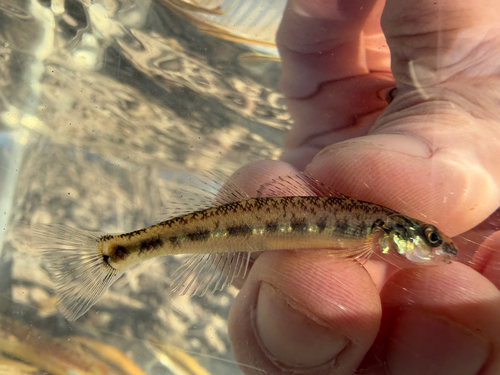
Same genus Percina

More from the family Percidae


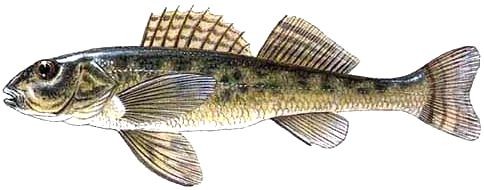
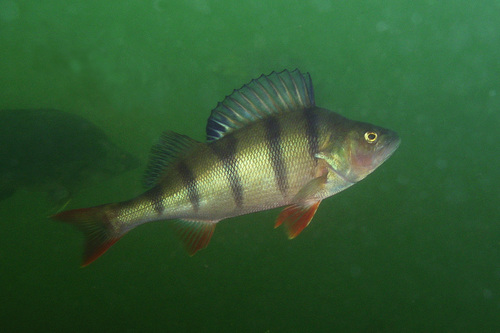

Want the complete picture on the Tangerine darter?
Point your camera at the fish and Fin names the species in seconds. Free, and the Tangerine darter is one of 12,519 species in the app.