
The Scale-eating cichlid (Plecodus paradoxus) is a freshwater fish of the family Cichlidae that grows up to 20 cm.
Description
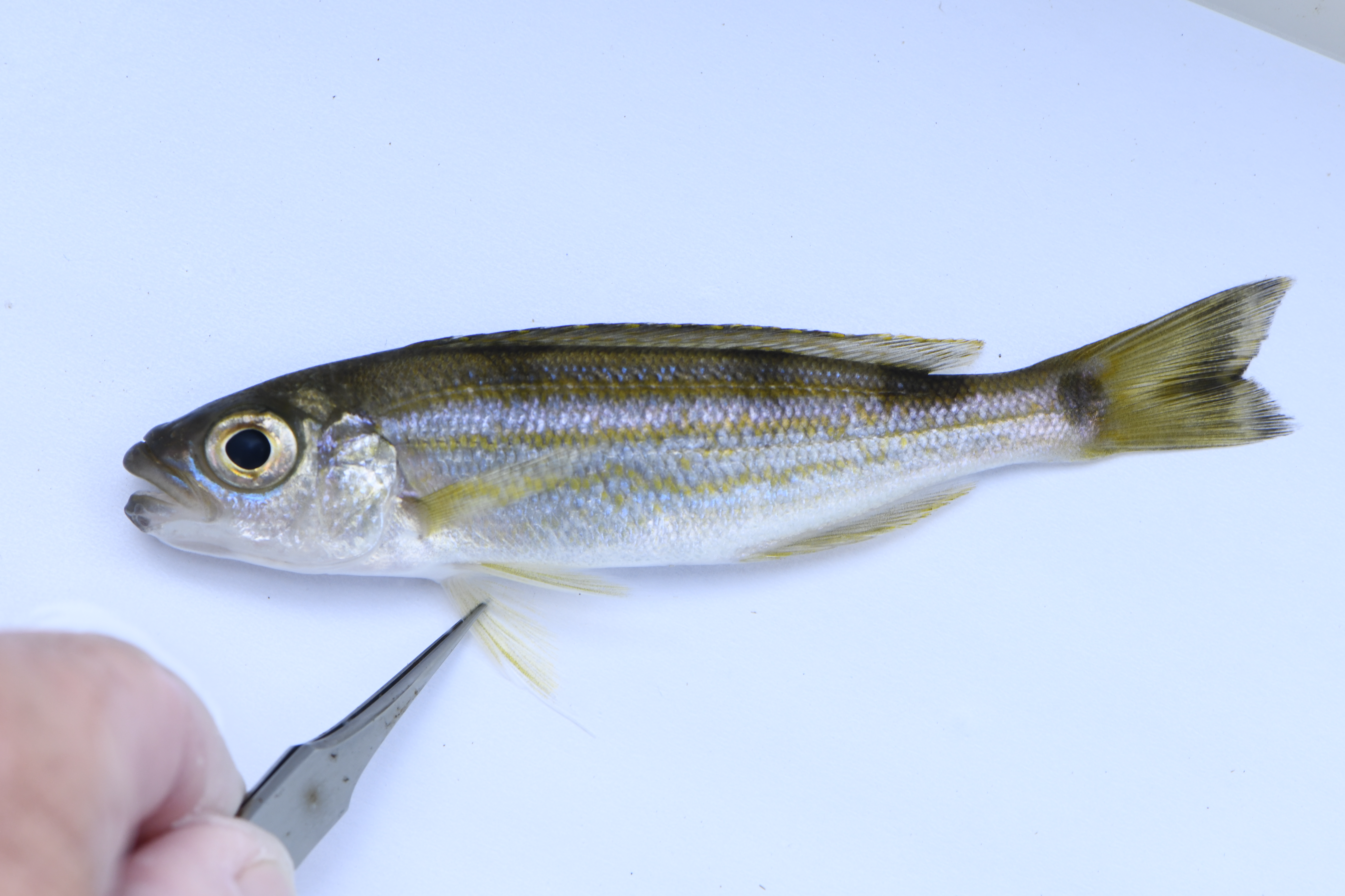
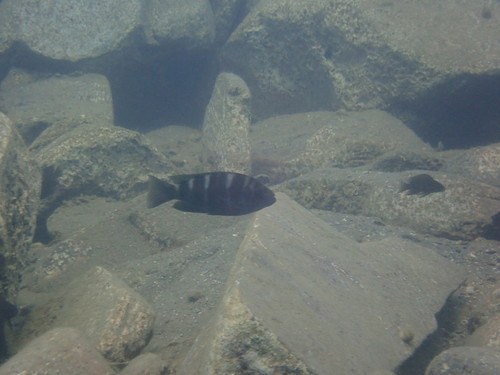
The scale-eating cichlid is a remarkable cichlid endemic to Lake Tanganyika in East Africa. The species grows to about 20 cm and is specialised in lepidophagy: it feeds on the scales of other fishes. For this it has an upward-angled mouth with outward-pointing, tilting teeth with which it rasps scales from the flanks of prey fishes. The body is streamlined, with a dark lengthwise stripe that aids camouflage while stalking. The species lives along rocky shores. It is harmless to humans.
Frequently asked questions
How do you recognise the Scale-eating cichlid?
The Scale-eating cichlid has a torpedo-shaped body, is mainly silver-grey and shows a horizontal stripes pattern.
Where does the Scale-eating cichlid live?
The Scale-eating cichlid lives in fresh water and is mostly found around stony or rocky ground.
How big does the Scale-eating cichlid get?
The Scale-eating cichlid grows to a maximum of about 20 cm.
Is the Scale-eating cichlid dangerous to humans?
No, the Scale-eating cichlid is harmless to humans.
Is the Scale-eating cichlid edible?
The Scale-eating cichlid is not usually eaten.
Download Fin's Fish Guide
Identify fish in seconds, log your catches and dives. Join the TestFlight beta.
All data
Identification
Appearance
Habitat & distribution
Behaviour & biology
For anglers
Safety
Status & sources
Same genus Plecodus
More from the family Cichlidae



Download Fin's Fish Guide
Identify fish in seconds, log your catches and dives. Join the TestFlight beta.