
The African mouthbrooder (Oreochromis mossambicus) is a brackish-water fish of the family Cichlidae that grows up to 39 cm.
Description
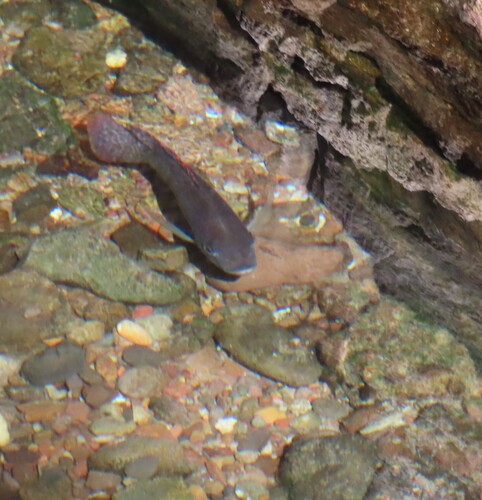
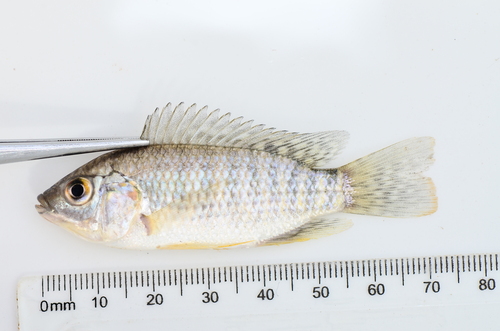
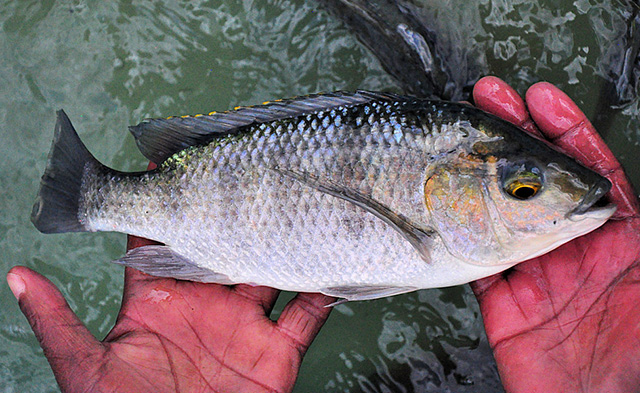
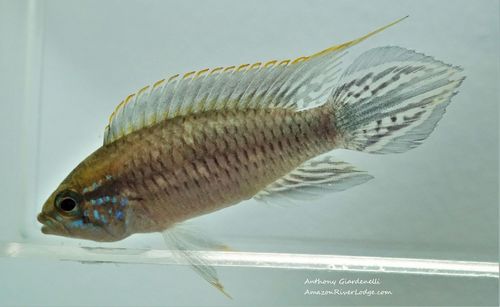
The Mozambique tilapia is a robust cichlid of the family Cichlidae reaching about 39 cm. The laterally compressed body is usually silvery-grey to olive; breeding males turn almost black with white fin margins. Its reproduction is distinctive: females are maternal mouthbrooders that shelter the fertilised eggs and the young in the mouth. The species is native to south-eastern Africa but has been introduced worldwide for aquaculture. As a result it is invasive in many warm regions, where it displaces native fish and hybridises with related tilapias. It is an omnivore, highly adaptable and tolerant of brackish water. Partly because of this pressure on wild populations the species is assessed as Vulnerable.
Frequently asked questions
How do you recognise the African mouthbrooder?
The African mouthbrooder has a torpedo-shaped body, is mainly silver-grey and shows a plain pattern.
Where does the African mouthbrooder live?
The African mouthbrooder lives in brackish water and is mostly found around mixed bottom.
How big does the African mouthbrooder get?
The African mouthbrooder grows to a maximum of about 39 cm. On average the species is around 35 cm.
Is the African mouthbrooder dangerous to humans?
No, the African mouthbrooder is harmless to humans.
Is the African mouthbrooder edible?
Yes, the African mouthbrooder is commonly eaten.
Download Fin's Fish Guide
Identify fish in seconds, log your catches and dives. Join the TestFlight beta.
All data
Identification
Appearance
Habitat & distribution
Behaviour & biology
For anglers
Safety
Status & sources
Same genus Oreochromis

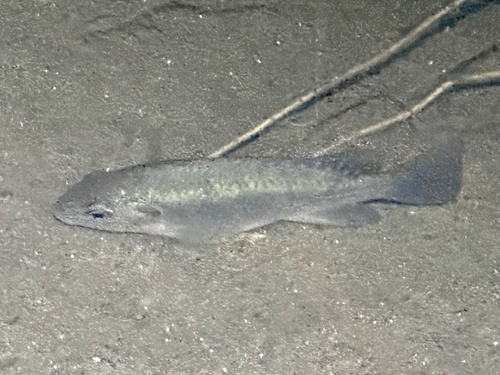
More from the family Cichlidae


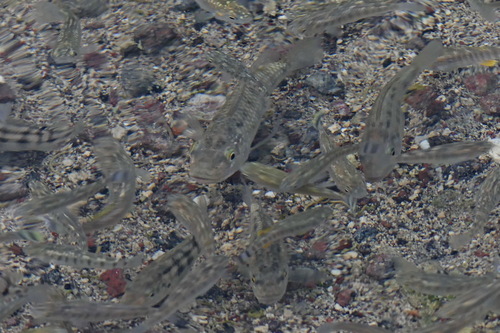
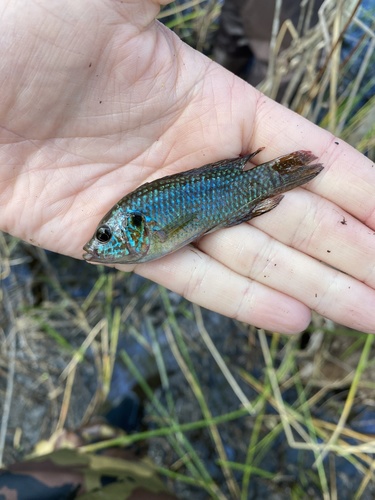

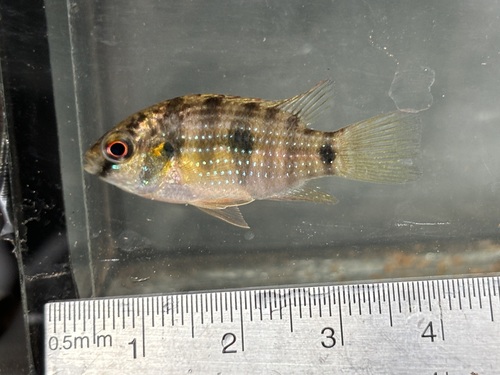
Download Fin's Fish Guide
Identify fish in seconds, log your catches and dives. Join the TestFlight beta.