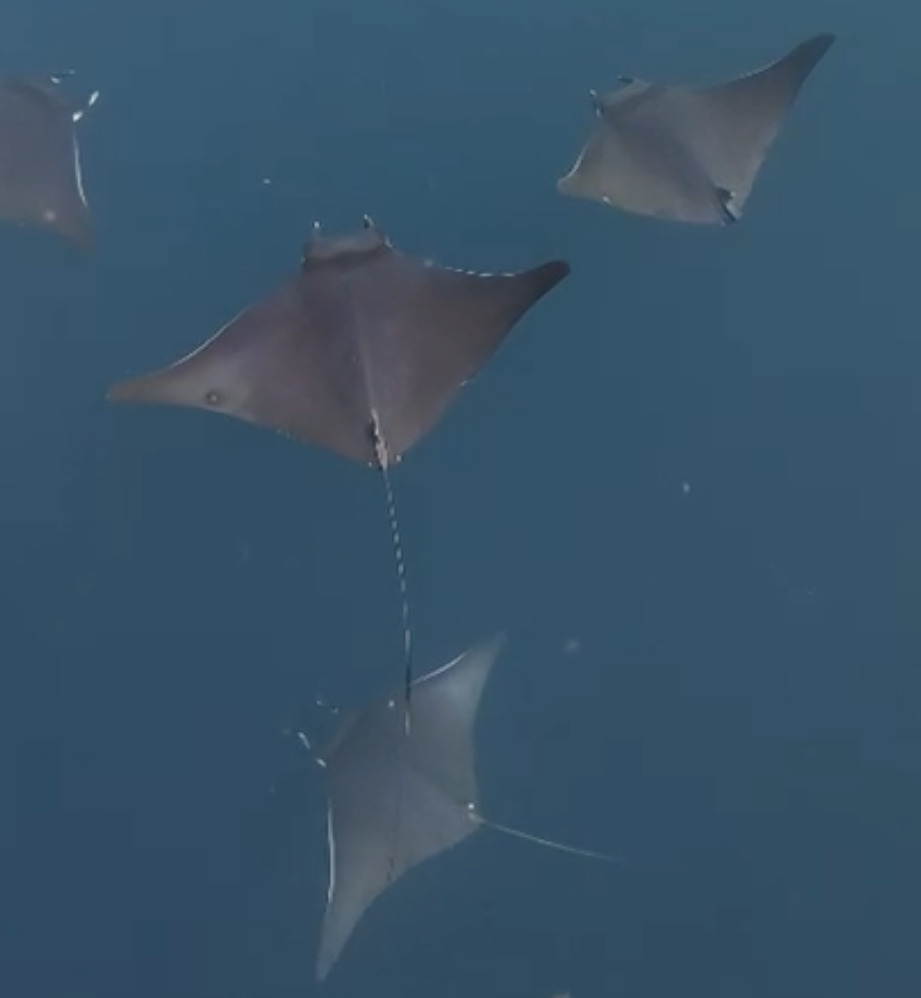
The Bentfin devil ray (Mobula thurstoni) is a saltwater fish of the family Myliobatidae that grows up to 220 cm.
Description
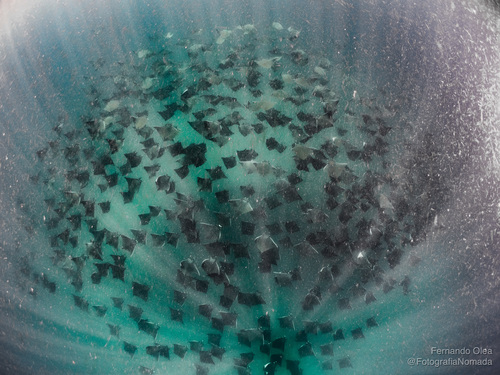
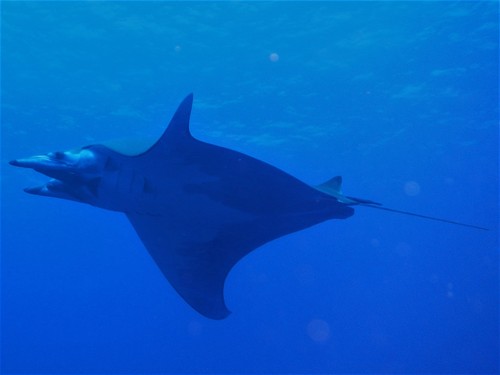
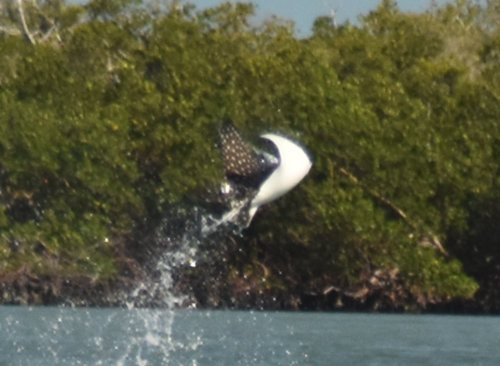
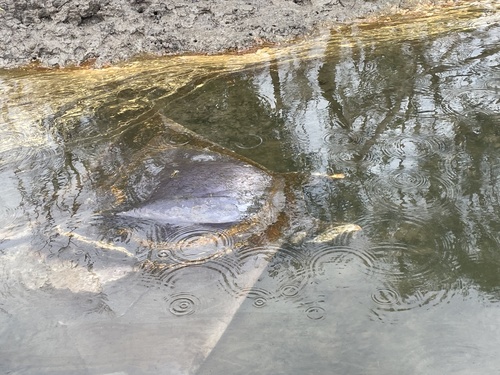
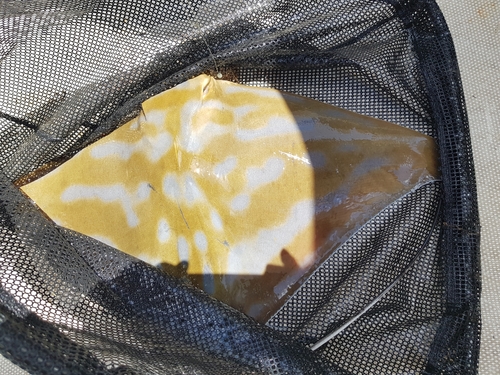
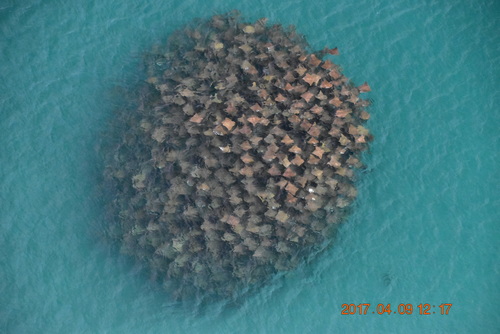
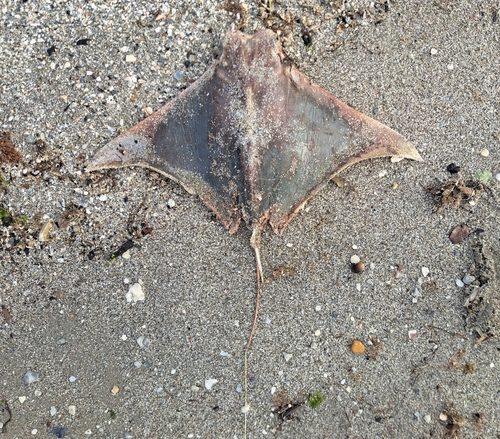
The bentfin devil ray is a large devil ray occurring worldwide in tropical seas. The species grows to about 2.2 metres disc width and has the wing-shaped pectoral fins characteristic of devil rays and two cephalic fins that guide food to the mouth. Unlike stingrays it has no venomous spine in the tail. It is a filter feeder that swims in schools through open water and strains planktonic crustaceans, mainly small shrimp, from the water. Through fishing for its gill plates and as by-catch it is listed as Critically Endangered (CR) on the IUCN Red List.
Frequently asked questions
How do you recognise the Bentfin devil ray?
The Bentfin devil ray has an irregular in shape body, is mainly black and shows a plain pattern.
Where does the Bentfin devil ray live?
The Bentfin devil ray lives in the sea (marine waters) and is mostly found around open water.
How big does the Bentfin devil ray get?
The Bentfin devil ray grows to a maximum of about 220 cm. On average the species is around 150 cm.
Is the Bentfin devil ray dangerous to humans?
No, the Bentfin devil ray is harmless to humans.
Is the Bentfin devil ray edible?
The Bentfin devil ray is rarely eaten.
Download Fin's Fish Guide
Identify fish in seconds, log your catches and dives. Join the TestFlight beta.
All data
Identification
Appearance
Habitat & distribution
Behaviour & biology
For anglers
Safety
Status & sources
Same genus Mobula
More from the family Myliobatidae
Download Fin's Fish Guide
Identify fish in seconds, log your catches and dives. Join the TestFlight beta.