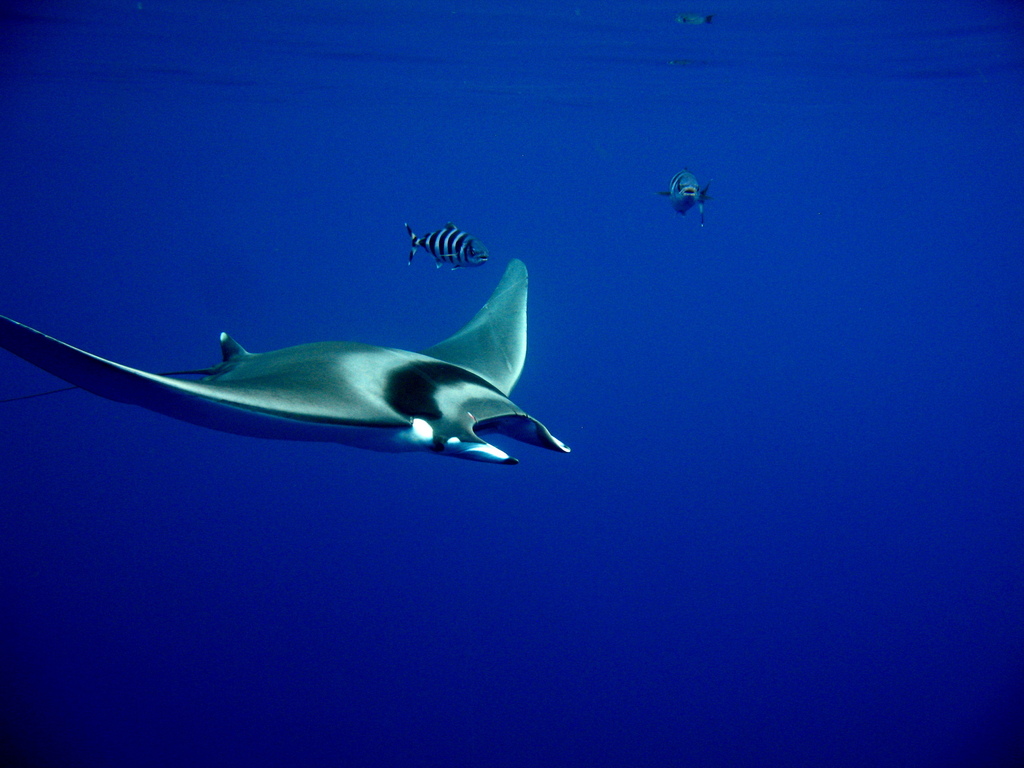
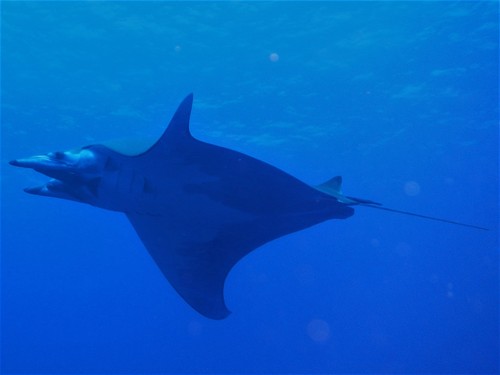
The Devilray (Mobula japanica) is a saltwater fish of the family Myliobatidae that grows up to 310 cm.
Description
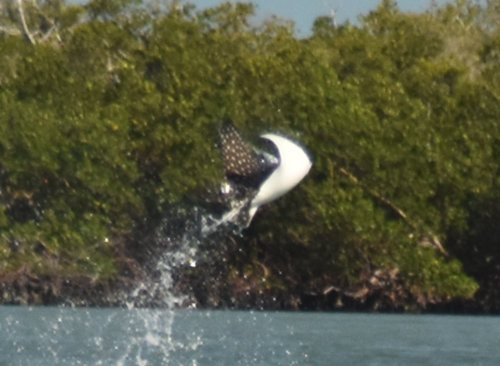
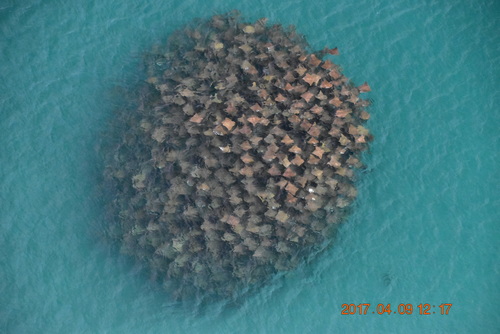
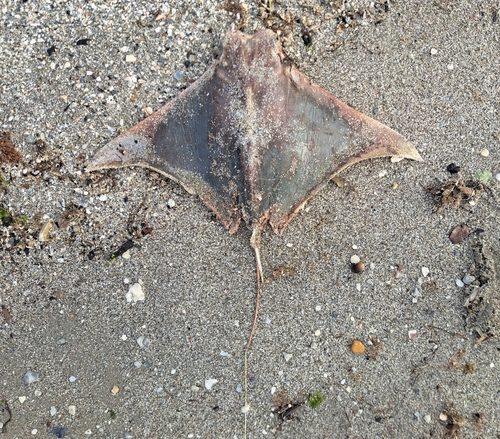
The spinetail devil ray is a large, plankton-feeding ray of the family Mobulidae found worldwide in tropical and temperate oceans. The species can reach a wingspan of over three metres and has a flattened, diamond-shaped body with large pectoral fins that serve as wings, and two cephalic fins with which it guides food to the mouth. It lives pelagically, both inshore and in oceanic waters, singly or in groups, and feeds mainly on krill, supplemented with copepods and crustacean larvae. The species is ovoviviparous and usually bears a single pup. It can leap spectacularly from the water.
Frequently asked questions
How do you recognise the Devilray?
The Devilray has an irregular in shape body, is mainly black and shows a plain pattern.
Where does the Devilray live?
The Devilray lives in the sea (marine waters) and is mostly found around stony or rocky ground.
How big does the Devilray get?
The Devilray grows to a maximum of about 310 cm. On average the species is around 225 cm.
Is the Devilray dangerous to humans?
No, the Devilray is harmless to humans.
Is the Devilray edible?
Yes, the Devilray is commonly eaten.
Download Fin's Fish Guide
Identify fish in seconds, log your catches and dives. Join the TestFlight beta.
All data
Identification
Appearance
Habitat & distribution
Behaviour & biology
For anglers
Safety
Status & sources
Same genus Mobula
More from the family Myliobatidae
Download Fin's Fish Guide
Identify fish in seconds, log your catches and dives. Join the TestFlight beta.