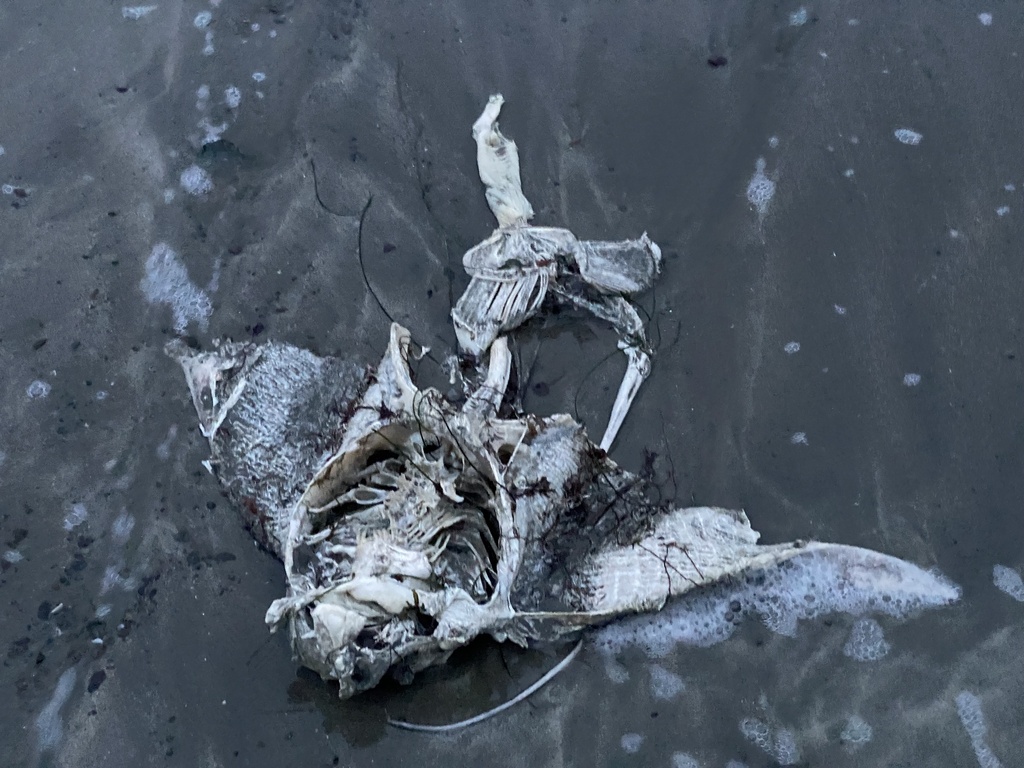
The Bat eagle ray (Myliobatis californica) is a saltwater fish of the family Myliobatidae that grows up to 180 cm.
Description
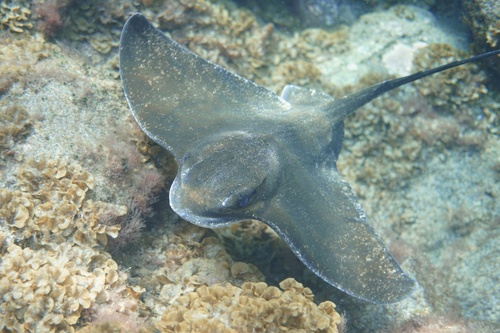
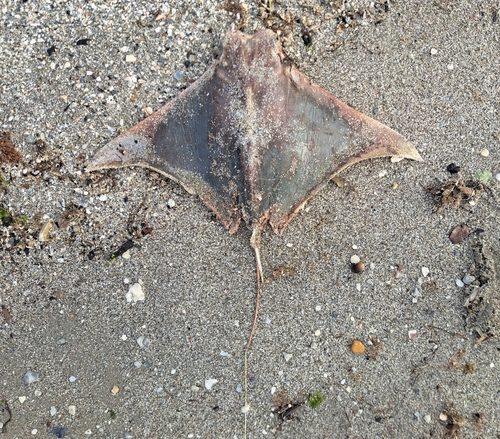
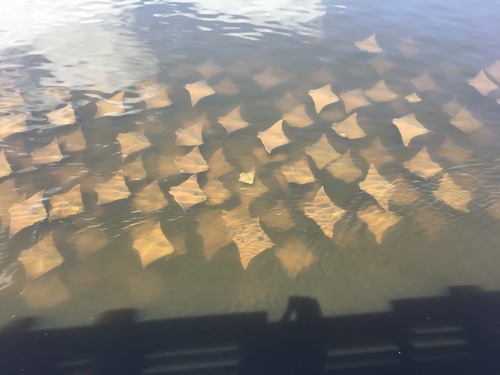
The bat ray is an eagle ray of the family Myliobatidae from the eastern Pacific. The species grows to about 1.8 metres wide and has a rhomboidal, wing-like pectoral disc, a high domed head and a long, whip-like tail. It 'flies' with powerful pectoral beats through sandy and muddy bays and tidal sloughs, and also occurs on rocky bottoms. With its flat jaw plates it crushes hard-shelled prey such as shellfish, crabs, shrimps and worms, which it digs out by blowing away sand. Reproduction is ovoviviparous. On the tail is a serrated, venomous spine; a sting causes severe pain, so keep your distance and do not step on a resting ray.
Frequently asked questions
How do you recognise the Bat eagle ray?
The Bat eagle ray has an irregular in shape body, is mainly brown and shows a plain pattern.
Where does the Bat eagle ray live?
The Bat eagle ray lives in the sea (marine waters) and is mostly found around sand or mud bottom.
How big does the Bat eagle ray get?
The Bat eagle ray grows to a maximum of about 180 cm. On average the species is around 100 cm.
Is the Bat eagle ray dangerous to humans?
The Bat eagle ray is venomous — handle spines with care and seek medical help after a sting if needed.
Is the Bat eagle ray edible?
The Bat eagle ray is rarely eaten.
Download Fin's Fish Guide
Identify fish in seconds, log your catches and dives. Join the TestFlight beta.
All data
Identification
Appearance
Habitat & distribution
Behaviour & biology
For anglers
Safety
Status & sources
Same genus Myliobatis
More from the family Myliobatidae
Download Fin's Fish Guide
Identify fish in seconds, log your catches and dives. Join the TestFlight beta.