Home · Tetraodontidae · False-eye toby
False-eye toby (Canthigaster solandri) — Tetraodontidae

False-eye toby

Canthigaster solandri
LC · Least Concern

The False-eye toby (Canthigaster solandri) is a saltwater fish of the family Tetraodontidae that grows up to 12 cm.

Length
12.1 cm
Water
Saltwater
Depth
10.0–36.0 m
Diet
Omnivore
Behaviour
Solitary
Body shape
Flat / disc-shaped
Substrate
Stone or rock
Danger
Harmless
Range
Indo-West Pacific; sheltered rocky and coral reefs and lagoons.
Edibility
Not eaten

Want the complete picture on the False-eye toby?

Get the app

Description

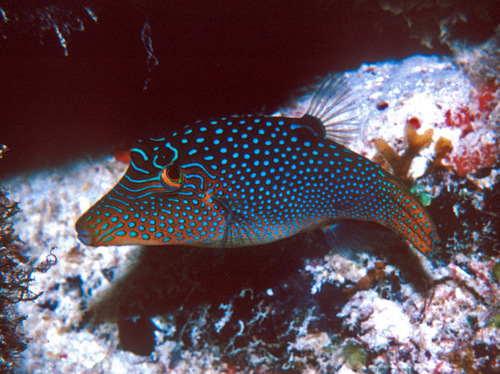
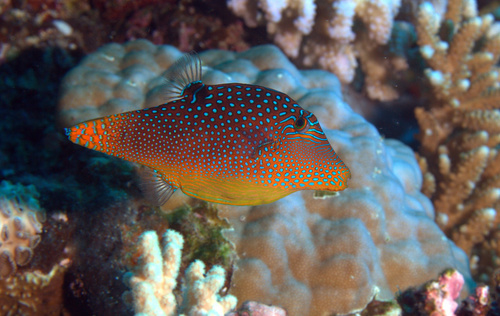
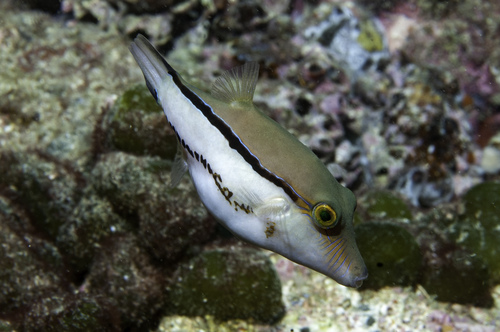
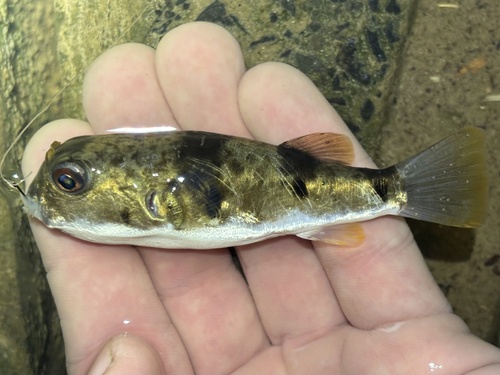
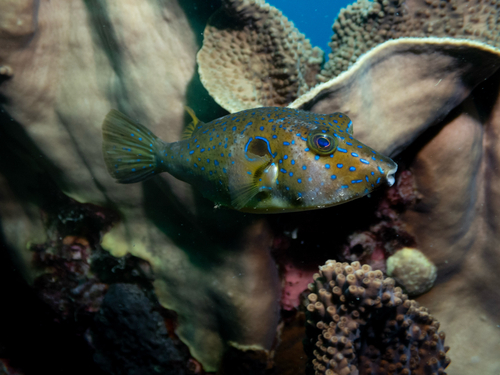
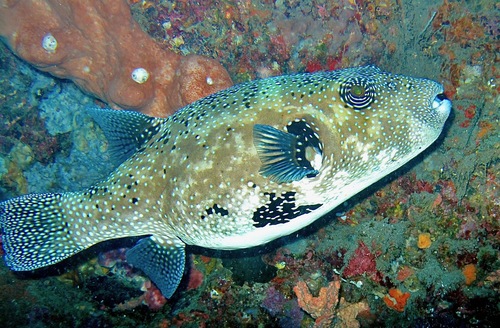
The spotted sharpnose puffer is a small puffer (Tetraodontidae) from the Indo-West Pacific. The species has a stocky, brownish body studded with light-blue spots and lines, with blue lines around the eyes and a dark eyespot at the base of the dorsal fin. It inhabits sheltered rock and coral reefs, intertidal flats and lagoons. As an omnivore it nibbles on a wide range of bottom organisms. Like other puffers it can inflate itself with water and its tissue contains the deadly poison tetrodotoxin; never eat this fish.

Frequently asked questions

How do you recognise the False-eye toby?

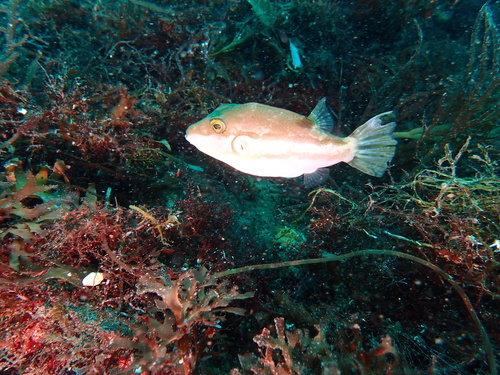
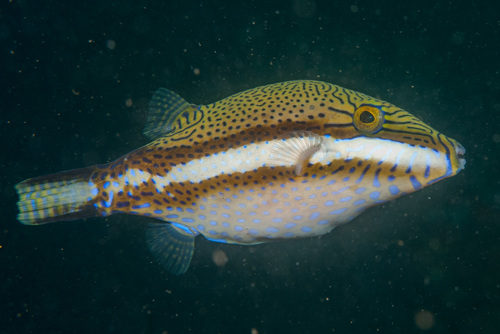
The False-eye toby has a flattened, disc-shaped body, is mainly brown and shows a spots pattern. Studded with light blue spots and an eyespot near the dorsal fin; contains the deadly toxin tetrodotoxin.

Where does the False-eye toby live?

The False-eye toby lives in the sea (marine waters) and is mostly found around stony or rocky ground. Indo-West Pacific; sheltered rocky and coral reefs and lagoons.

How big does the False-eye toby get?

The False-eye toby grows to a maximum of about 12 cm.

Is the False-eye toby dangerous to humans?

No, the False-eye toby is harmless to humans. The flesh, organs and skin can contain the deadly poison tetrodotoxin; never eat this fish. There is no antidote - if ingested, seek emergency medical care immediately.

Is the False-eye toby edible?

The False-eye toby is not usually eaten.

More photos

False-eye toby (Canthigaster solandri) — Tetraodontidae — 2
Wikimedia Commons — 探索墾丁~www.ekt.idv.tw~ (CC BY-SA 2.0)
False-eye toby (Canthigaster solandri) — Tetraodontidae — 3
iNaturalist ((c) uwkwaj, some rights reserved (CC BY-NC))
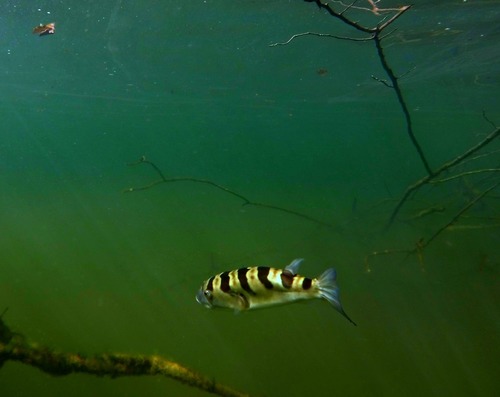
False-eye toby (Canthigaster solandri) — Tetraodontidae — 4
iNaturalist ((c) craigjhowe, some rights reserved (CC BY-NC))
False-eye toby (Canthigaster solandri) — Tetraodontidae — 5
Wikimedia Commons — 探索墾丁~www.ekt.idv.tw~ (CC BY-SA 2.0)
Fin

Want the complete picture on the False-eye toby?

Point your camera at the fish and Fin names the species in seconds. Free, and the False-eye toby is one of 12,519 species in the app.

Get the app →

All data

Identification

English name
False-eye toby verified
Scientific name
Canthigaster solandri
Family
Tetraodontidae
Other names
Jewel pufferfish; Netted pufferfish; Sharpbacked puffer; Spotted sharpnose; Spotted sharpnose puffer; Spotted toby verified

Appearance

Size class
Small verified
Max length (cm)
12.1 verified
Body shape
Flat / disc-shaped sourced
Dominant colour
Brown inferred
Pattern
Spots inferred
Tail shape
Rounded inferred
Mouth position
Terminal inferred
Lips
Thick / fleshy inferred
Barbels
No sourced
Dorsal fins
One continuous inferred
Dorsal spines
No sourced

Habitat & distribution

Water type
Saltwater sourced
Substrate
Stone or rock sourced
Min depth (m)
10.0 verified
Max depth (m)
36.0 verified
Natural range
Indo-West Pacific; sheltered rocky and coral reefs and lagoons. inferred
Origin
Native sourced

Behaviour & biology

Diet
Omnivore sourced
Diet (detail)
Various bottom organisms (algae, invertebrates) sourced
Social behaviour
Solitary inferred
Territorial
No inferred
Reproduction
Separate sexes sourced
Sexual dimorphism
No inferred
Seasonality
Present year-round in its habitat; no pronounced seasonality known. inferred
Special features
Studded with light blue spots and an eyespot near the dorsal fin; contains the deadly toxin tetrodotoxin. sourced

For anglers

Edibility
Not eaten sourced
Fishing method
Not a target species for angling; at most an incidental catch or usable as baitfish. inferred
Regulations source
FishBase ↗ inferred

Safety

Danger to humans
Harmless sourced
First aid
The flesh, organs and skin can contain the deadly poison tetrodotoxin; never eat this fish. There is no antidote - if ingested, seek emergency medical care immediately. sourced

Status & sources

Sources
FishBase via GBIF (DwC-A), CC-BY-NC 4.0

Same genus Canthigaster

More from the family Tetraodontidae
Fin

Want the complete picture on the False-eye toby?

Point your camera at the fish and Fin names the species in seconds. Free, and the False-eye toby is one of 12,519 species in the app.

Get the app →
Is this the False-eye toby? Get the app