 Fin's Fish Guide
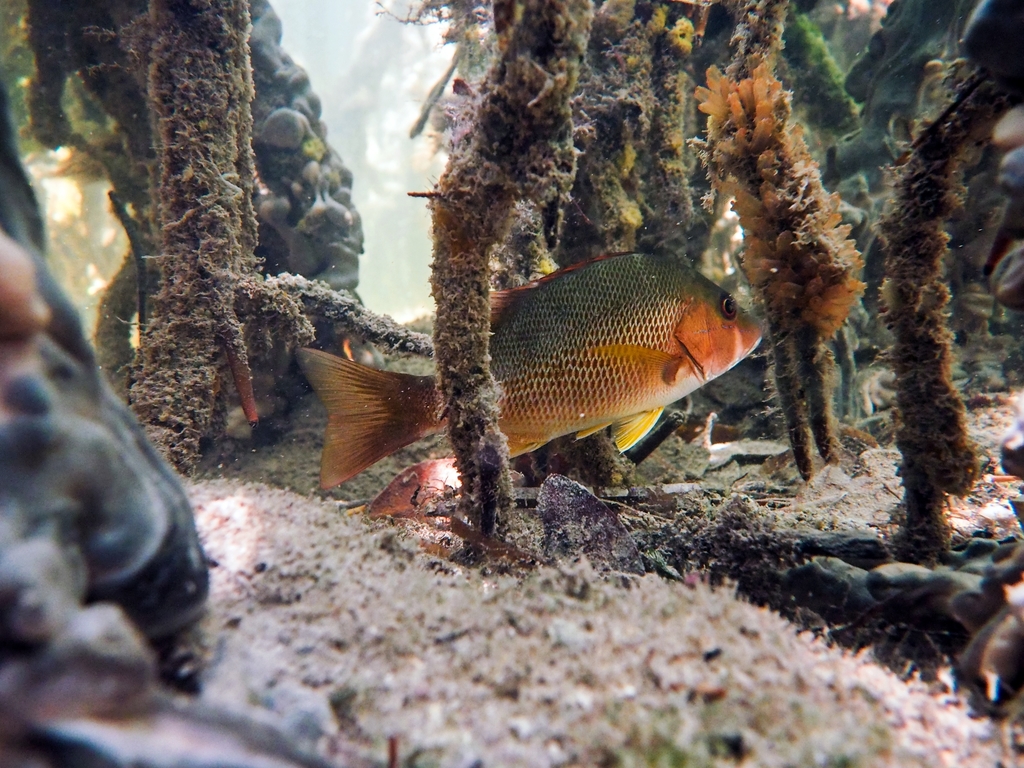
The Dog snapper (Lutjanus jocu) is a fish that lives in both fresh and salt water of the family Lutjanidae that grows up to 128 cm.
Western Atlantic and Caribbean; rocky and coral reefs, estuaries for the juveniles.
Description
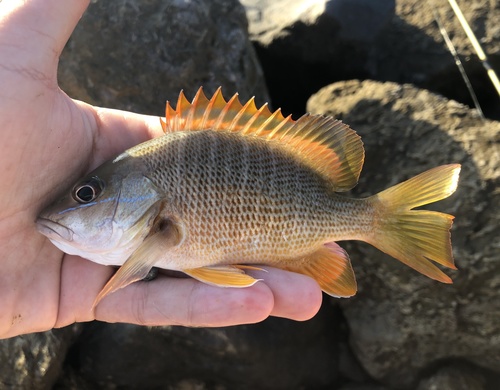
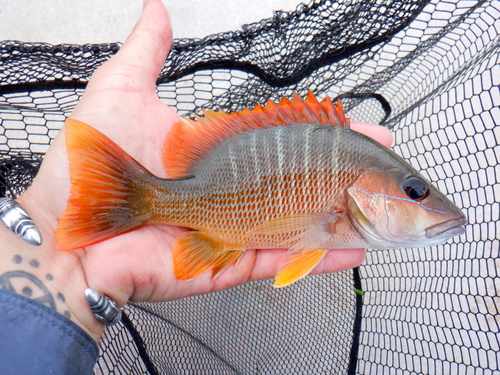
The dog snapper is a large snapper of the family Lutjanidae from the western Atlantic and Caribbean. The species grows to about 128 cm and has a red-brown body with a pale triangular mark below the eye and conspicuously large canine teeth, to which its name refers. Adults live around rocky and coral reefs, while juveniles grow up in estuaries and sometimes enter rivers. As a predator it feeds mainly on fishes and benthic invertebrates. The dog snapper is a valued sport and food fish, but large reef specimens can contain ciguatera. Owing to limited data the species is assessed as Data Deficient (DD).
Frequently asked questions
How do you recognise the Dog snapper?
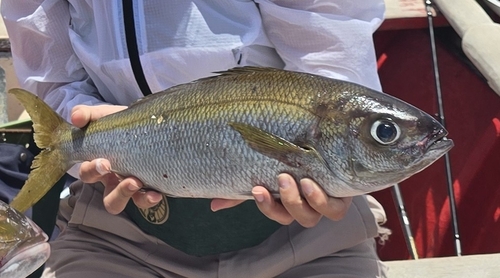
The Dog snapper has a torpedo-shaped body, is mainly red-orange and shows a plain pattern. Pale triangular blotch below the eye and large canine teeth; large specimens may contain ciguatera.
Where does the Dog snapper live?
The Dog snapper lives in both fresh and salt water and is mostly found around stony or rocky ground. Western Atlantic and Caribbean; rocky and coral reefs, estuaries for the juveniles.
How big does the Dog snapper get?
The Dog snapper grows to a maximum of about 128 cm. On average the species is around 60 cm.
Is the Dog snapper dangerous to humans?
The Dog snapper is venomous — handle spines with care and seek medical help after a sting if needed. The flesh can contain ciguatera in tropical areas; do not eat large reef specimens from risk areas. In case of poisoning (tingling, gastrointestinal symptoms, temperature-reversal sensation), seek medical care.
Is the Dog snapper edible?
Yes, the Dog snapper is commonly eaten.
More photos
Easily confused with
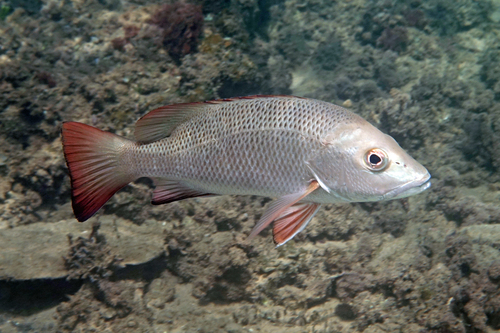
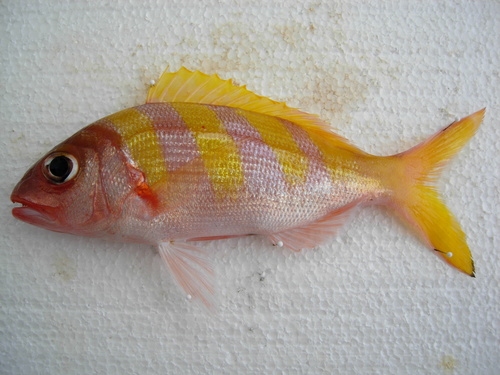
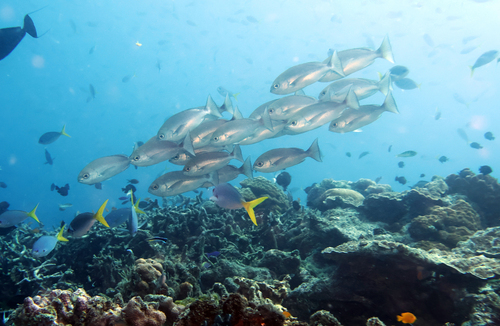
These species look like the Dog snapper and live in the same waters.

Want the complete picture on the Dog snapper?
Point your camera at the fish and Fin names the species in seconds. Free, and the Dog snapper is one of 12,519 species in the app.
All data
Identification
Appearance
Habitat & distribution
Behaviour & biology
For anglers
Safety
Status & sources
Same genus Lutjanus
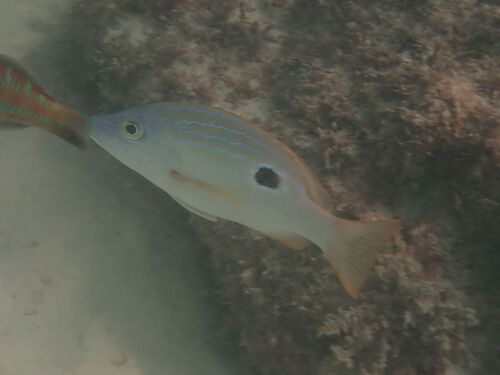
More from the family Lutjanidae
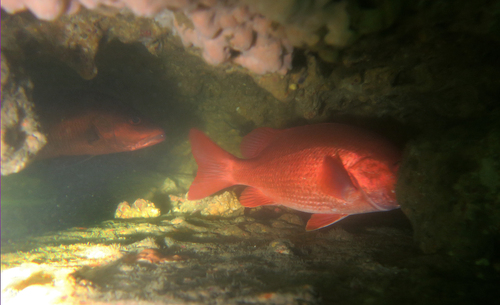
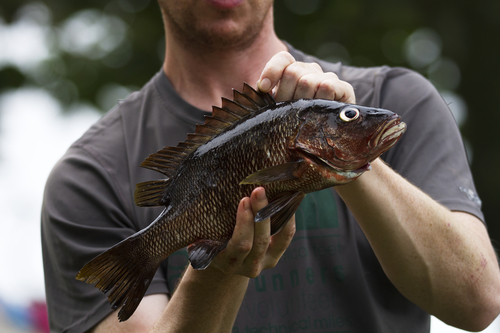
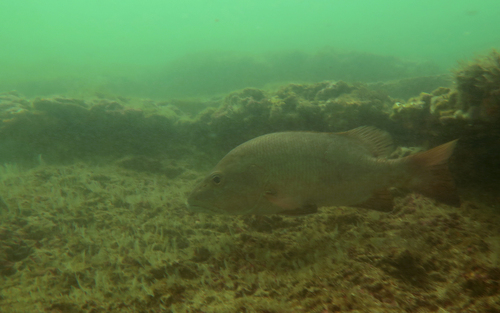


Want the complete picture on the Dog snapper?
Point your camera at the fish and Fin names the species in seconds. Free, and the Dog snapper is one of 12,519 species in the app.