Home · Cichlidae · Blue tilapia
Blue tilapia (Coptodon rendalli) — Cichlidae

Blue tilapia

Coptodon rendalli
Family: Cichlidae
LC · Least Concern
NativeIntroduced

The Blue tilapia (Coptodon rendalli) is a brackish-water fish of the family Cichlidae that grows up to 45 cm.

Length
45 cm
Water
Brackish
Depth
3.0–8.0 m
Diet
Herbivore
Behaviour
Schooling
Activity
Diurnal
Body shape
Torpedo-shaped
Substrate
Mixed bottom
Danger
Harmless
Range
Central, East and Southern Africa: from the Congo basin to the Zambezi, the Limpopo, Lake Malawi and Lake Tanganyika.
Edibility
Commonly eaten

Want the complete picture on the Blue tilapia?

Get the app

Description

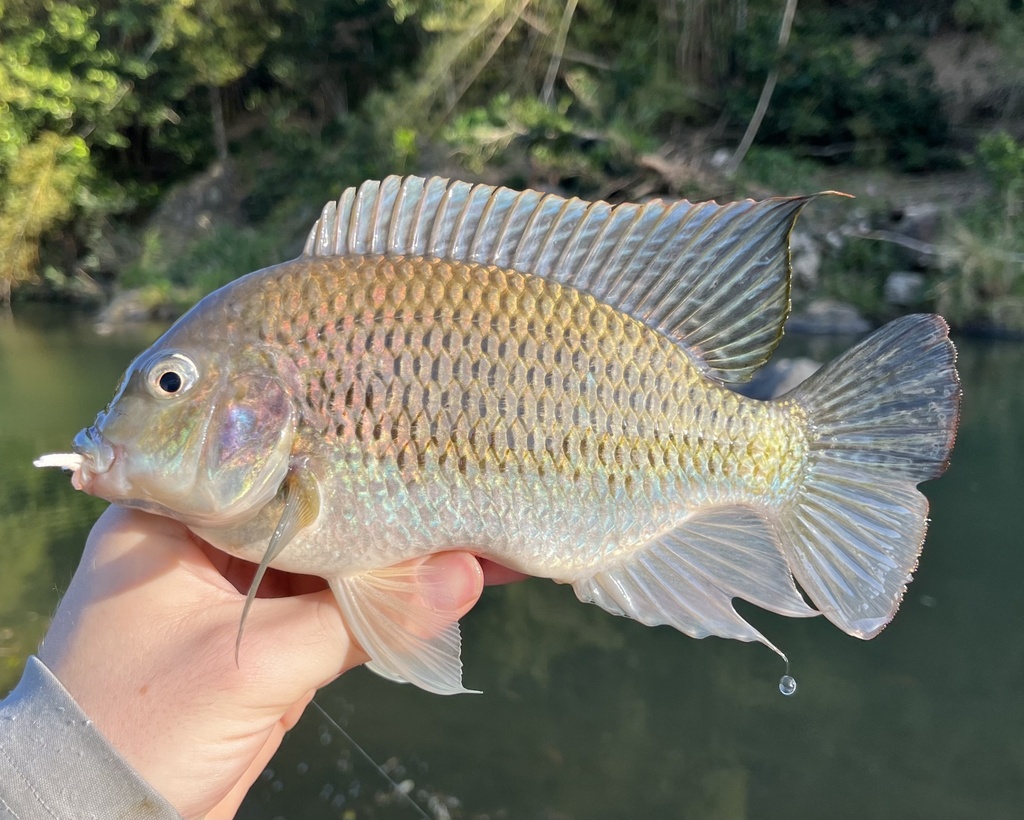
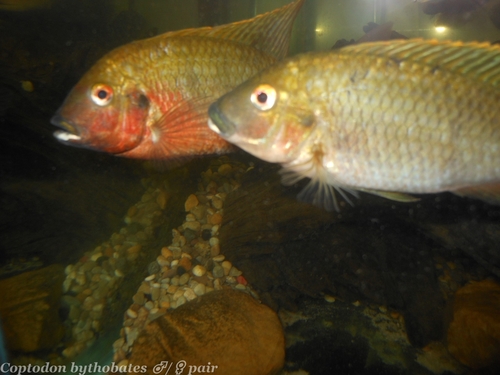
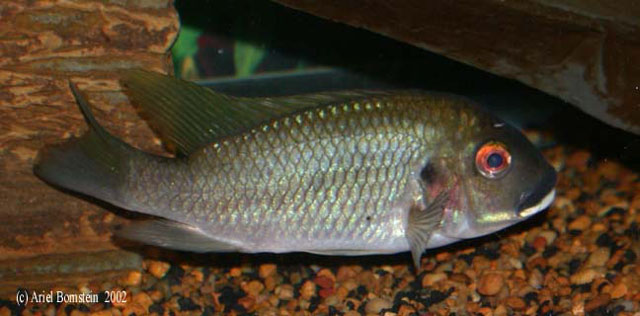
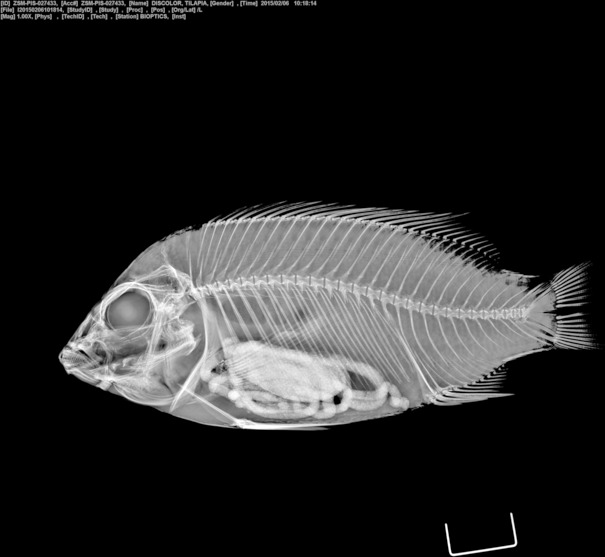
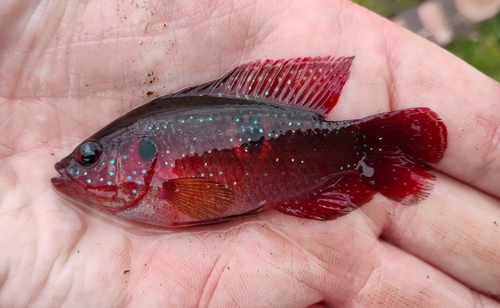
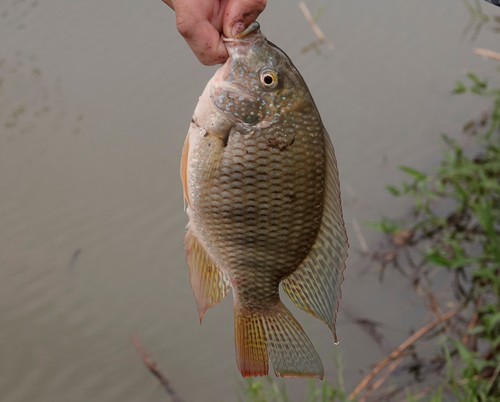
The redbreast tilapia is a deep-bodied freshwater cichlid reaching about 45 cm. The body has a steep head profile, a narrow head and a small mouth; many individuals are brownish with a white belly, but some show a bright red breast and belly, giving the species its name. The redbreast tilapia is a herbivore feeding on water plants, algae and detritus. It lives in still, well-vegetated water across central, eastern and southern Africa and has been introduced elsewhere for aquaculture, locally with adverse effects. Unlike many related tilapias it is a substrate brooder: a parent pair digs a pit and together guards the eggs and young.

Frequently asked questions

How do you recognise the Blue tilapia?

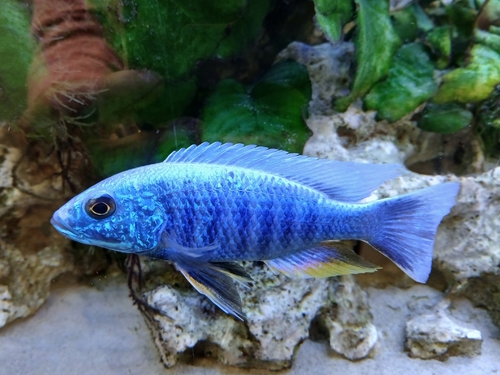
The Blue tilapia has a torpedo-shaped body, is mainly brown and shows a plain pattern. Deep-bodied cichlid with a steep head, small mouth and in some individuals a bright red breast and belly; substrate brooder in which both parents guard the young.

Where does the Blue tilapia live?

The Blue tilapia lives in brackish water and is mostly found around mixed bottom. Central, East and Southern Africa: from the Congo basin to the Zambezi, the Limpopo, Lake Malawi and Lake Tanganyika.

How big does the Blue tilapia get?

The Blue tilapia grows to a maximum of about 45 cm.

Is the Blue tilapia dangerous to humans?

No, the Blue tilapia is harmless to humans. None required: this species is harmless to humans.

Is the Blue tilapia edible?

Yes, the Blue tilapia is commonly eaten.

More photos
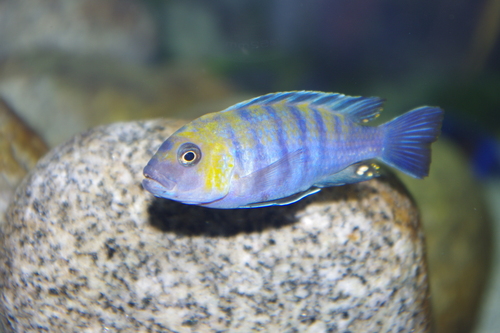
Blue tilapia (Coptodon rendalli) — Cichlidae — 2
iNaturalist ((c) Doug Macdonald, some rights reserved (CC BY-NC))
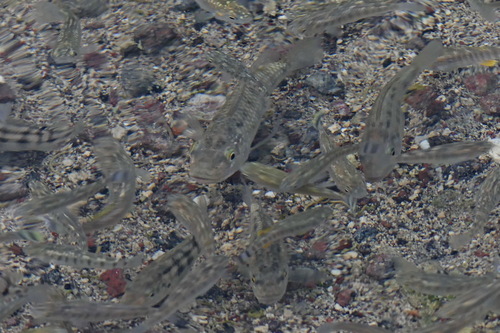
Blue tilapia (Coptodon rendalli) — Cichlidae — 3
Wikimedia Commons — Bernard DUPONT from FRANCE (CC BY-SA 2.0)
Blue tilapia (Coptodon rendalli) — Cichlidae — 4
Wikimedia Commons — South African Institute for Aquatic Biodiversity (CC BY-SA 4.0)
Blue tilapia (Coptodon rendalli) — Cichlidae — 5
Wikimedia Commons — Wynand Uys (CC BY 4.0)
Fin

Want the complete picture on the Blue tilapia?

Point your camera at the fish and Fin names the species in seconds. Free, and the Blue tilapia is one of 12,519 species in the app.

Get the app →

All data

Identification

English name
Blue tilapia verified
Scientific name
Coptodon rendalli
Family
Cichlidae
Other names
Congo perch; Congo tilapia; Northern redbreast bream; Red-breasted tilapia; Redbreast tilapia; Redbreasted bream; Red-breasted bream; Rendall's redbreast tilapia verified

Appearance

Size class
Large verified
Max length (cm)
45.0 verified
Body shape
Torpedo-shaped sourced
Dominant colour
Brown sourced
Pattern
Plain sourced
Tail shape
Straight sourced
Mouth position
Terminal inferred
Barbels
No verified
Dorsal fins
One continuous sourced
Dorsal spines
Yes verified

Habitat & distribution

Water type
Brackish sourced
Substrate
Mixed bottom sourced
Min depth (m)
3.0 verified
Max depth (m)
8.0 verified
Natural range
Central, East and Southern Africa: from the Congo basin to the Zambezi, the Limpopo, Lake Malawi and Lake Tanganyika. verified
Origin
Non-native (invasive) verified

Behaviour & biology

Diet
Herbivore verified
Diet (detail)
Algae, seaweeds and plant material inferred
Social behaviour
Schooling verified
Territorial
Yes verified
Activity
Diurnal sourced
Reproduction
Separate sexes verified
Sexual dimorphism
No verified
levensduur_max_jaar
7 verified
Seasonality
Substrate brooder: a pair of parents digs a pit in the mud and together guards the eggs and young. sourced
Special features
Deep-bodied cichlid with a steep head, small mouth and in some individuals a bright red breast and belly; substrate brooder in which both parents guard the young. sourced

For anglers

Edibility
Commonly eaten verified
Fishing method
Bottom fishing with natural bait (worm, shrimp or fish) on or just above the seabed. inferred
Regulations source
FishBase ↗ inferred

Safety

Danger to humans
Harmless verified
First aid
None required: this species is harmless to humans. sourced

Status & sources

Sources
FishBase via GBIF (DwC-A), CC-BY-NC 4.0

Same genus Coptodon

More from the family Cichlidae

Fin

Want the complete picture on the Blue tilapia?

Point your camera at the fish and Fin names the species in seconds. Free, and the Blue tilapia is one of 12,519 species in the app.

Get the app →
Is this the Blue tilapia? Get the app