Home · Labridae · Blacktail wrasse
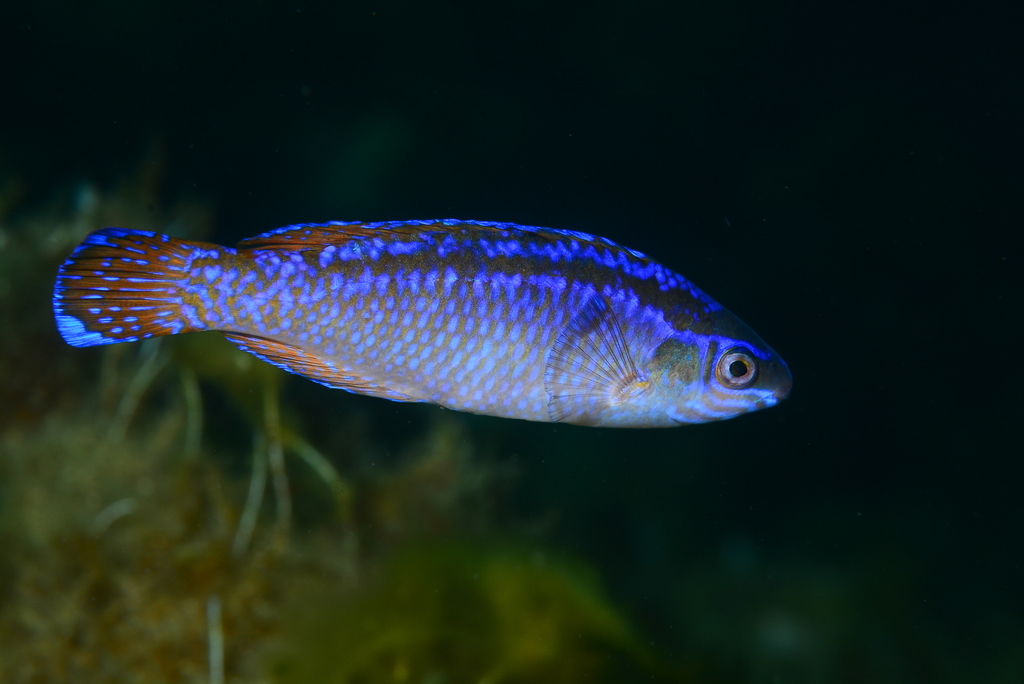
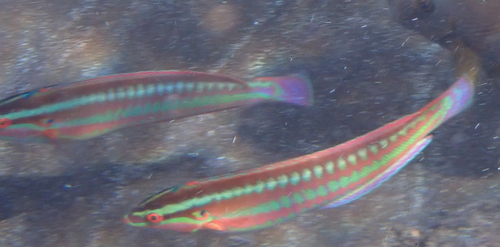
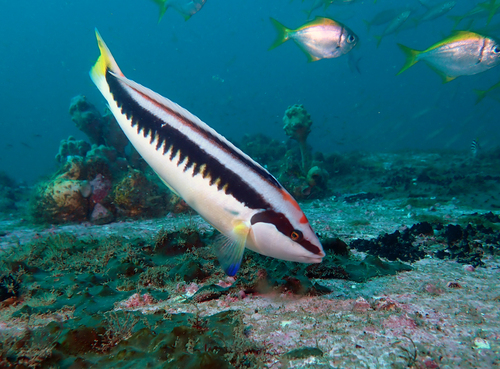
Blacktail wrasse (Centrolabrus melanocercus) — Labridae

Blacktail wrasse

Centrolabrus melanocercus
Family: Labridae

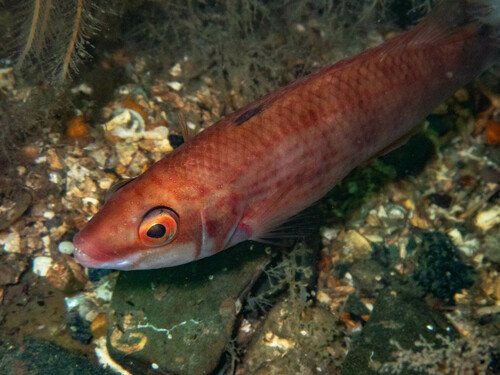
The Blacktail wrasse (Centrolabrus melanocercus) is a saltwater fish of the family Labridae that grows up to 14 cm.

Length
14 cm
Water
Saltwater
Depth
1.0–25.0 m
Diet
Carnivore
Activity
Diurnal
Body shape
Torpedo-shaped
Substrate
Stone or rock
Danger
Harmless
Range
Europe: Albania, Algeria, Cyprus, France, Greece, Israel and others

Want the complete picture on the Blacktail wrasse?

Get the app

Description

The blacktail wrasse is a small wrasse (Labridae) from the eastern Atlantic and Mediterranean. The species grows to about 14 cm and has an elongate, brown-green body with a dark band at the tail base. As a reef-dweller it lives over rocky bottoms and seagrass beds and picks small invertebrates; juveniles sometimes act as cleaners, removing parasites from other fish. The fish is harmless to humans.

Frequently asked questions

How do you recognise the Blacktail wrasse?

The Blacktail wrasse has a torpedo-shaped body and is mainly green.

Where does the Blacktail wrasse live?

The Blacktail wrasse lives in the sea (marine waters) and is mostly found around stony or rocky ground. Europe: Albania, Algeria, Cyprus, France, Greece, Israel and others

How big does the Blacktail wrasse get?

The Blacktail wrasse grows to a maximum of about 14 cm. On average the species is around 11 cm.

Is the Blacktail wrasse dangerous to humans?

No, the Blacktail wrasse is harmless to humans. This species is harmless to humans. No specific first aid is needed. Still handle the fish with care: mind the fin rays and the sharp edges of the gill cover, and rinse any scratch with clean water and cover it. For a dirty or deep wound check tetanus status.

More photos
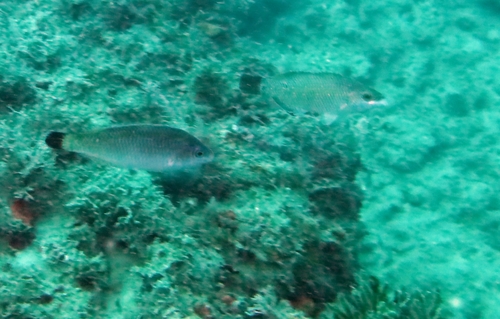
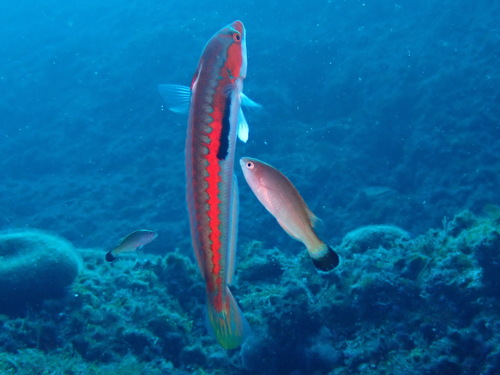
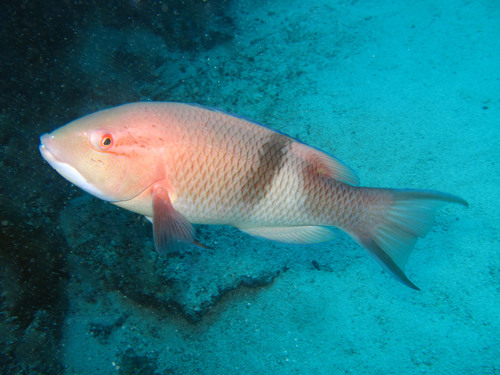
Blacktail wrasse (Centrolabrus melanocercus) — Labridae — 2
iNaturalist ((c) Xavier Rufray, some rights reserved (CC BY-NC))
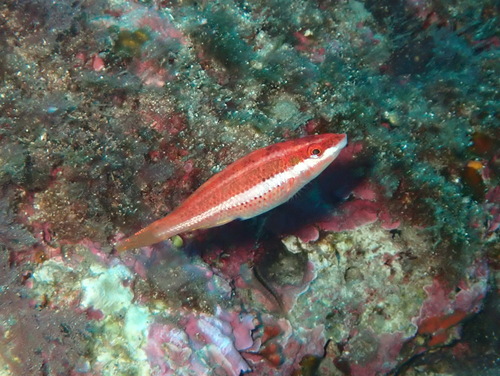
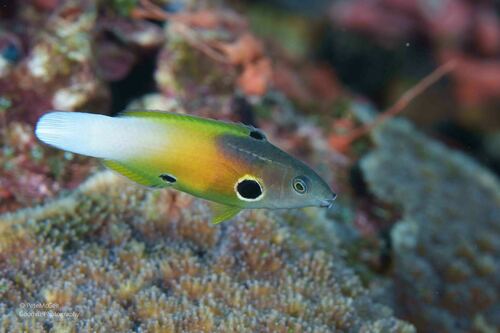
Blacktail wrasse (Centrolabrus melanocercus) — Labridae — 3
iNaturalist ((c) Sylvain Le Bris, some rights reserved (CC BY-NC))

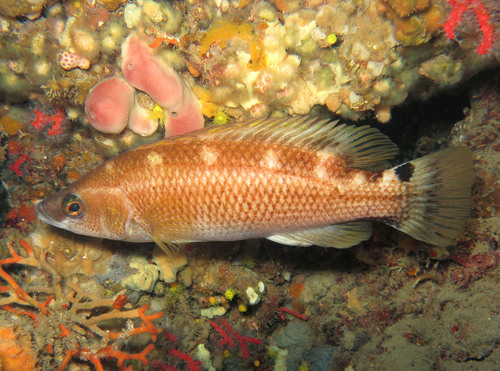
Easily confused with

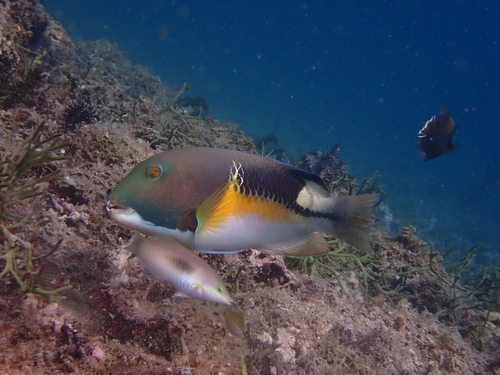
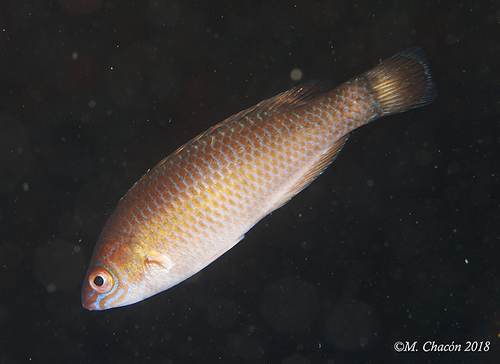
These species look like the Blacktail wrasse and live in the same waters.
Fin

Want the complete picture on the Blacktail wrasse?

Point your camera at the fish and Fin names the species in seconds. Free, and the Blacktail wrasse is one of 12,519 species in the app.

Get the app →

All data

Identification

English name
Blacktail wrasse sourced
Scientific name
Centrolabrus melanocercus
Family
Labridae

Appearance

Size class
Small verified
Max length (cm)
14.0 verified
Average length (cm)
11.0 verified
Body shape
Torpedo-shaped sourced
Dominant colour
Green sourced
Tail shape
Straight inferred

Habitat & distribution

Water type
Saltwater sourced
Substrate
Stone or rock sourced
Min depth (m)
1.0 verified
Max depth (m)
25.0 verified
Natural range
Europe: Albania, Algeria, Cyprus, France, Greece, Israel and others sourced
Origin
Native inferred

Behaviour & biology

Diet
Carnivore inferred
Diet (detail)
Small fishes, crustaceans and invertebrates inferred
Territorial
No inferred
Activity
Diurnal inferred
Reproduction
Separate sexes inferred
Sexual dimorphism
Yes inferred
Seasonality
Present year-round in its habitat; no pronounced seasonality known. inferred

For anglers

Fishing method
Small in size and barely an angling target; mostly caught incidentally or as baitfish. inferred
Regulations source
FishBase ↗ inferred

Safety

Danger to humans
Harmless verified
First aid
This species is harmless to humans. No specific first aid is needed. Still handle the fish with care: mind the fin rays and the sharp edges of the gill cover, and rinse any scratch with clean water and cover it. For a dirty or deep wound check tetanus status. verified

Status & sources

Sources
FishBase via GBIF (DwC-A), CC-BY-NC 4.0

Same genus Centrolabrus

More from the family Labridae

Fin

Want the complete picture on the Blacktail wrasse?

Point your camera at the fish and Fin names the species in seconds. Free, and the Blacktail wrasse is one of 12,519 species in the app.

Get the app →
Is this the Blacktail wrasse? Get the app