 Fin's Fish Guide
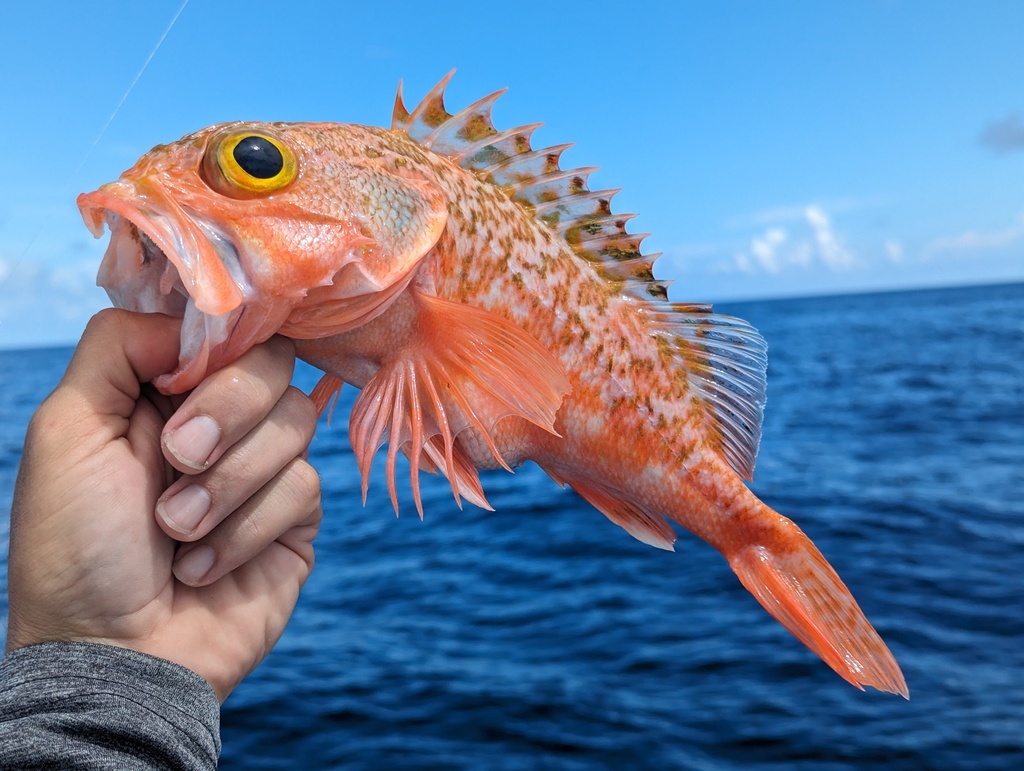
The Blackbelly rosefish (Helicolenus dactylopterus) is a saltwater fish of the family Sebastidae that grows up to 50 cm.
Western Atlantic from Nova Scotia to Venezuela; eastern Atlantic from Iceland to the Mediterranean Sea, the Gulf of Guinea and southern Africa.
Description
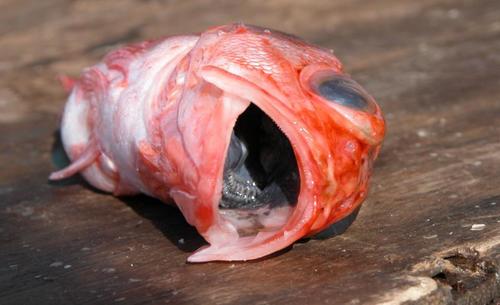
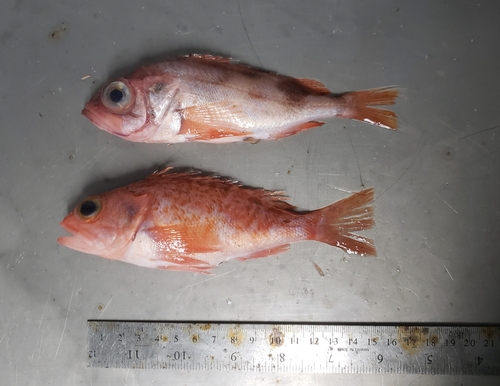
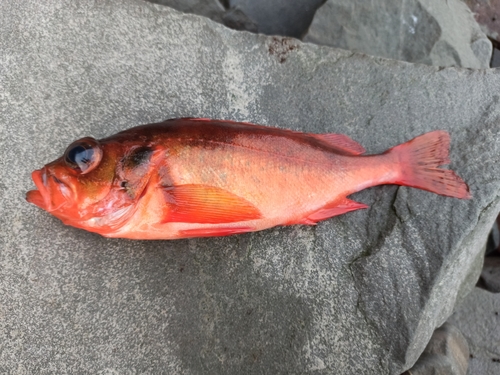
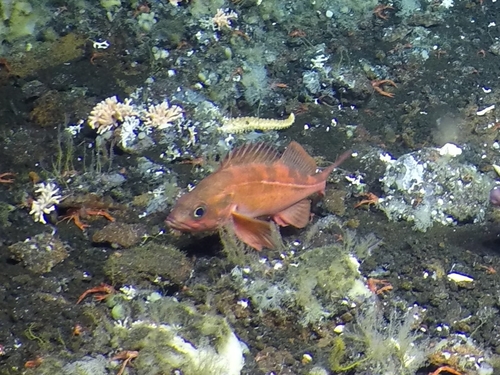
The blackbelly rosefish is a deep-water redfish of the family Sebastidae reaching about 50 cm and exceptionally long-lived (up to 43 years). The pinkish body bears faint dark bars and a Y-shaped dark band between the soft dorsal and anal fins; the belly cavity is black. The fin spines carry venom glands and can deliver a painful sting. The species lives sedentarily on soft bottoms of the continental shelf and upper slope of the Atlantic and Mediterranean, usually between 150 and 600 m, eating crustaceans, fish, cephalopods and echinoderms. It is a valued food fish taken in deep-water fisheries.
Frequently asked questions
How do you recognise the Blackbelly rosefish?
The Blackbelly rosefish has a torpedo-shaped body, is mainly red-orange and shows a vertical stripes pattern. Pink deep-water redfish with faint dark vertical bars and a black-coloured body cavity; the fin spines bear venom glands.
Where does the Blackbelly rosefish live?
The Blackbelly rosefish lives in the sea (marine waters) and is mostly found around sand or mud bottom. Western Atlantic from Nova Scotia to Venezuela; eastern Atlantic from Iceland to the Mediterranean Sea, the Gulf of Guinea and southern Africa.
How big does the Blackbelly rosefish get?
The Blackbelly rosefish grows to a maximum of about 50 cm. On average the species is around 25 cm.
Is the Blackbelly rosefish dangerous to humans?
The Blackbelly rosefish is venomous — handle spines with care and seek medical help after a sting if needed. The fin spines are venomous and cause a painful sting. Immerse the wound in hot water (~45 °C) for 30-90 minutes to break down the venom, remove any spine fragments, and seek medical help for severe pain or swelling.
Is the Blackbelly rosefish edible?
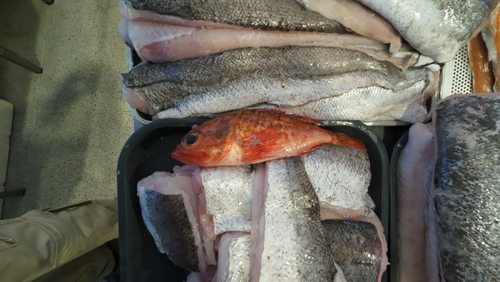
Yes, the Blackbelly rosefish is commonly eaten.
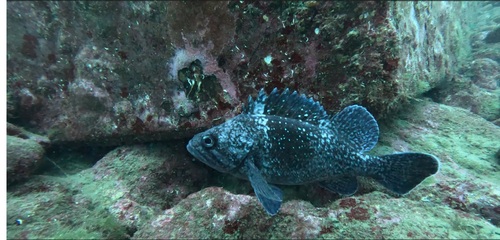
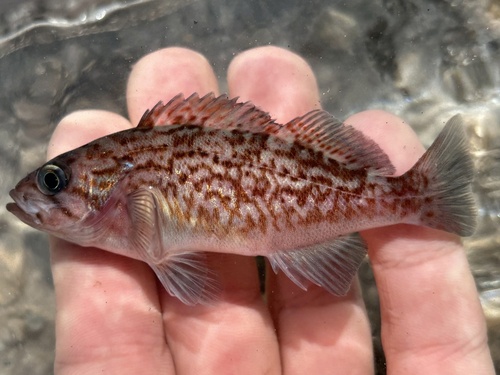
More photos
Easily confused with
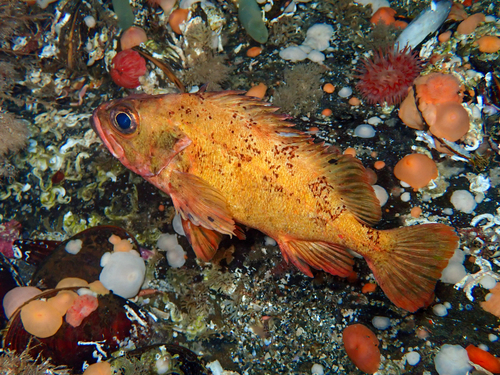
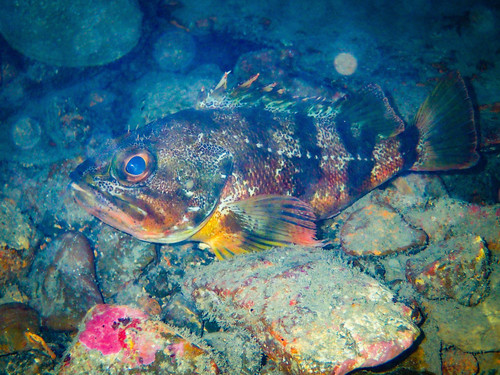
These species look like the Blackbelly rosefish and live in the same waters.

Want the complete picture on the Blackbelly rosefish?
Point your camera at the fish and Fin names the species in seconds. Free, and the Blackbelly rosefish is one of 12,519 species in the app.
All data
Identification
Appearance
Habitat & distribution
Behaviour & biology
For anglers
Safety
Status & sources
Same genus Helicolenus

More from the family Sebastidae




Want the complete picture on the Blackbelly rosefish?
Point your camera at the fish and Fin names the species in seconds. Free, and the Blackbelly rosefish is one of 12,519 species in the app.