 Fin's Fish Guide
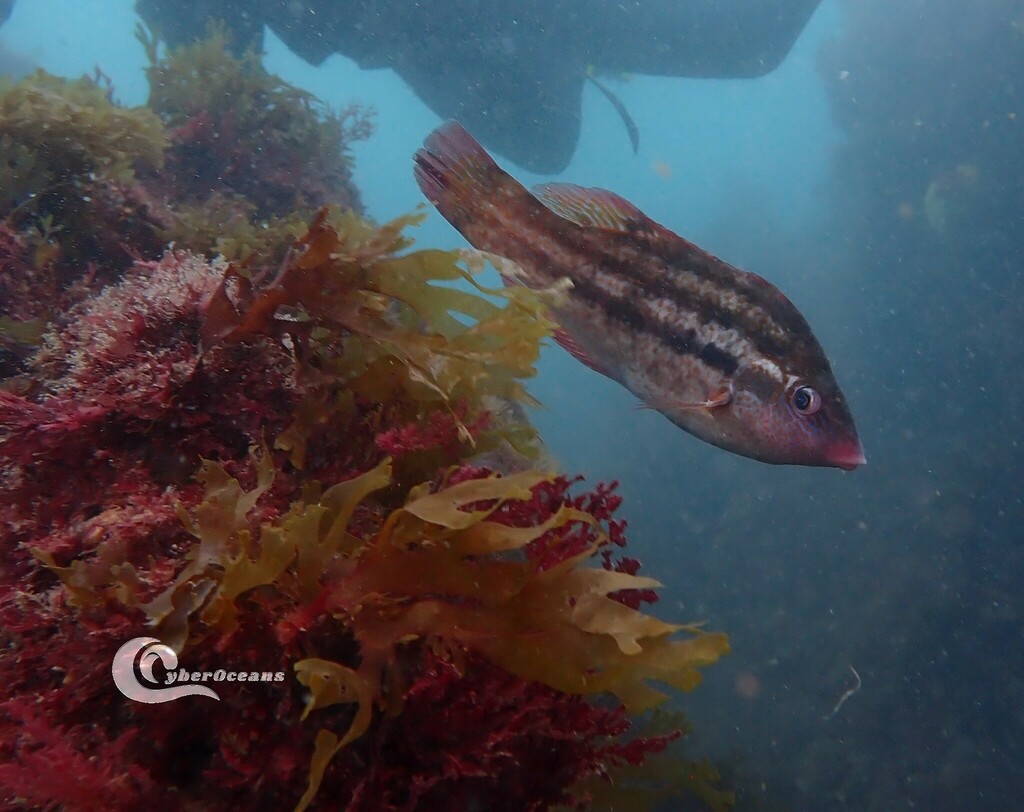
The Baillon's wrasse (Symphodus bailloni) is a saltwater fish of the family Labridae that grows up to 20 cm.
Eastern Atlantic and the western Mediterranean Sea, in seagrass beds and on rocky bottoms of shallow coastal water.
Description
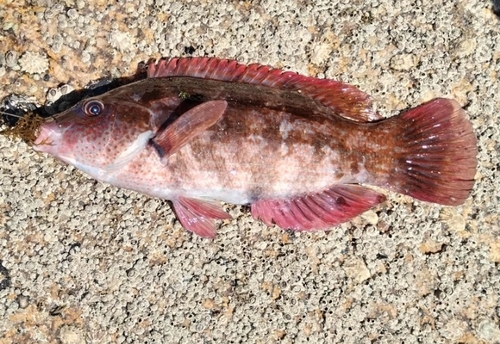
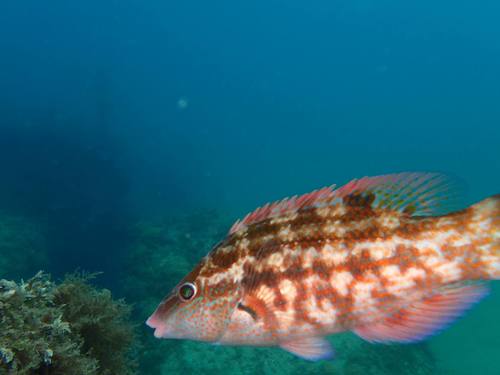
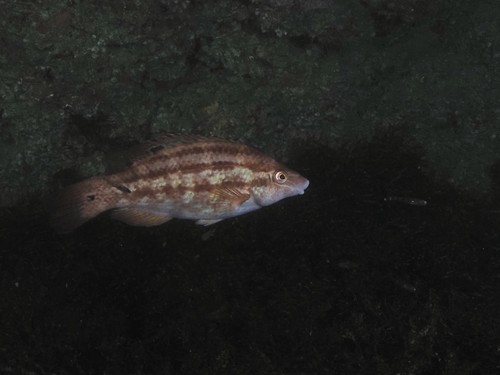
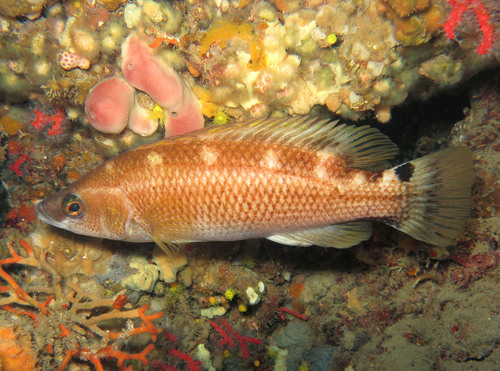
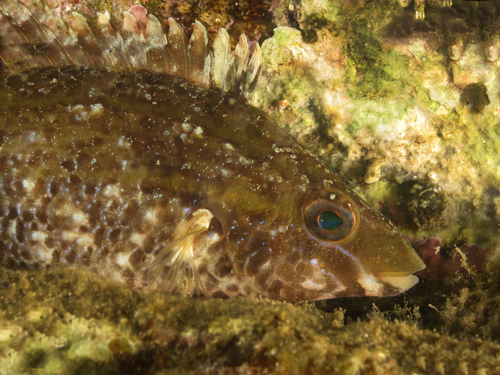
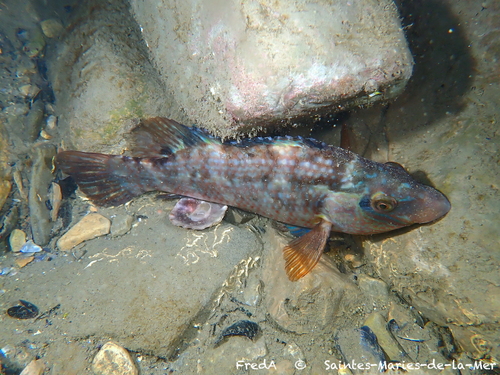
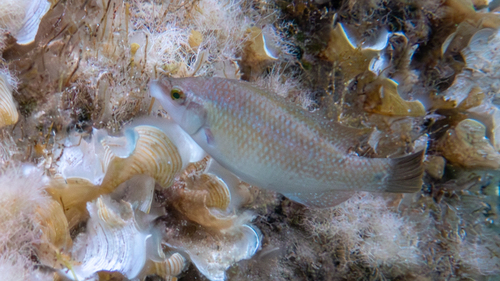
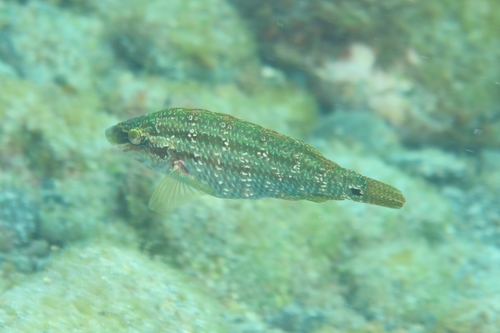
Baillon's wrasse is a small, colourful wrasse of the family Labridae reaching about 20 cm. The elongate body is brown to greenish with reddish tints and has the thick lips typical of wrasses; characteristic is a conspicuous dark spot in the middle of the caudal peduncle, often with a row of small spots along the dorsal-fin base. Like many wrasses the species is a protogynous hermaphrodite: individuals begin as females and may later turn into males. It lives in seagrass beds and on rocky bottoms of shallow coastal water of the eastern Atlantic and the western Mediterranean. Among the plants it searches for small crustaceans, molluscs and worms. In spring the male builds a nest of weed and guards the eggs.
Frequently asked questions
How do you recognise the Baillon's wrasse?
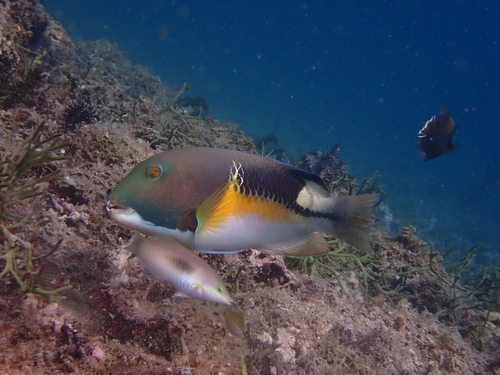
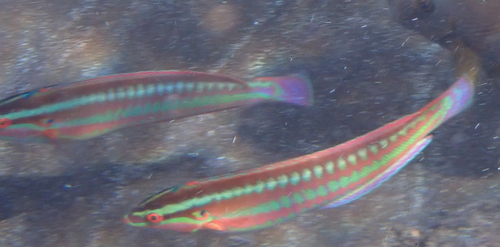
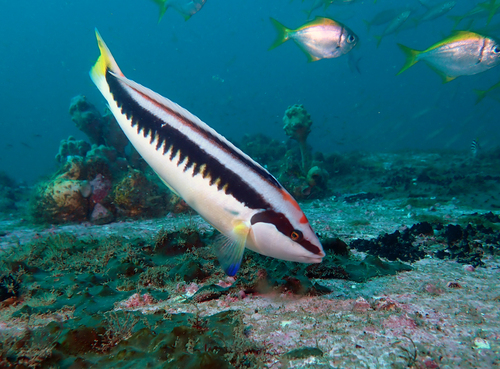
The Baillon's wrasse has a torpedo-shaped body, is mainly brown and shows a spots pattern. Small, colourful wrasse with thick lips and a striking dark blotch in the middle of the caudal peduncle; often with a small row of blotches along the base of the dorsal fin.
Where does the Baillon's wrasse live?
The Baillon's wrasse lives in the sea (marine waters) and is mostly found around algae or seagrass beds. Eastern Atlantic and the western Mediterranean Sea, in seagrass beds and on rocky bottoms of shallow coastal water.
How big does the Baillon's wrasse get?
The Baillon's wrasse grows to a maximum of about 20 cm. On average the species is around 18 cm.
Is the Baillon's wrasse dangerous to humans?
No, the Baillon's wrasse is harmless to humans. None required: this species is harmless to humans.
Is the Baillon's wrasse edible?
The Baillon's wrasse is rarely eaten.
More photos
Easily confused with
These species look like the Baillon's wrasse and live in the same waters.



Want the complete picture on the Baillon's wrasse?
Point your camera at the fish and Fin names the species in seconds. Free, and the Baillon's wrasse is one of 12,519 species in the app.
All data
Identification
Appearance
Habitat & distribution
Behaviour & biology
For anglers
Safety
Status & sources
Same genus Symphodus
More from the family Labridae



Want the complete picture on the Baillon's wrasse?
Point your camera at the fish and Fin names the species in seconds. Free, and the Baillon's wrasse is one of 12,519 species in the app.