 Fin's Fish Guide
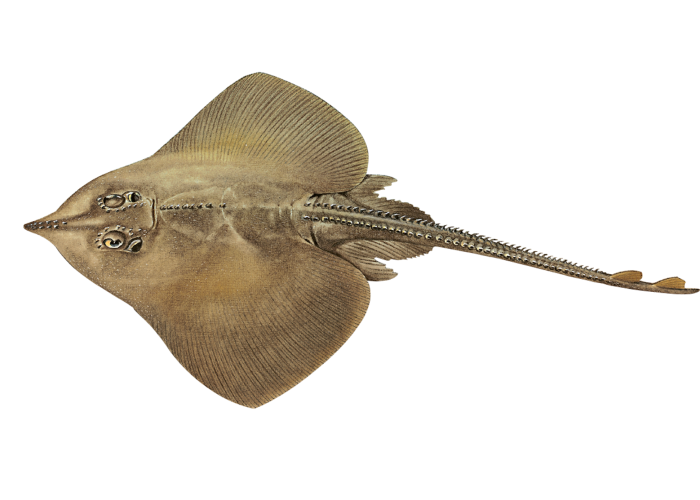
The Shagreen ray (Leucoraja fullonica) is a saltwater fish of the family Rajidae that grows up to 120 cm.
Northeast Atlantic and the western Mediterranean Sea, on sandy and silty bottoms of the deeper continental shelf and the upper slope.
Description
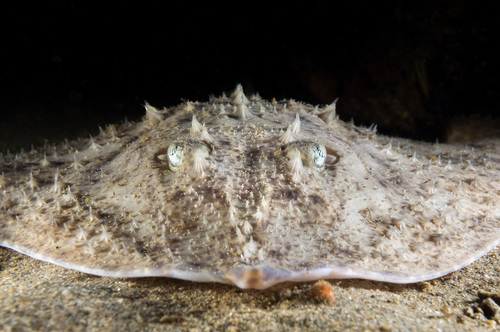
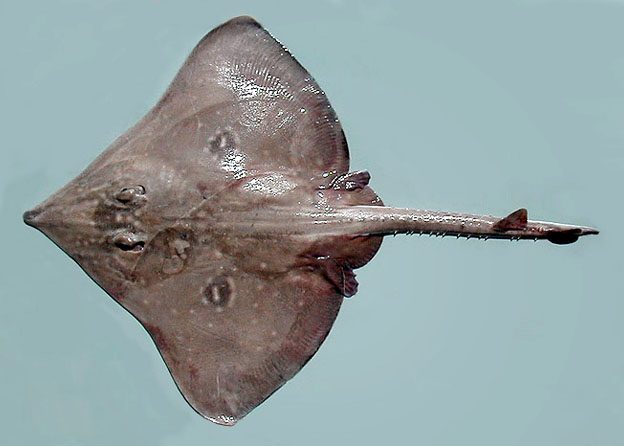
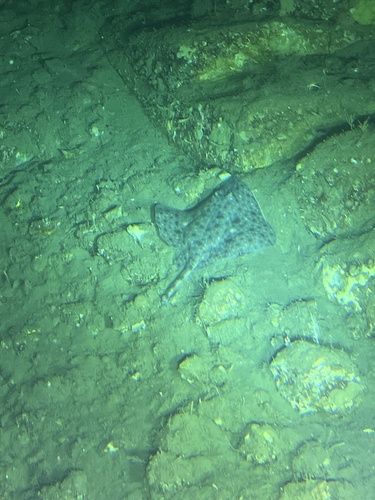
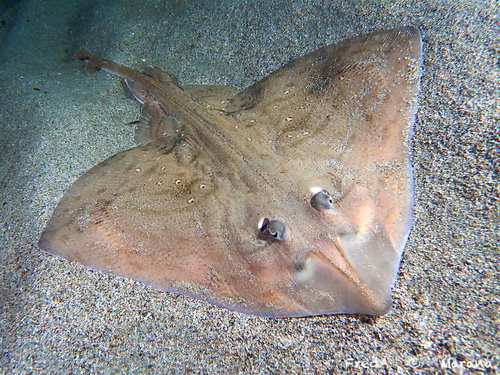
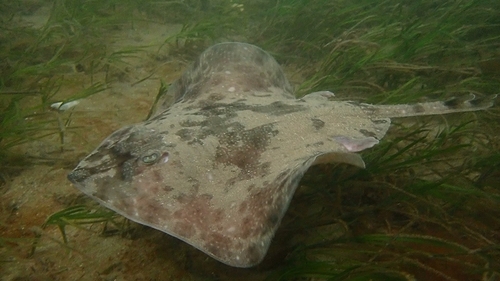
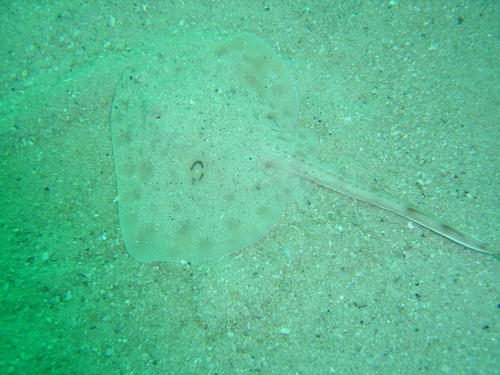
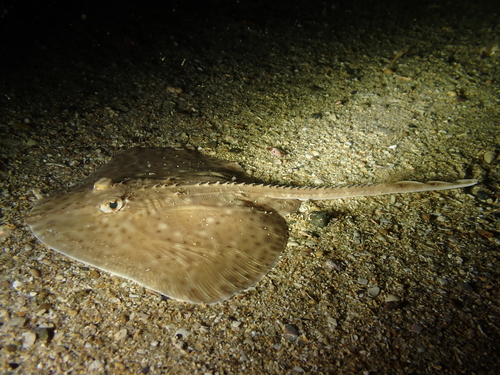
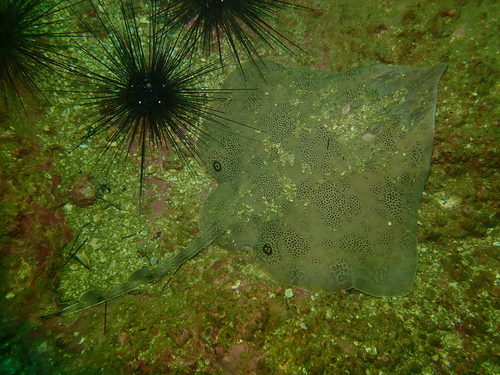
The shagreen ray is a large skate of the family Rajidae reaching a total length of about 1.2 metres. The diamond-shaped body, formed by the pectoral fins fused to the head, has a pointed snout and a grey-brown upper side. Characteristic is the strikingly rough, sandpaper-like skin covered with small denticles, from which the species takes its Dutch and English names; rows of larger thorns run over the back and tail. The species lives on sand and mud bottoms of the deeper continental shelf and upper slope of the north-eastern Atlantic and the western Mediterranean. On the bottom it hunts crustaceans, small fish and squid. It lays eggs in horny capsules and grows slowly; due to fishing it is assessed as Vulnerable (VU).
Frequently asked questions
How do you recognise the Shagreen ray?
The Shagreen ray has a flattened, disc-shaped body, is mainly silver-grey and shows a plain pattern. Large ray with a pointed snout and a strikingly rough, sandpapery upperside (hence 'shagreen ray'), with rows of thorns over the back and tail.
Where does the Shagreen ray live?
The Shagreen ray lives in the sea (marine waters) and is mostly found around sand or mud bottom. Northeast Atlantic and the western Mediterranean Sea, on sandy and silty bottoms of the deeper continental shelf and the upper slope.
How big does the Shagreen ray get?
The Shagreen ray grows to a maximum of about 120 cm.
Is the Shagreen ray dangerous to humans?
No, the Shagreen ray is harmless to humans. None required: this species is harmless to humans.
Is the Shagreen ray edible?
The Shagreen ray is rarely eaten.
Easily confused with
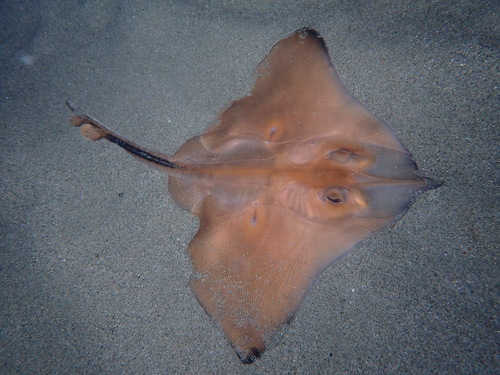
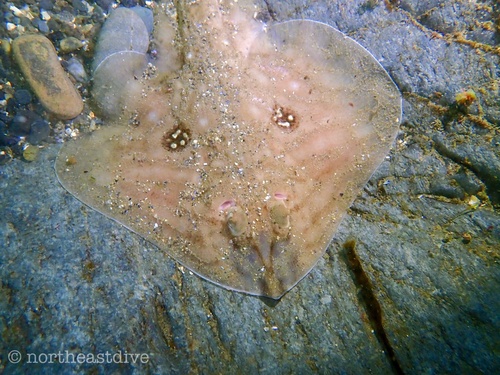
These species look like the Shagreen ray and live in the same waters.

Want the complete picture on the Shagreen ray?
Point your camera at the fish and Fin names the species in seconds. Free, and the Shagreen ray is one of 12,519 species in the app.
All data
Identification
Appearance
Habitat & distribution
Behaviour & biology
For anglers
Safety
Status & sources
Same genus Leucoraja



More from the family Rajidae

Want the complete picture on the Shagreen ray?
Point your camera at the fish and Fin names the species in seconds. Free, and the Shagreen ray is one of 12,519 species in the app.