 Fin's Fish Guide
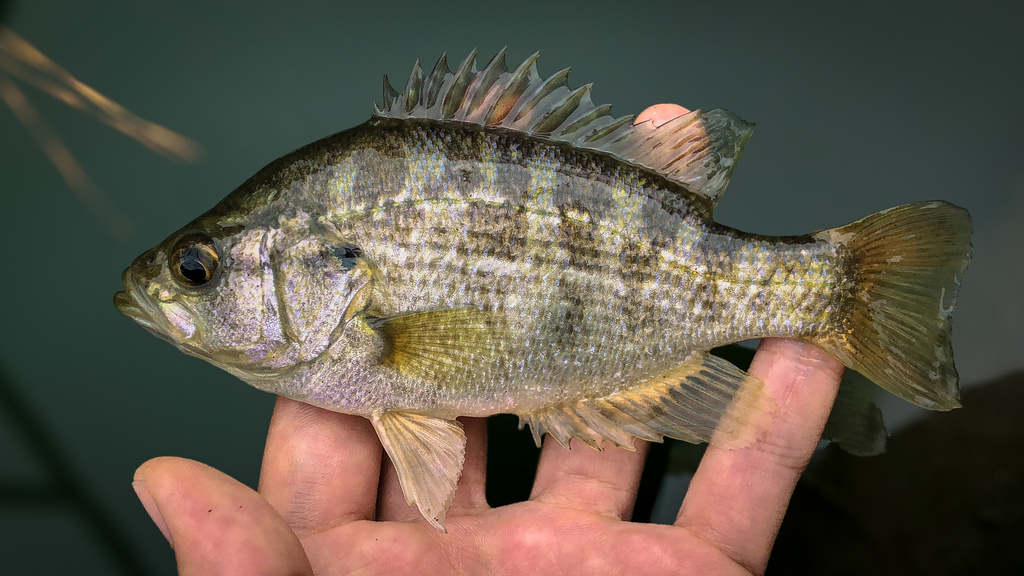
The Sacramento perch (Archoplites interruptus) is a freshwater fish of the family Centrarchidae that grows up to 73 cm.
Description
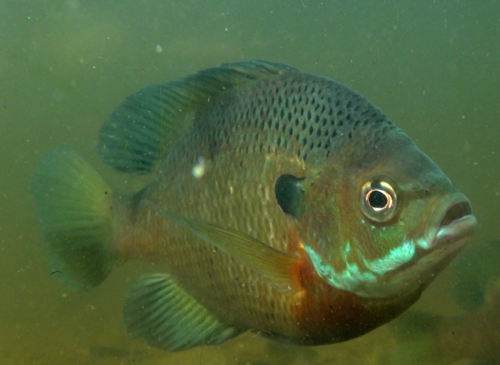
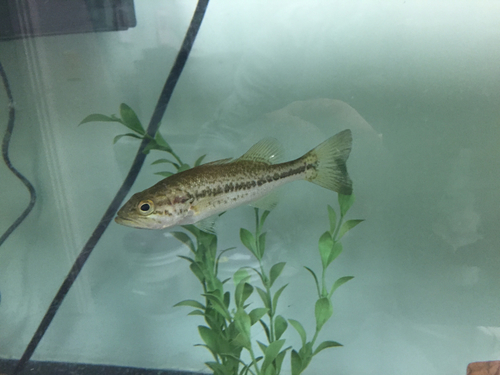
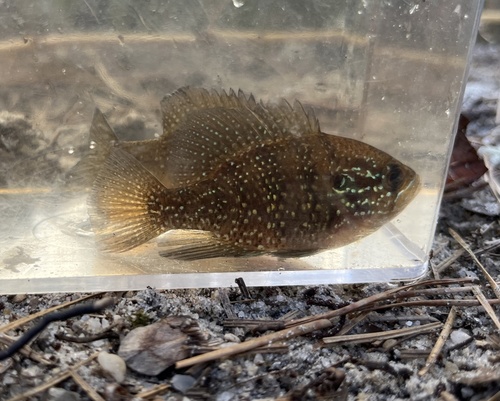
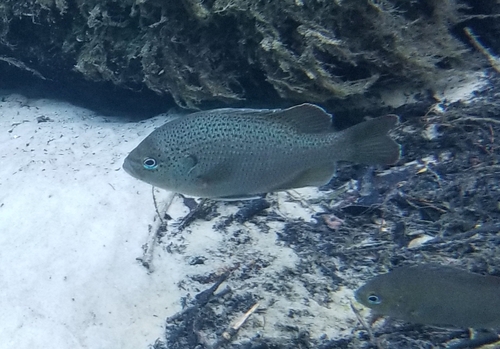
The Sacramento perch is a sunfish of the family Centrarchidae and the only member of that family native west of the Rocky Mountains; it is endemic to central California. The species grows to over 70 cm and has a deep, laterally compressed body with irregular dark crossbars. It inhabits vegetated sloughs, pools of sluggish rivers and lakes. As a predator it feeds on insect larvae, crustaceans and small fishes. Owing to habitat loss and competition from introduced alien fishes it has disappeared from much of its native range and is listed as Endangered (EN). It is harmless to humans.
Frequently asked questions
How do you recognise the Sacramento perch?
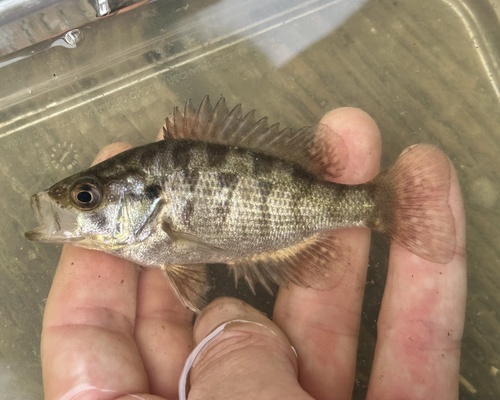
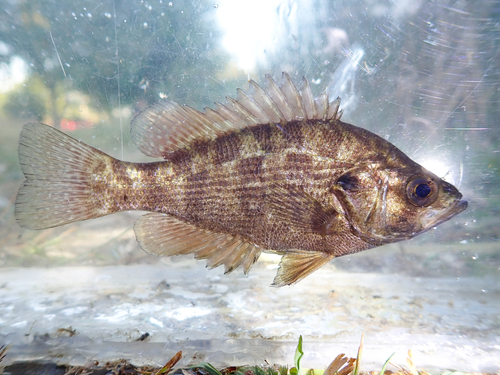
The Sacramento perch has a torpedo-shaped body, is mainly silver-grey and shows a vertical stripes pattern. The only sunfish that occurs naturally west of the Rocky Mountains; endangered (EN) by habitat loss.
Where does the Sacramento perch live?
The Sacramento perch lives in fresh water and is mostly found around mixed bottom. Endemic to central California; vegetated oxbow lakes, pools and lakes.
How big does the Sacramento perch get?
The Sacramento perch grows to a maximum of about 73 cm. On average the species is around 30 cm.
Is the Sacramento perch dangerous to humans?
No, the Sacramento perch is harmless to humans. None required: this species is harmless to humans.
Is the Sacramento perch edible?
The Sacramento perch is rarely eaten.
More photos


Want the complete picture on the Sacramento perch?
Point your camera at the fish and Fin names the species in seconds. Free, and the Sacramento perch is one of 12,519 species in the app.
All data
Identification
Appearance
Habitat & distribution
Behaviour & biology
For anglers
Safety
Status & sources
More from the family Centrarchidae



Want the complete picture on the Sacramento perch?
Point your camera at the fish and Fin names the species in seconds. Free, and the Sacramento perch is one of 12,519 species in the app.