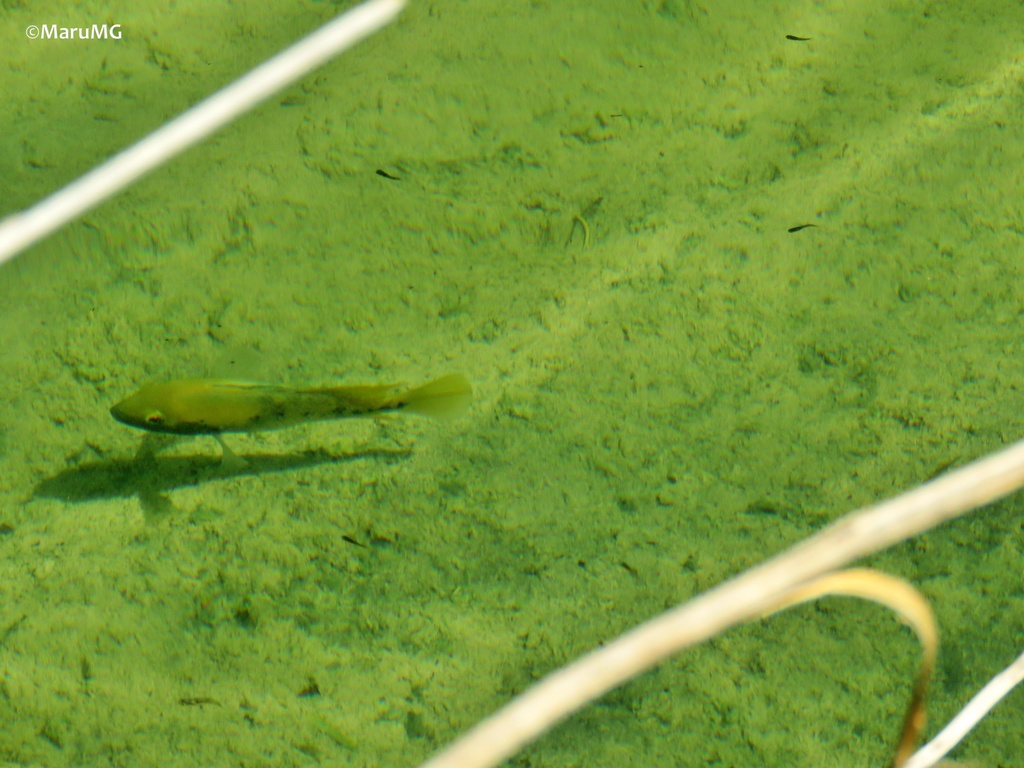
The Curve cichlid (Nosferatu labridens) is a fish of the family Cichlidae that grows up to 25 cm.
Description
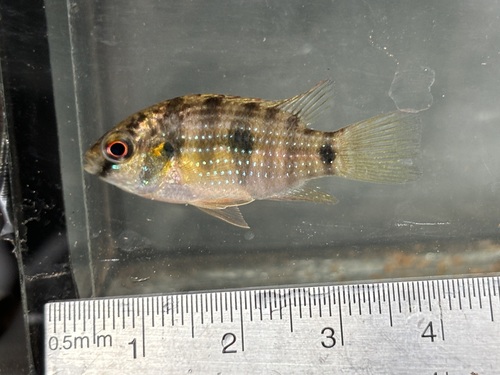
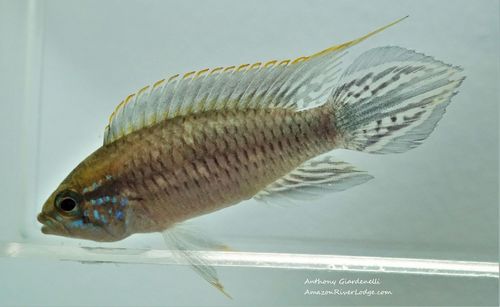
The curve cichlid is a Central American cichlid from the Panuco drainages of northeastern Mexico, placed in the genus Nosferatu (formerly Herichthys). The species grows to about 25 cm and has a deep, grey to yellowish body that changes colour strongly in breeding fish, with a dark flank blotch. As a snail-eating cichlid it lives over rock and gravel bottoms and crushes molluscs with strong throat teeth. It is a substrate brooder. The fish is harmless to humans and is known from the aquarium trade.
Frequently asked questions
How do you recognise the Curve cichlid?
The Curve cichlid is mainly yellow-gold and shows a spots pattern.
Where does the Curve cichlid live?
The Curve cichlid is mostly found around stony or rocky ground.
How big does the Curve cichlid get?
The Curve cichlid grows to a maximum of about 25 cm. On average the species is around 15 cm.
Is the Curve cichlid dangerous to humans?
No, the Curve cichlid is harmless to humans.
Is the Curve cichlid edible?
The Curve cichlid is rarely eaten.
Download Fin's Fish Guide
Identify fish in seconds, log your catches and dives. Join the TestFlight beta.
All data
Identification
Appearance
Habitat & distribution
Behaviour & biology
Safety
Status & sources
Same genus Nosferatu
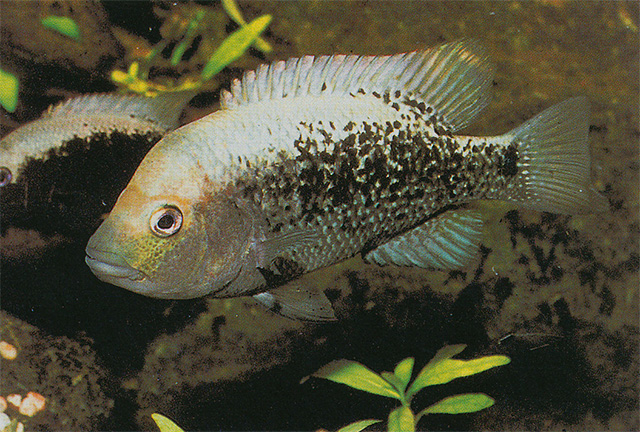

More from the family Cichlidae



Download Fin's Fish Guide
Identify fish in seconds, log your catches and dives. Join the TestFlight beta.