Home · Cichlidae · Multi-banded shelldweller
Multi-banded shelldweller (Neolamprologus multifasciatus) — Cichlidae

Multi-banded shelldweller

Neolamprologus multifasciatus
Family: Cichlidae
LC · Least Concern

The Multi-banded shelldweller (Neolamprologus multifasciatus) is a freshwater fish of the family Cichlidae that grows up to 4 cm.

Length
4 cm
Water
Freshwater
Diet
Carnivore
Behaviour
Large groups
Body shape
Flat / disc-shaped
Substrate
Mixed bottom
Danger
Harmless
Range
Endemic to Lake Tanganyika in East Africa.
Edibility
Not eaten

Want the complete picture on the Multi-banded shelldweller?

Get the app

Description

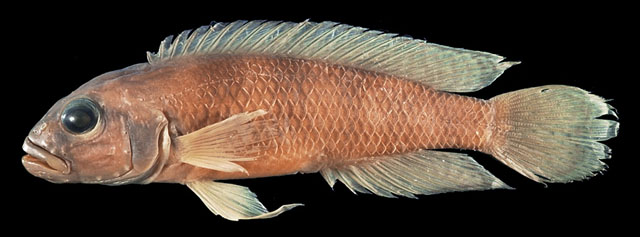
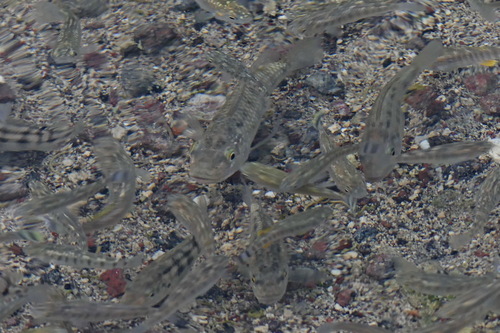
At about 4 cm the multi-banded shelldweller is one of the smallest cichlids in the world and is endemic to Lake Tanganyika. The species lives on sand flats strewn with empty snail shells, into which each fish retreats and lays its eggs. Although large colonies gather, each pair holds a very small territory around a few closely spaced shells. The fish is silvery-grey with numerous narrow cross-bands and feeds on zooplankton drifting slowly above the colony. Because of its striking digging and nesting behaviour the species is popular with aquarists.

Frequently asked questions

How do you recognise the Multi-banded shelldweller?

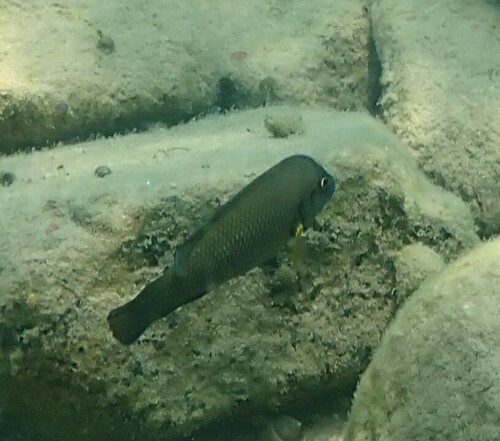
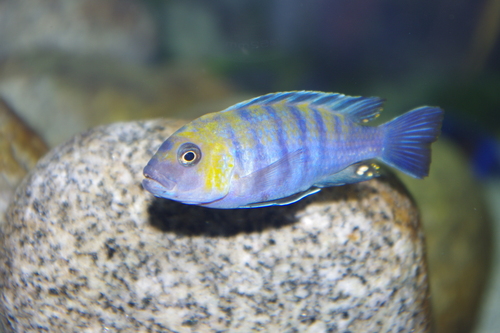
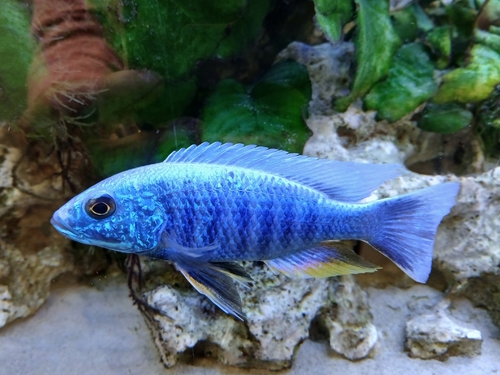
The Multi-banded shelldweller has a flattened, disc-shaped body, is mainly silver-grey and shows a vertical stripes pattern. One of the smallest cichlids in the world; lives and breeds in empty snail shells in large colonies.

Where does the Multi-banded shelldweller live?

The Multi-banded shelldweller lives in fresh water and is mostly found around mixed bottom. Endemic to Lake Tanganyika in East Africa.

How big does the Multi-banded shelldweller get?

The Multi-banded shelldweller grows to a maximum of about 4 cm. On average the species is around 3 cm.

Is the Multi-banded shelldweller dangerous to humans?

No, the Multi-banded shelldweller is harmless to humans. None required: this species is harmless to humans.

Is the Multi-banded shelldweller edible?

The Multi-banded shelldweller is not usually eaten.

More photos

Multi-banded shelldweller (Neolamprologus multifasciatus) — Cichlidae — 2
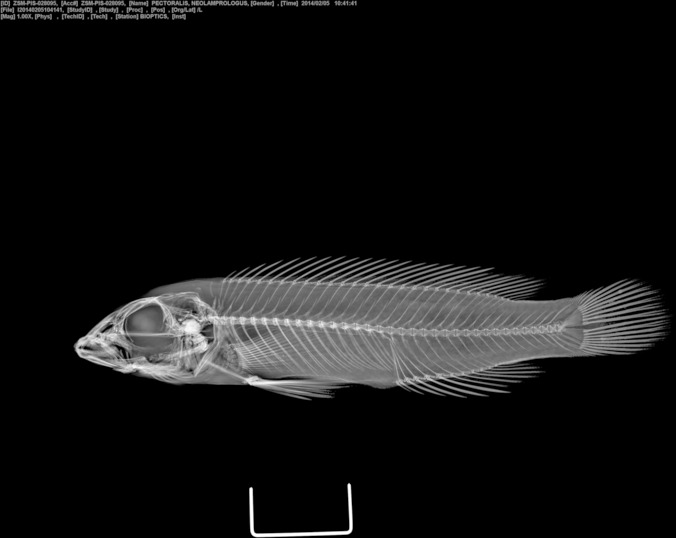
Wikimedia Commons — Richard Andre Ingebrigtsen, Department of Aquatic Biosciences, University of Tromsø, Rex shock at en.wikipedia (Public domain)
Multi-banded shelldweller (Neolamprologus multifasciatus) — Cichlidae — 3
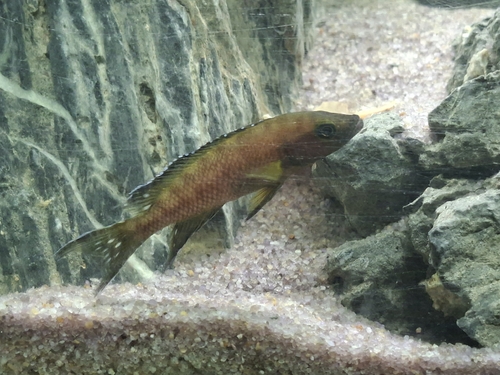
Wikimedia Commons — Pmalkowski (CC BY-SA 4.0)
Multi-banded shelldweller (Neolamprologus multifasciatus) — Cichlidae — 4
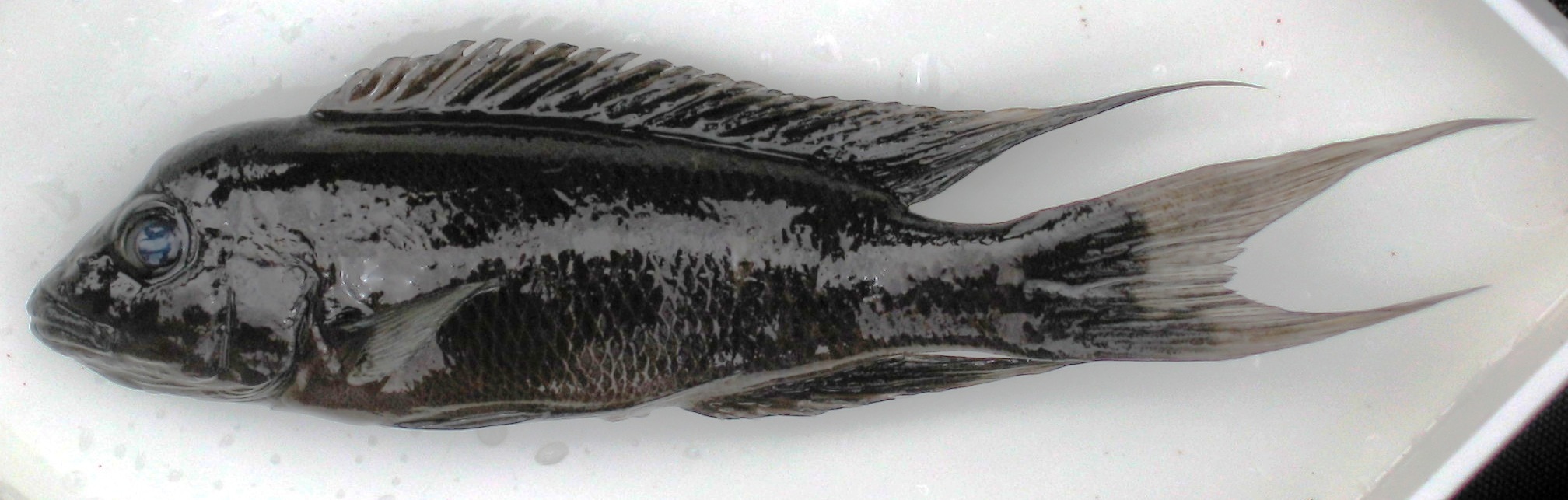
Wikimedia Commons — Marrabbio2 (CC BY-SA 3.0)
Multi-banded shelldweller (Neolamprologus multifasciatus) — Cichlidae — 5
Wikimedia Commons — NasserHalaweh (CC BY-SA 4.0)
Fin

Want the complete picture on the Multi-banded shelldweller?

Point your camera at the fish and Fin names the species in seconds. Free, and the Multi-banded shelldweller is one of 12,519 species in the app.

Get the app →

All data

Identification

English name
Multi-banded shelldweller sourced
Scientific name
Neolamprologus multifasciatus
Family
Cichlidae

Appearance

Size class
Small verified
Max length (cm)
4.0 verified
Average length (cm)
3.0 verified
Body shape
Flat / disc-shaped sourced
Dominant colour
Silver / grey inferred
Pattern
Vertical bars inferred
Tail shape
Straight inferred
Mouth position
Terminal inferred
Lips
Thin inferred
Barbels
No sourced
Dorsal fins
One continuous inferred
Dorsal spines
Yes sourced

Habitat & distribution

Water type
Freshwater sourced
Substrate
Mixed bottom sourced
Natural range
Endemic to Lake Tanganyika in East Africa. inferred
Origin
Native sourced

Behaviour & biology

Diet
Carnivore sourced
Diet (detail)
Zooplankton drifting past above the colony sourced
Social behaviour
Large groups inferred
Territorial
Yes inferred
Reproduction
Separate sexes sourced
Sexual dimorphism
Yes inferred
Seasonality
Present year-round in its habitat; no pronounced seasonality known. inferred
Special features
One of the smallest cichlids in the world; lives and breeds in empty snail shells in large colonies. sourced

For anglers

Edibility
Not eaten sourced
Fishing method
Not a target species for angling; at most an incidental catch or usable as baitfish. inferred
Regulations source
FishBase ↗ inferred

Safety

Danger to humans
Harmless sourced
First aid
None required: this species is harmless to humans. sourced

Status & sources

Sources
FishBase via GBIF (DwC-A), CC-BY-NC 4.0

Same genus Neolamprologus

More from the family Cichlidae

Fin

Want the complete picture on the Multi-banded shelldweller?

Point your camera at the fish and Fin names the species in seconds. Free, and the Multi-banded shelldweller is one of 12,519 species in the app.

Get the app →
Is this the Multi-banded shelldweller? Get the app