 Fin's Fish Guide
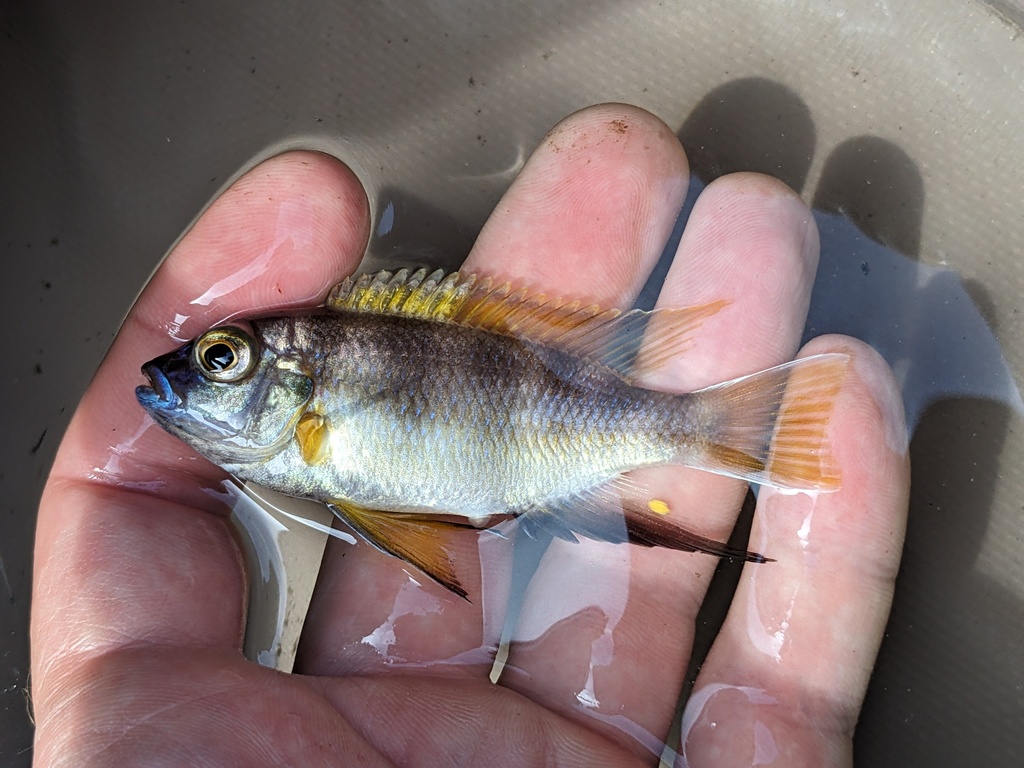
The Livingston's mbuna (Maylandia livingstonii) is a fish of the family Cichlidae that grows up to 10 cm.
Endemic to Lake Malawi in East Africa; sandy bottoms with snail shells.
Description
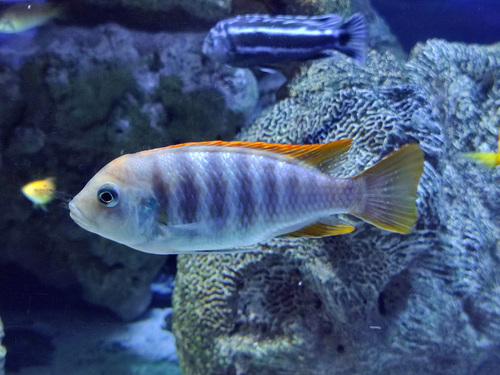
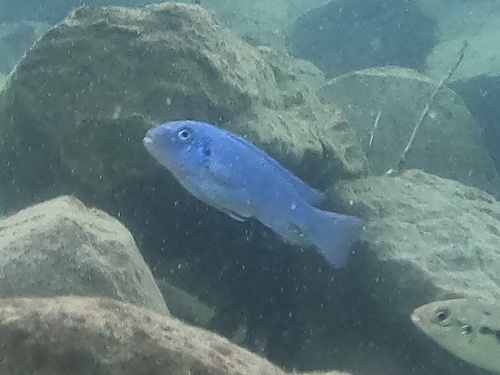
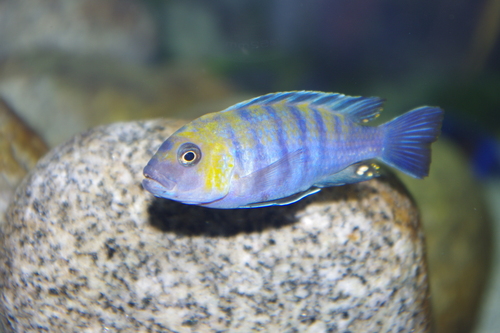
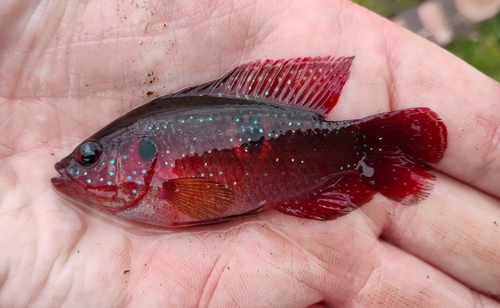
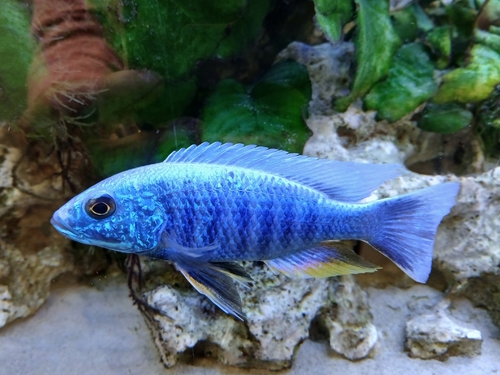
Livingston's mbuna is a cichlid endemic to Lake Malawi in East Africa. The species has a stocky body; courting males colour up blue. Unlike many rock-dwelling mbuna it lives on sand bottoms, where it takes refuge in empty snail shells of the genus Lanistes. It feeds on growth, small invertebrates and plankton. It is a maternal mouthbrooder: the female incubates the eggs and larvae in her mouth. The species is harmless to humans.
Frequently asked questions
How do you recognise the Livingston's mbuna?
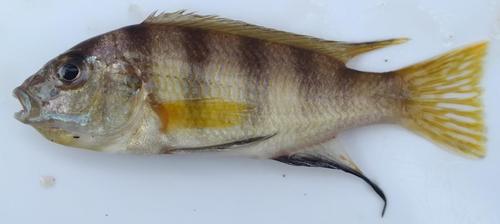
The Livingston's mbuna is mainly silver-grey and shows a vertical stripes pattern. Sand-dwelling mbuna that shelters in empty Lanistes snail shells; maternal mouthbrooder.
Where does the Livingston's mbuna live?
The Livingston's mbuna is mostly found around sand or mud bottom. Endemic to Lake Malawi in East Africa; sandy bottoms with snail shells.
How big does the Livingston's mbuna get?
The Livingston's mbuna grows to a maximum of about 10 cm.
Is the Livingston's mbuna dangerous to humans?
No, the Livingston's mbuna is harmless to humans. None required: this species is harmless to humans.
Is the Livingston's mbuna edible?
The Livingston's mbuna is rarely eaten.
More photos

Want the complete picture on the Livingston's mbuna?
Point your camera at the fish and Fin names the species in seconds. Free, and the Livingston's mbuna is one of 12,519 species in the app.
All data
Identification
Appearance
Habitat & distribution
Behaviour & biology
For anglers
Safety
Status & sources
Same genus Maylandia


More from the family Cichlidae




Want the complete picture on the Livingston's mbuna?
Point your camera at the fish and Fin names the species in seconds. Free, and the Livingston's mbuna is one of 12,519 species in the app.