 Fin's Fish Guide
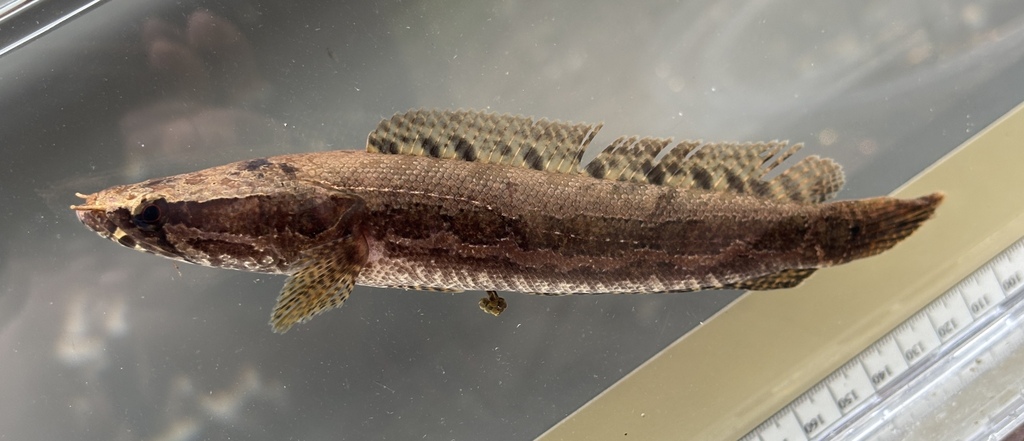
The Largespotted snakehead (Parachanna insignis) is a freshwater fish of the family Channidae that grows up to 53 cm.
West and Central Africa, in slow-flowing and still waters, swamps and floodplains.
Description
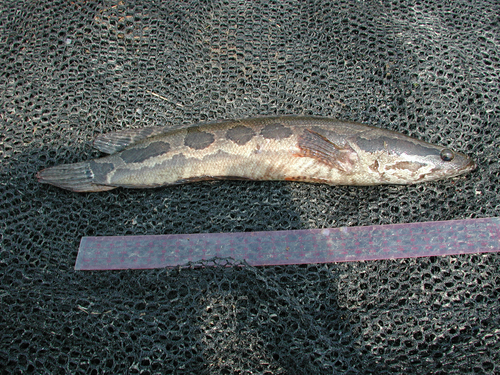
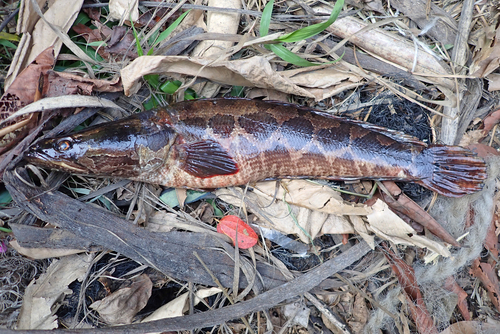
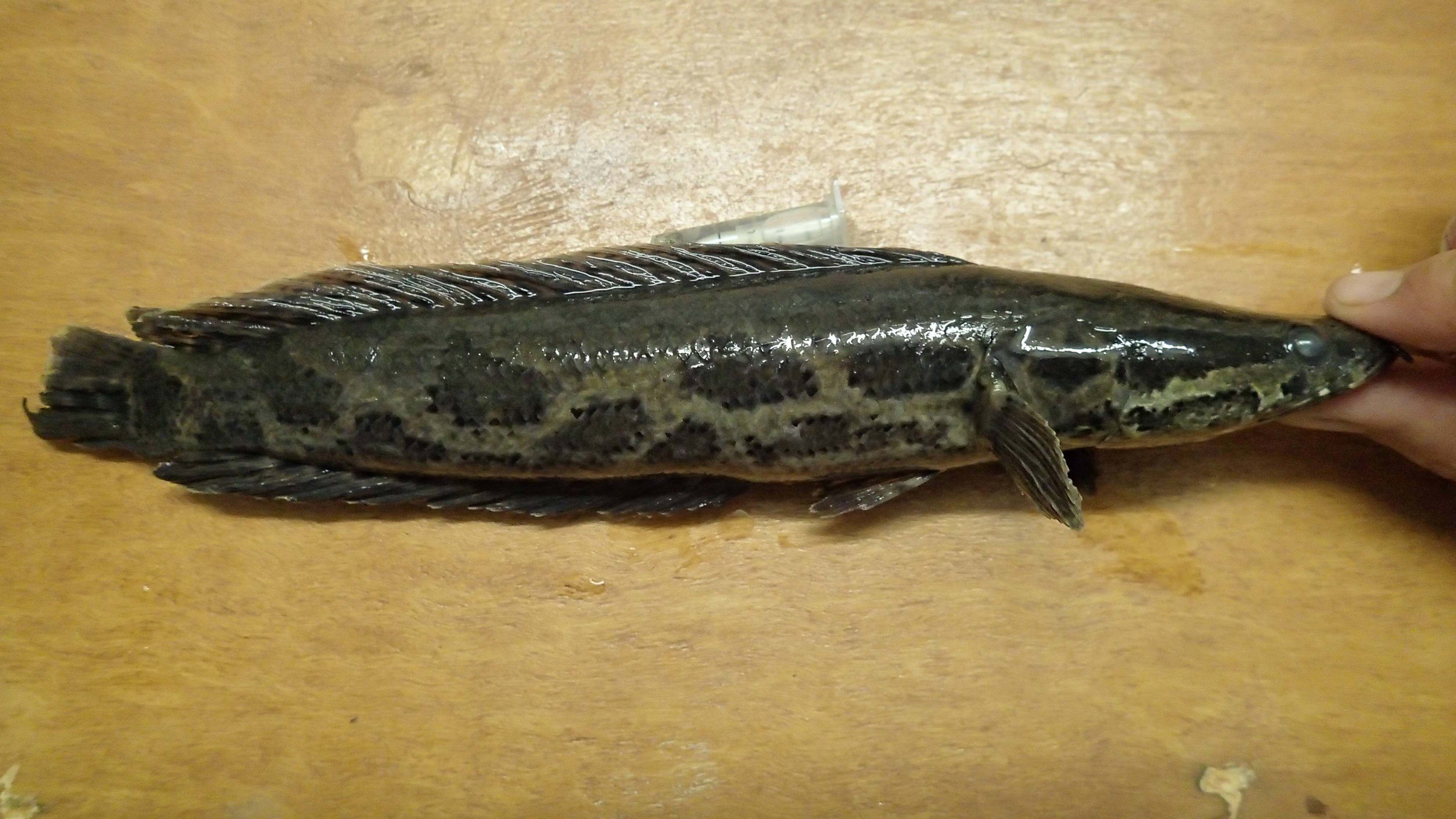
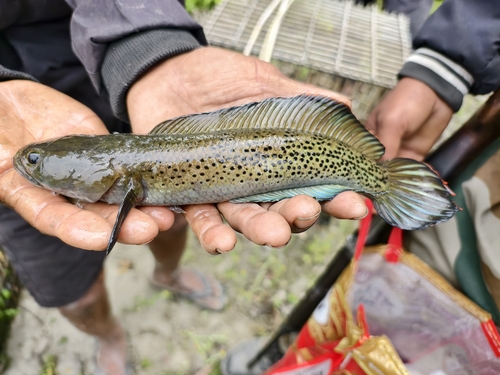
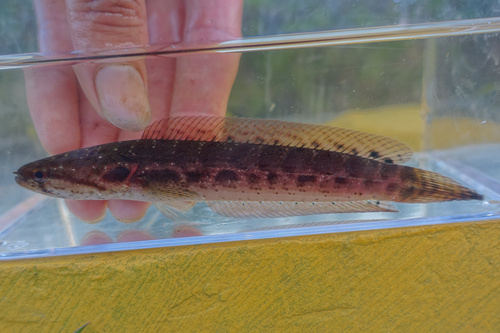
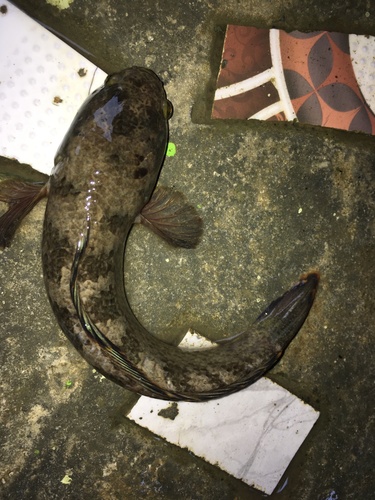
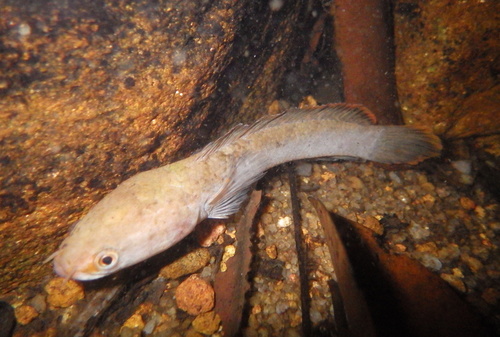
The largespotted snakehead is an African snakehead (family Channidae) of West and Central Africa. The species grows to about 53 cm and has an elongate body with a flattened head, a long dorsal and anal fin and large dark blotches on the flank. It inhabits slow-flowing and stagnant waters, swamps and floodplains, and can gulp air with an accessory organ to tolerate low-oxygen conditions. As a predator it hunts fishes, crustaceans and insects and protects its brood. The species is of commercial value; with its strong jaws it can bite when handled.
Frequently asked questions
How do you recognise the Largespotted snakehead?
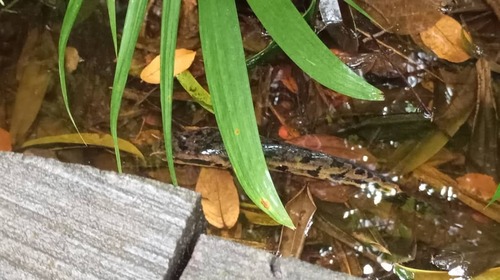
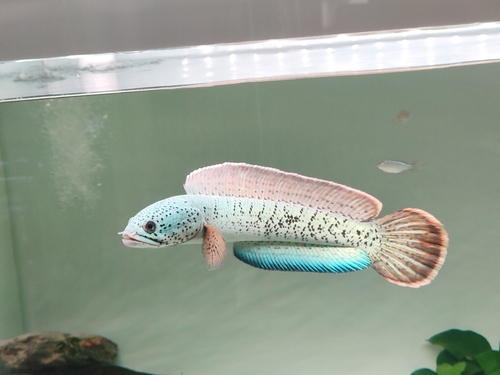
The Largespotted snakehead has an elongate, eel-like body, is mainly brown and shows a spots pattern. Air-breathing snakehead that tolerates oxygen-poor water; predator that guards its brood; large dark blotches on the flanks.
Where does the Largespotted snakehead live?
The Largespotted snakehead lives in fresh water and is mostly found around mixed bottom. West and Central Africa, in slow-flowing and still waters, swamps and floodplains.
How big does the Largespotted snakehead get?
The Largespotted snakehead grows to a maximum of about 53 cm.
Is the Largespotted snakehead dangerous to humans?
No, the Largespotted snakehead is harmless to humans. For a bite: clean and disinfect the wound thoroughly, stop the bleeding, and see a doctor for a deep or infected wound.
Is the Largespotted snakehead edible?
Yes, the Largespotted snakehead is commonly eaten.
More photos

Want the complete picture on the Largespotted snakehead?
Point your camera at the fish and Fin names the species in seconds. Free, and the Largespotted snakehead is one of 12,519 species in the app.
All data
Identification
Appearance
Habitat & distribution
Behaviour & biology
For anglers
Safety
Status & sources
Same genus Parachanna
More from the family Channidae

Want the complete picture on the Largespotted snakehead?
Point your camera at the fish and Fin names the species in seconds. Free, and the Largespotted snakehead is one of 12,519 species in the app.