Home · Terapontidae · Jarbua terapon
Jarbua terapon (Terapon jarbua) — Terapontidae

Jarbua terapon

Terapon jarbua
Family: Terapontidae
LC · Least Concern
NativeIntroduced

The Jarbua terapon (Terapon jarbua) is a fish that lives in both fresh and salt water of the family Terapontidae that grows up to 36 cm.

Length
36 cm
Water
Euryhaline
Depth
20.0–350.0 m
Diet
Carnivore
Behaviour
Schooling
Activity
Diurnal
Body shape
Torpedo-shaped
Substrate
Sand / mud bottom
Danger
Can cause injury
Range
Indian and western Pacific Ocean, in shallow coastal water, estuaries, mangroves and river mouths; juveniles move far into fresh water.
Edibility
Commonly eaten

Want the complete picture on the Jarbua terapon?

Get the app

Description

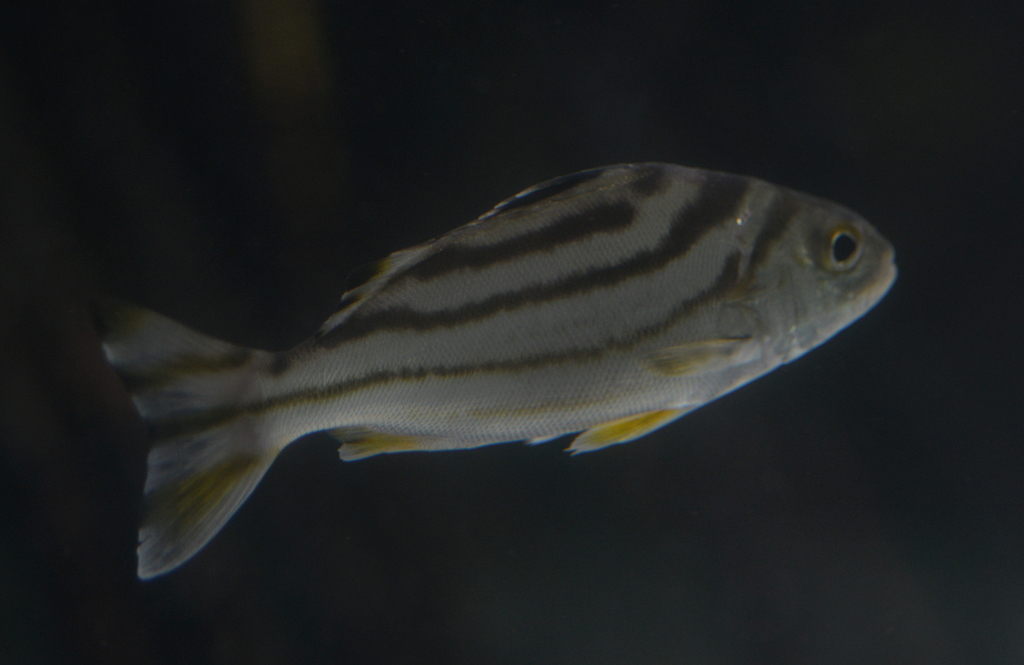
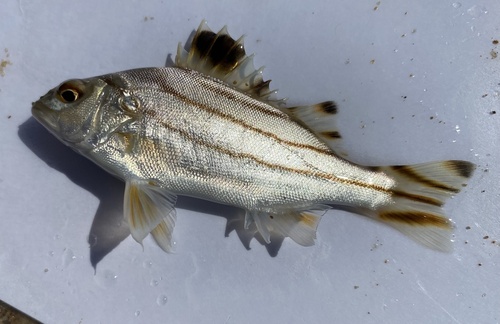
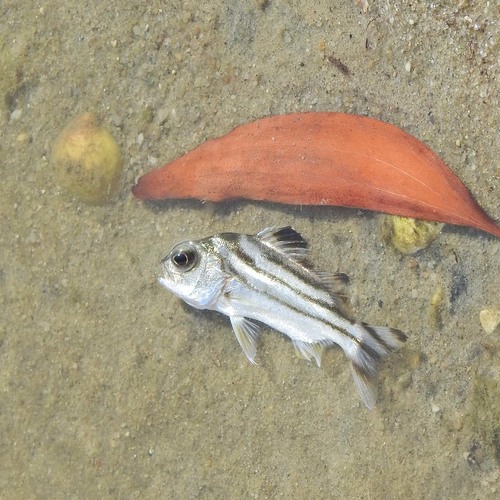
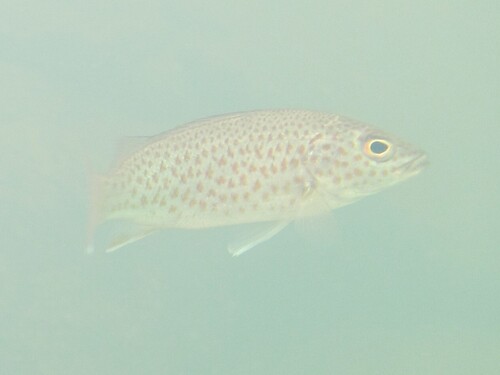
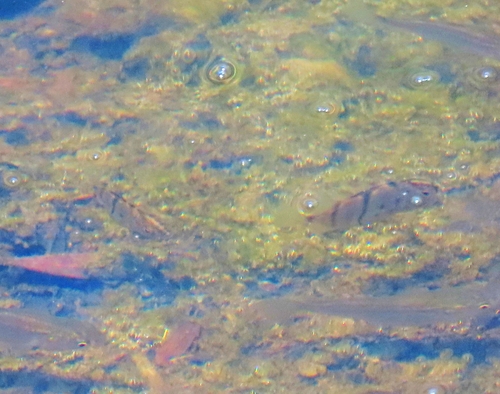
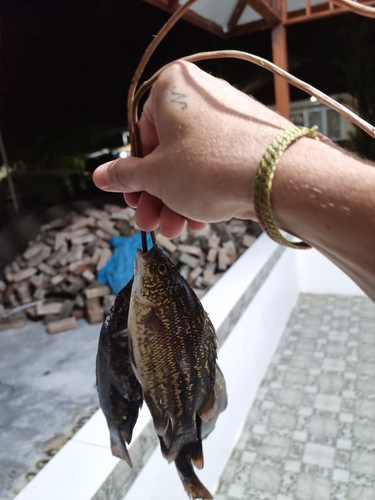
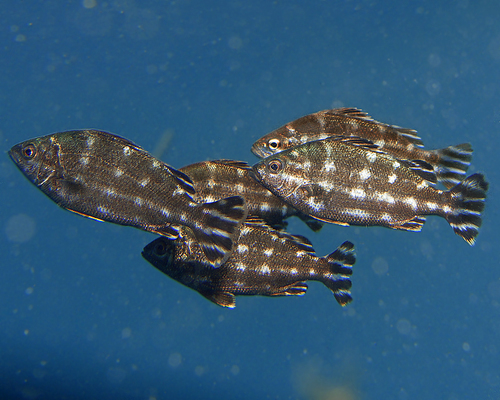
The jarbua terapon is a silvery fish of the family Terapontidae reaching about 36 cm. Three or four strikingly curved black bands run along the body, and the tail and dorsal fin bear dark markings. The gill cover has sharp spines and the dorsal fin is stoutly spined; both can cause painful cuts. The species forms schools in shallow coastal water, estuaries, mangroves and river mouths of the Indian and western Pacific Oceans and tolerates brackish and fresh water. It eats small fish, crustaceans, worms and insects and sometimes nibbles scales off other fish. With its swim bladder it produces grunting sounds. It is a common coastal and market fish.

Frequently asked questions

How do you recognise the Jarbua terapon?

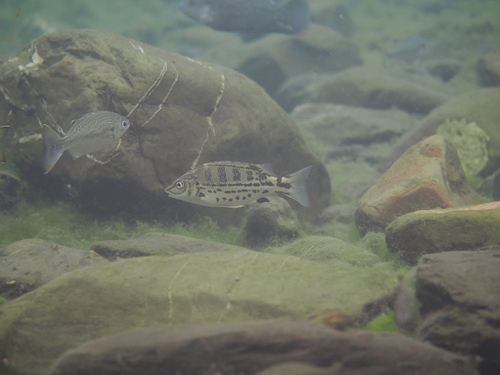
The Jarbua terapon has a torpedo-shaped body, is mainly silver-grey and shows a horizontal stripes pattern. Silvery little fish with three or four curved black longitudinal bands and sharp opercular spines; can make grunting sounds.

Where does the Jarbua terapon live?

The Jarbua terapon lives in both fresh and salt water and is mostly found around sand or mud bottom. Indian and western Pacific Ocean, in shallow coastal water, estuaries, mangroves and river mouths; juveniles move far into fresh water.

How big does the Jarbua terapon get?

The Jarbua terapon grows to a maximum of about 36 cm. On average the species is around 25 cm.

Is the Jarbua terapon dangerous to humans?

The Jarbua terapon can cause injury; handle it with care. The sharp fin and gill-cover spines can cause painful cut or puncture wounds; handle a caught fish carefully and clean any wound.

Is the Jarbua terapon edible?

Yes, the Jarbua terapon is commonly eaten.

More photos

Jarbua terapon (Terapon jarbua) — Terapontidae — 2
Wikimedia Commons — Kare Kare (CC BY-SA 3.0)
Jarbua terapon (Terapon jarbua) — Terapontidae — 3
iNaturalist ((c) jayce-the-creature-creator, some rights reserved (CC BY-NC))
Jarbua terapon (Terapon jarbua) — Terapontidae — 4
iNaturalist ((c) Paulmathi Vinod, some rights reserved (CC BY))
Jarbua terapon (Terapon jarbua) — Terapontidae — 5
Wikimedia Commons — Sahat Ratmuangkhwang (CC BY 3.0)

Easily confused with

These species look like the Jarbua terapon and live in the same waters.
Fin

Want the complete picture on the Jarbua terapon?

Point your camera at the fish and Fin names the species in seconds. Free, and the Jarbua terapon is one of 12,519 species in the app.

Get the app →

All data

Identification

English name
Jarbua terapon verified
Scientific name
Terapon jarbua
Family
Terapontidae
Other names
Convex-lined therapon; Crescent grunter; Crescent perch; Crescent-banded grunter; Thornfish; Tiger perch; Convex-lined grunt; Crescent-banded tiger-fish; Cresent grunter; Cresent perch; Croaker; Grunter verified

Appearance

Size class
Medium verified
Max length (cm)
36.0 verified
Average length (cm)
25.0 verified
Body shape
Torpedo-shaped sourced
Dominant colour
Silver / grey sourced
Pattern
Horizontal stripes sourced
Tail shape
Forked inferred
Mouth position
Terminal inferred
Lips
Thick / fleshy inferred
Barbels
No verified
Dorsal fins
One continuous sourced
Dorsal spines
Yes verified

Habitat & distribution

Water type
Euryhaline verified
Substrate
Sand / mud bottom verified
Min depth (m)
20.0 verified
Max depth (m)
350.0 verified
Natural range
Indian and western Pacific Ocean, in shallow coastal water, estuaries, mangroves and river mouths; juveniles move far into fresh water. verified
Origin
Native verified

Behaviour & biology

Diet
Carnivore verified
Diet (detail)
Small fishes, crustaceans, worms, insects and scales of other fishes sourced
Social behaviour
Schooling verified
Territorial
No verified
Activity
Diurnal inferred
Reproduction
Separate sexes verified
Sexual dimorphism
No verified
Seasonality
Forms shoals in shallow coastal and brackish water; the young migrate up the river mouths, eggs and larvae drift in open water. sourced
Special features
Silvery little fish with three or four curved black longitudinal bands and sharp opercular spines; can make grunting sounds. sourced

For anglers

Edibility
Commonly eaten verified
Fishing method
Bottom fishing with natural bait (worm, shrimp or fish) on or just above the seabed. inferred
Regulations source
FishBase ↗ inferred

Safety

Danger to humans
Can cause injury verified
First aid
The sharp fin and gill-cover spines can cause painful cut or puncture wounds; handle a caught fish carefully and clean any wound. sourced

Status & sources

Sources
FishBase via GBIF (DwC-A), CC-BY-NC 4.0

Same genus Terapon

More from the family Terapontidae
Fin

Want the complete picture on the Jarbua terapon?

Point your camera at the fish and Fin names the species in seconds. Free, and the Jarbua terapon is one of 12,519 species in the app.

Get the app →
Is this the Jarbua terapon? Get the app