Home · Lethrinidae · Grey large-eye bream
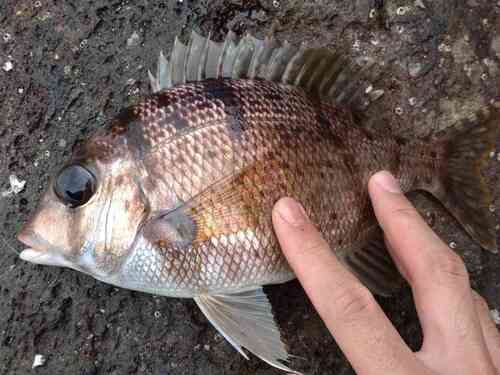
Grey large-eye bream (Gymnocranius griseus) — Lethrinidae

Grey large-eye bream

Gymnocranius griseus
Family: Lethrinidae
LC · Least Concern

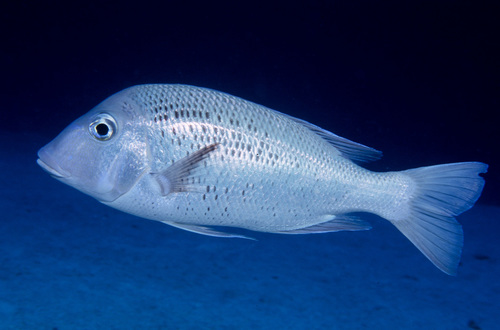
The Grey large-eye bream (Gymnocranius griseus) is a saltwater fish of the family Lethrinidae that grows up to 35 cm.

Length
35 cm
Water
Saltwater
Depth
15.0–80.0 m
Diet
Carnivore
Behaviour
Solitary
Activity
Diurnal
Body shape
Torpedo-shaped
Substrate
Stone or rock
Danger
Harmless
Range
Indo-West Pacific
Edibility
Commonly eaten

Want the complete picture on the Grey large-eye bream?

Get the app

Description

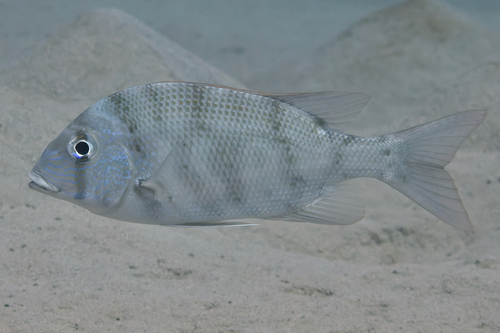
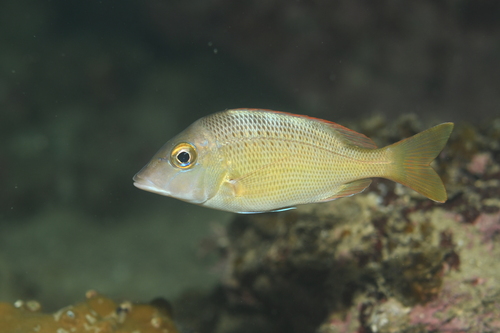
The grey large-eye bream is an emperor relative from the Indo-West Pacific, from southern Japan to the Indo-Malaysian region. The species grows to about 35 cm and has a deep, silver-grey body with large eyes. As a bottom-dweller it stays in sheltered coastal bays and on deeper sand and mud slopes between 15 and 80 metres and feeds on bottom invertebrates. It is a valued food and sport fish. The IUCN assesses the species as Least Concern (LC).

Frequently asked questions

How do you recognise the Grey large-eye bream?

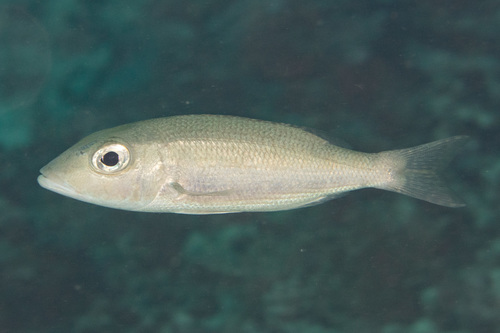
The Grey large-eye bream has a torpedo-shaped body, is mainly silver-grey and shows a plain pattern. Deep silvery-grey body with large eyes; bottom forager

Where does the Grey large-eye bream live?

The Grey large-eye bream lives in the sea (marine waters) and is mostly found around stony or rocky ground. Indo-West Pacific

How big does the Grey large-eye bream get?

The Grey large-eye bream grows to a maximum of about 35 cm. On average the species is around 25 cm.

Is the Grey large-eye bream dangerous to humans?

No, the Grey large-eye bream is harmless to humans. This species is harmless to humans. No specific first aid is needed. Still handle the fish with care: mind the fin rays and the sharp edges of the gill cover, and rinse any scratch with clean water and cover it. For a dirty or deep wound check tetanus status.

Is the Grey large-eye bream edible?

Yes, the Grey large-eye bream is commonly eaten.

More photos

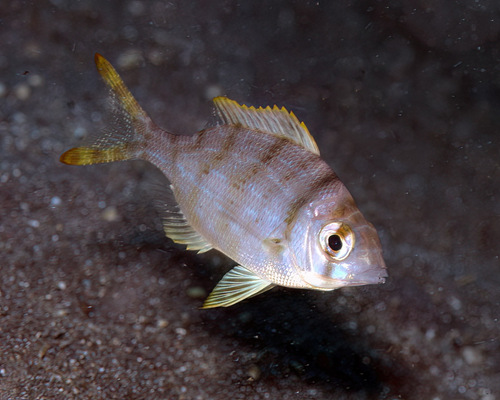
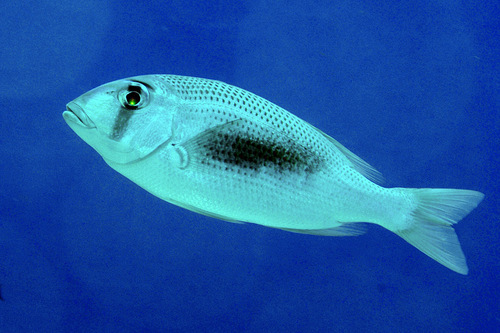
Grey large-eye bream (Gymnocranius griseus) — Lethrinidae — 2
Williams, Jeffrey T. (CC0 1.0) via GBIF — USNM
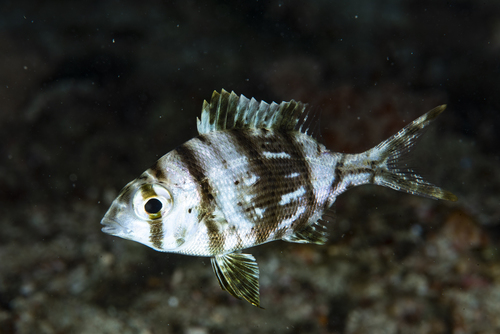
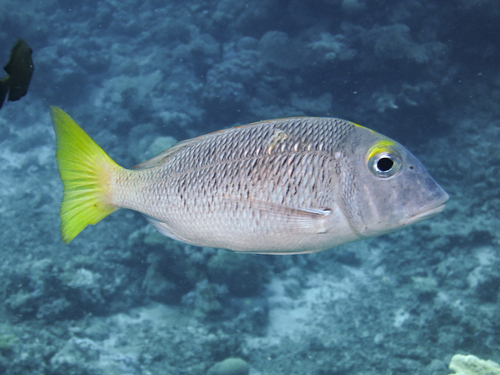
Grey large-eye bream (Gymnocranius griseus) — Lethrinidae — 3
iNaturalist ((c) an2mc, some rights reserved (CC BY-NC))
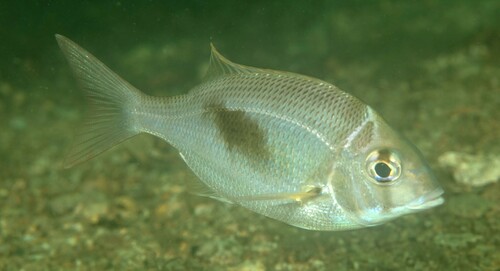
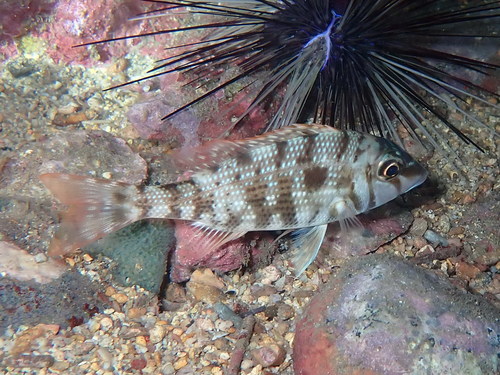
Grey large-eye bream (Gymnocranius griseus) — Lethrinidae — 4
iNaturalist ((c) uwkwaj, some rights reserved (CC BY-NC))
Grey large-eye bream (Gymnocranius griseus) — Lethrinidae — 5
iNaturalist ((c) Francesco Ricciardi, some rights reserved (CC BY-NC))
Fin

Want the complete picture on the Grey large-eye bream?

Point your camera at the fish and Fin names the species in seconds. Free, and the Grey large-eye bream is one of 12,519 species in the app.

Get the app →

All data

Identification

English name
Grey large-eye bream verified
Scientific name
Gymnocranius griseus
Family
Lethrinidae
Other names
Gingko; Gingko fish; Gray emperor; Gray large-eye bream; Barred large-eye bream; Grey emperor; Grey barenose; Grey seabream; Large-eye bream; Nakedhead large-eye bream; Naked-head seabream; Naked-headed large eyed bream verified

Appearance

Size class
Medium verified
Max length (cm)
35.0 verified
Average length (cm)
25.0 verified
Body shape
Torpedo-shaped sourced
Dominant colour
Silver / grey inferred
Pattern
Plain sourced
Tail shape
Forked inferred
Mouth position
Terminal sourced
Lips
Thick / fleshy sourced
Barbels
No sourced
Dorsal fins
One continuous sourced
Dorsal spines
Yes sourced

Habitat & distribution

Water type
Saltwater sourced
Substrate
Stone or rock sourced
Min depth (m)
15.0 verified
Max depth (m)
80.0 verified
Natural range
Indo-West Pacific verified
Origin
Native verified

Behaviour & biology

Diet
Carnivore sourced
Diet (detail)
Benthic invertebrates inferred
Social behaviour
Solitary sourced
Territorial
No sourced
Activity
Diurnal sourced
Reproduction
Separate sexes sourced
Sexual dimorphism
No sourced
Seasonality
Bottom-foraging bigeye bream; present year-round. sourced
Special features
Deep silvery-grey body with large eyes; bottom forager sourced

For anglers

Edibility
Commonly eaten sourced
Fishing method
Bottom fishing with bait sourced
Regulations source
FishBase ↗ inferred

Safety

Danger to humans
Harmless sourced
First aid
This species is harmless to humans. No specific first aid is needed. Still handle the fish with care: mind the fin rays and the sharp edges of the gill cover, and rinse any scratch with clean water and cover it. For a dirty or deep wound check tetanus status. verified

Status & sources

Sources
FishBase via GBIF (DwC-A), CC-BY-NC 4.0

Same genus Gymnocranius

More from the family Lethrinidae
Fin

Want the complete picture on the Grey large-eye bream?

Point your camera at the fish and Fin names the species in seconds. Free, and the Grey large-eye bream is one of 12,519 species in the app.

Get the app →
Is this the Grey large-eye bream? Get the app