 Fin's Fish Guide
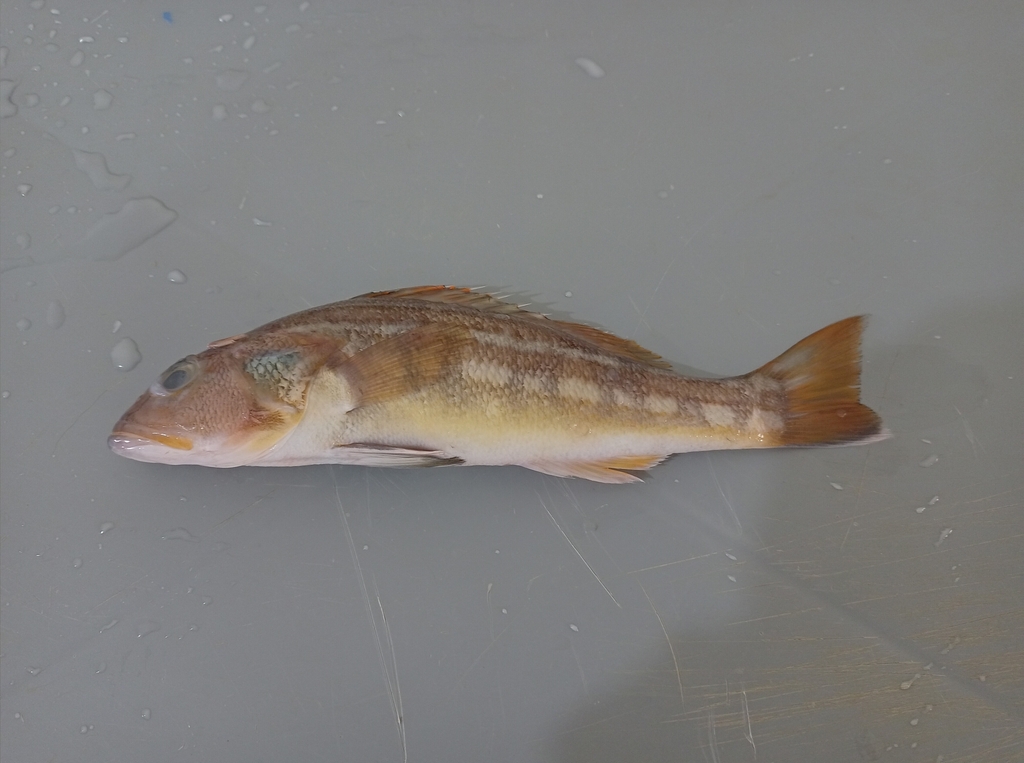
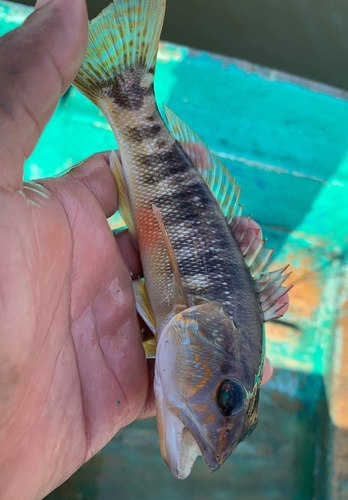
The Greater sand perch (Diplectrum maximum) is a saltwater fish of the family Serranidae that grows up to 37 cm.
Description
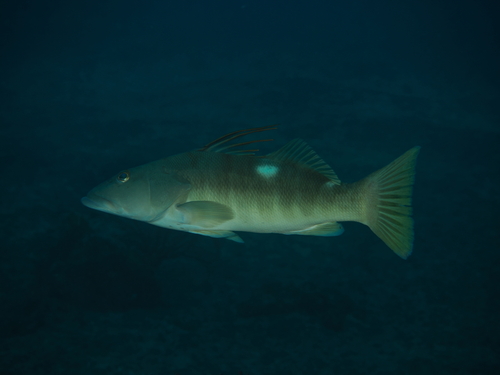
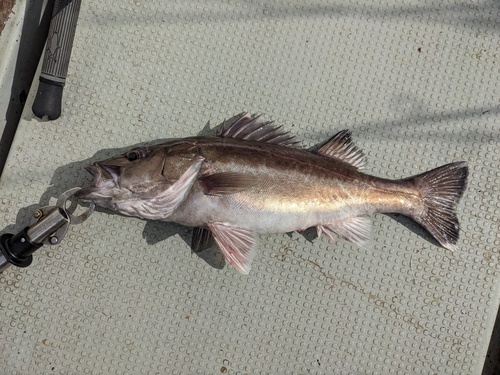
The greater sand perch is a fish of the family Serranidae from the eastern Pacific, along the coast of Central and South America. The species reaches about 37 cm and has an elongate, brownish body with dark cross-bands and blue lines on the head. It lives demersally to benthopelagically over soft bottoms of the continental shelf. The diet consists of small fishes and crustaceans. Like other sand perches the species is a synchronous (simultaneous) hermaphrodite, possessing male and female gonads at the same time. Little is known about the precise ecology of this species.
Frequently asked questions
How do you recognise the Greater sand perch?
The Greater sand perch has a torpedo-shaped body, is mainly brown and shows a vertical stripes pattern. Synchronous (simultaneous) hermaphrodite with male and female gonads at the same time.
Where does the Greater sand perch live?
The Greater sand perch lives in the sea (marine waters) and is mostly found around mixed bottom. Eastern Pacific, along Central and South America.
How big does the Greater sand perch get?
The Greater sand perch grows to a maximum of about 37 cm. On average the species is around 22 cm.
Is the Greater sand perch dangerous to humans?
No, the Greater sand perch is harmless to humans. None required: this species is harmless to humans.
Is the Greater sand perch edible?
The Greater sand perch is rarely eaten.

Want the complete picture on the Greater sand perch?
Point your camera at the fish and Fin names the species in seconds. Free, and the Greater sand perch is one of 12,519 species in the app.
All data
Identification
Appearance
Habitat & distribution
Behaviour & biology
For anglers
Safety
Status & sources
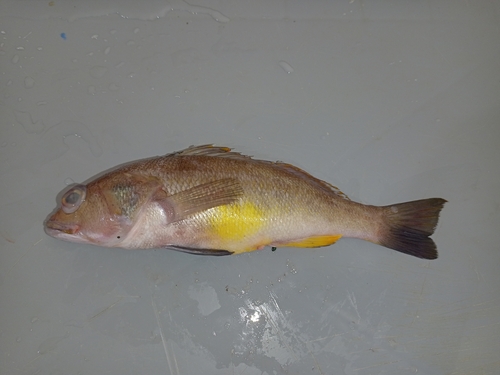
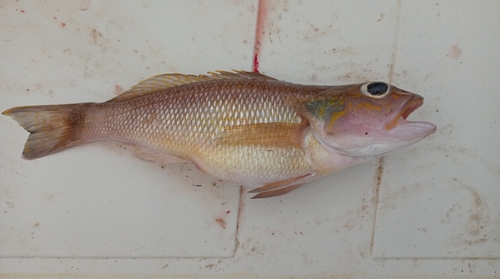
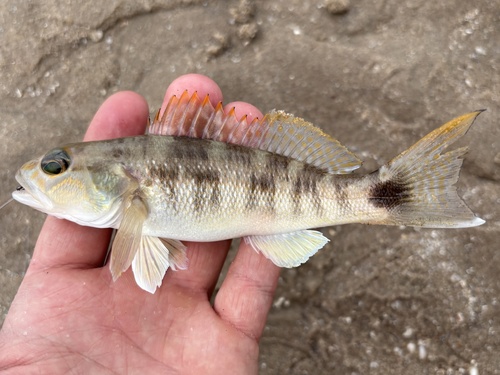
Same genus Diplectrum
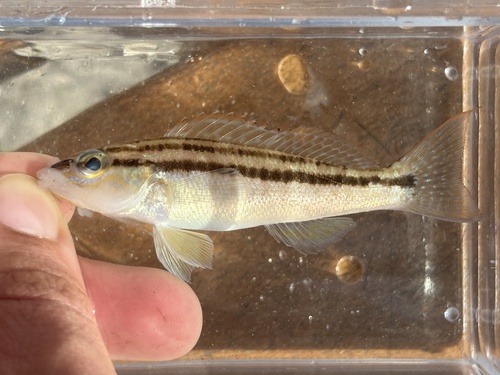
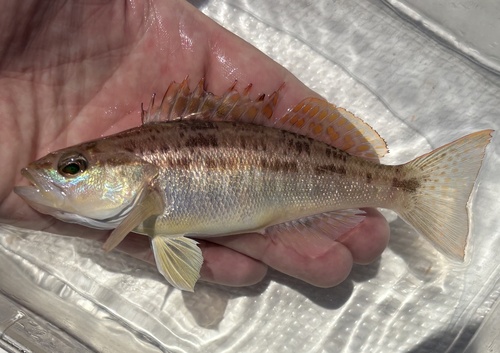
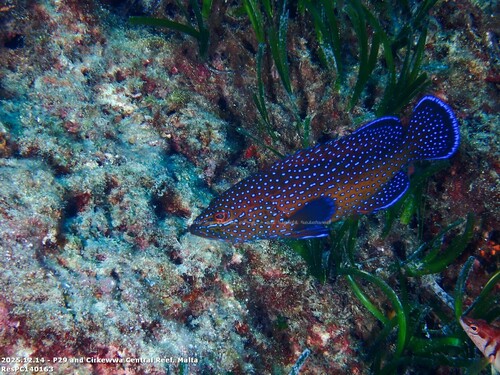
More from the family Serranidae



Want the complete picture on the Greater sand perch?
Point your camera at the fish and Fin names the species in seconds. Free, and the Greater sand perch is one of 12,519 species in the app.