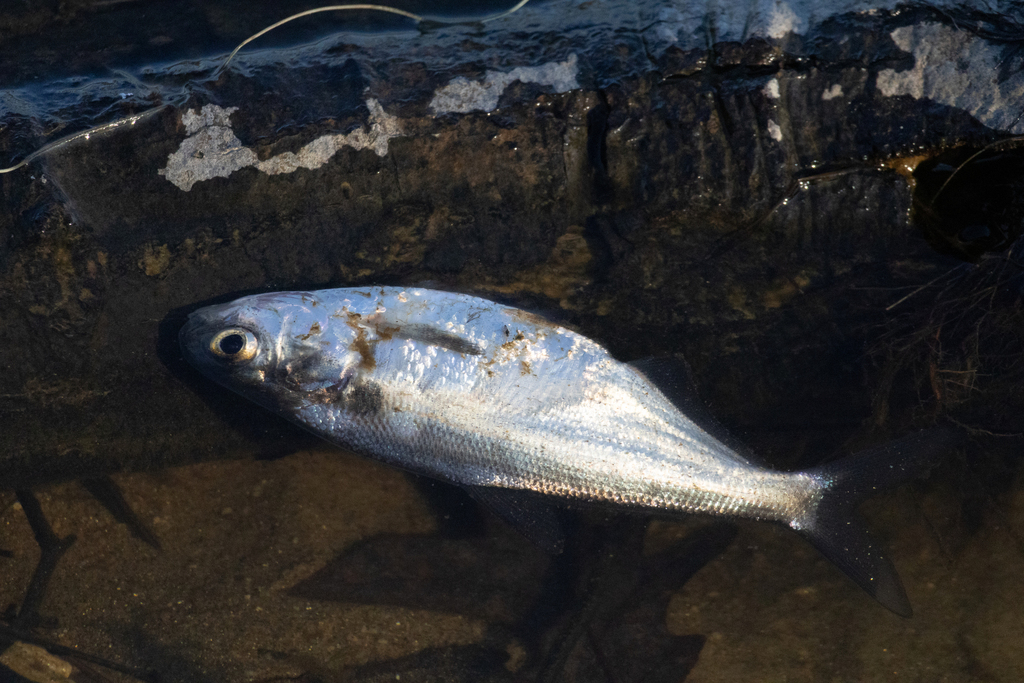
The American gizzard shad (Dorosoma cepedianum) is a fish that lives in both fresh and salt water of the family Clupeidae that grows up to 57 cm.
Description
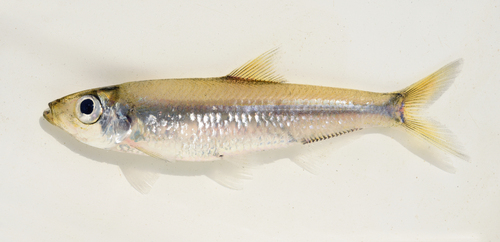
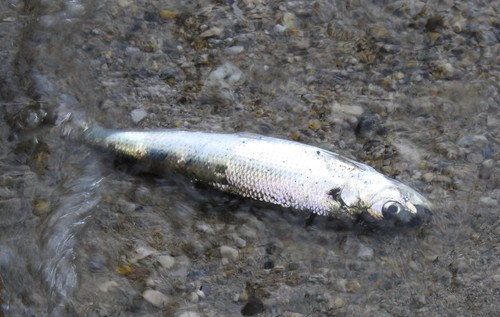
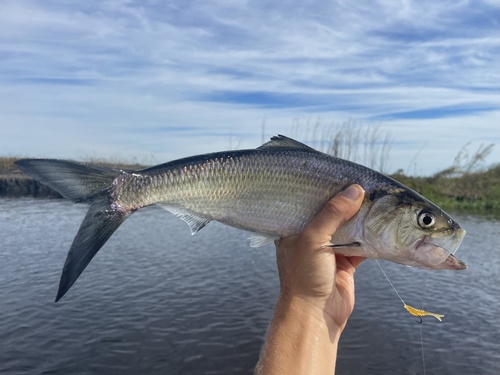
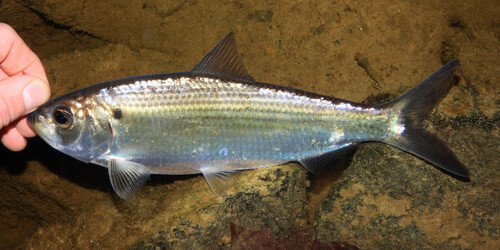
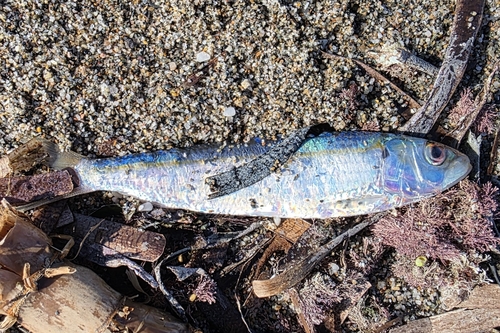
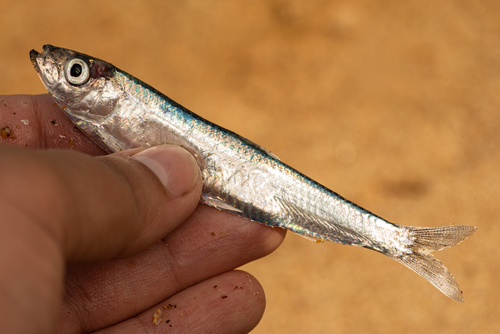
The American gizzard shad (Dorosoma cepedianum) is a herring-like fish of the family Clupeidae living in fresh and brackish waters of eastern and central North America. It reaches about 30-40 cm and has a deep, laterally compressed silvery body with a downward-pointing mouth. Distinctive features are the long, thread-like last dorsal ray and a dark shoulder spot in juveniles. A filter feeder, it forms large schools and eats plankton, detritus and algae. Ecologically important as a forage fish, it is widely used as bait but seldom eaten by people.
Frequently asked questions
How do you recognise the American gizzard shad?
The American gizzard shad has a torpedo-shaped body, is mainly silver-grey and shows a plain pattern.
Where does the American gizzard shad live?
The American gizzard shad lives in both fresh and salt water and is mostly found around open water.
How big does the American gizzard shad get?
The American gizzard shad grows to a maximum of about 57 cm. On average the species is around 35 cm.
Is the American gizzard shad dangerous to humans?
No, the American gizzard shad is harmless to humans.
Is the American gizzard shad edible?
The American gizzard shad is rarely eaten.
Download Fin's Fish Guide
Identify fish in seconds, log your catches and dives. Join the TestFlight beta.
All data
Identification
Appearance
Habitat & distribution
Behaviour & biology
For anglers
Safety
Status & sources
Same genus Dorosoma
More from the family Clupeidae


Download Fin's Fish Guide
Identify fish in seconds, log your catches and dives. Join the TestFlight beta.