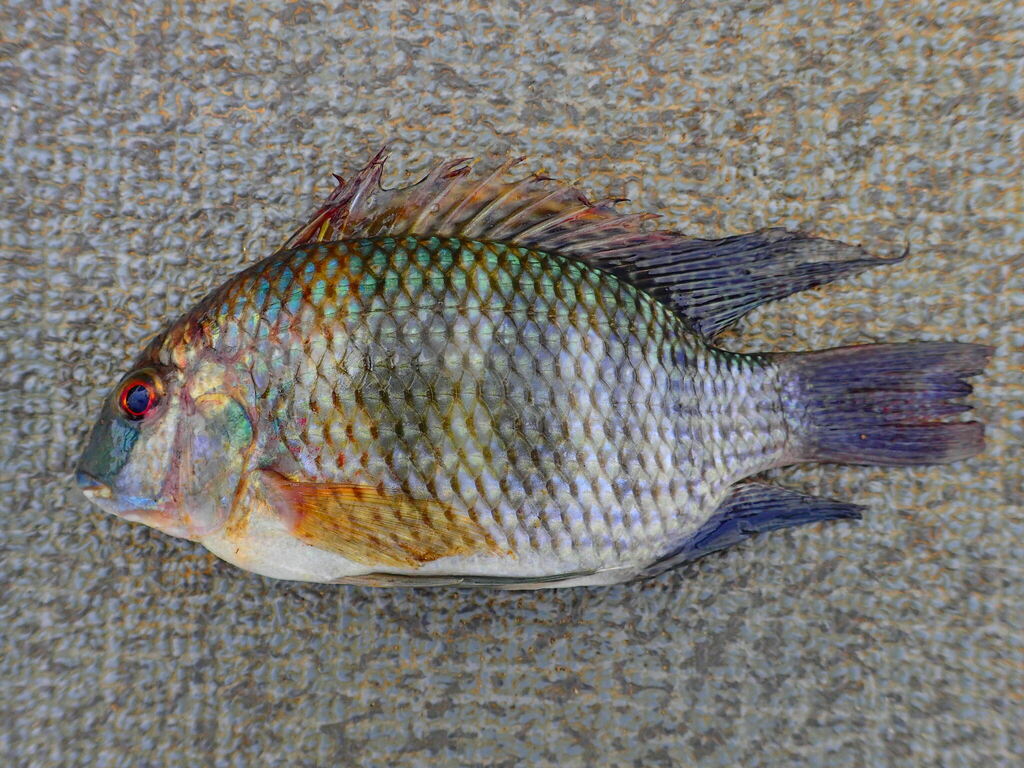
The Cameroon tilapia (Coptodon cameronensis) is a freshwater fish of the family Cichlidae that grows up to 32 cm.
Description
Coptodon cameronensis is a tilapia-type cichlid from coastal rivers of Cameroon in West-Central Africa. The species has a deep, laterally compressed body and reaches about 32 cm. It inhabits slow-flowing, often vegetated waters and estuaries. Unlike the mouthbrooding Oreochromis tilapias, this is a substrate spawner: the eggs are laid in the open on a surface and guarded by both parents. The diet consists of a varied menu of algae, plant matter, detritus and small invertebrates. The species is of local fishery importance and contributes to the diversity of West African cichlids.
Frequently asked questions
How do you recognise the Cameroon tilapia?
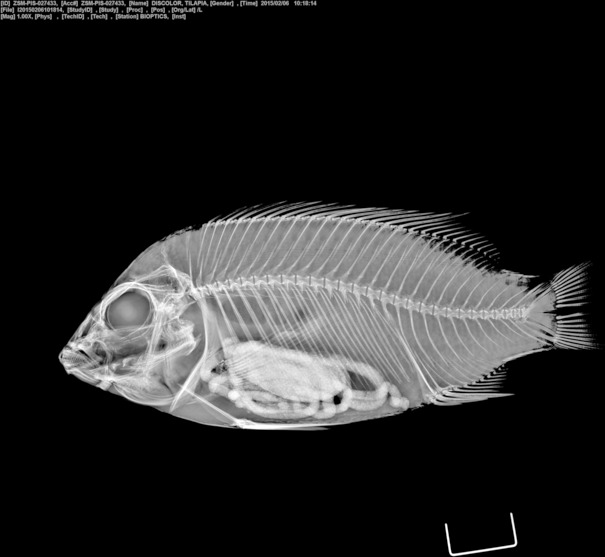
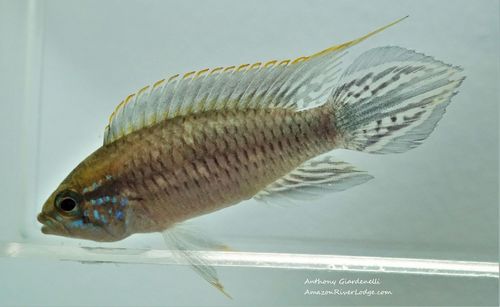
The Cameroon tilapia has a flattened, disc-shaped body, is mainly silver-grey and shows a vertical stripes pattern.
Where does the Cameroon tilapia live?
The Cameroon tilapia lives in fresh water and is mostly found around sand or mud bottom.
How big does the Cameroon tilapia get?
The Cameroon tilapia grows to a maximum of about 32 cm.
Is the Cameroon tilapia dangerous to humans?
No, the Cameroon tilapia is harmless to humans.
Is the Cameroon tilapia edible?
The Cameroon tilapia is rarely eaten.
Download Fin's Fish Guide
Identify fish in seconds, log your catches and dives. Join the TestFlight beta.
All data
Identification
Appearance
Habitat & distribution
Behaviour & biology
For anglers
Safety
Status & sources
Same genus Coptodon


More from the family Cichlidae



Download Fin's Fish Guide
Identify fish in seconds, log your catches and dives. Join the TestFlight beta.