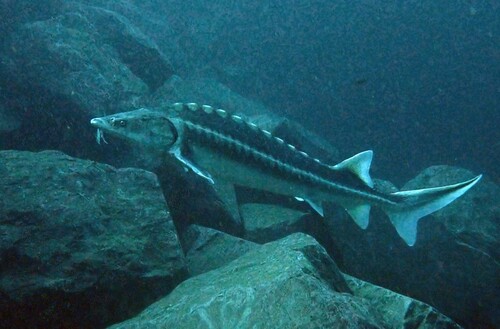
Home · Acipenseridae · Columbia sturgeon
Columbia sturgeon (Acipenser transmontanus) — Acipenseridae

Columbia sturgeon

Acipenser transmontanus
Family: Acipenseridae
VU · Vulnerable
NativeIntroduced

The Columbia sturgeon (Acipenser transmontanus) is a fish that lives in both fresh and salt water of the family Acipenseridae that grows up to 610 cm.

Length
610 cm
Water
Euryhaline
Depth
1.0–122.0 m
Diet
Carnivore
Behaviour
Solitary
Body shape
Elongated (eel-like)
Substrate
Sand / mud bottom
Danger
Harmless
Range
Northeast Pacific and large rivers along the west coast of North America (including the Columbia, Fraser and Sacramento).
Edibility
Commonly eaten

Want the complete picture on the Columbia sturgeon?

Get the app

Description

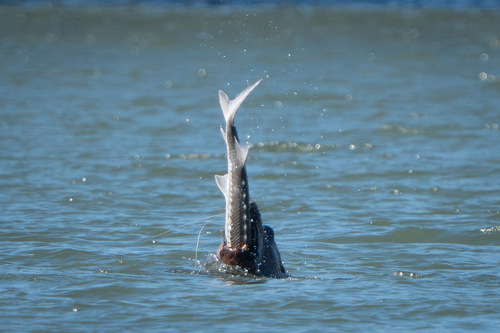
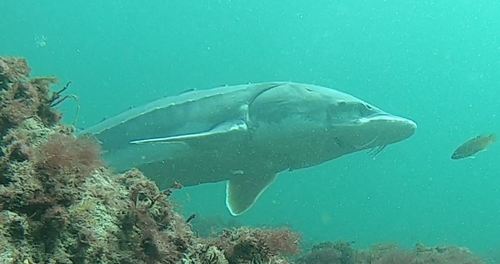
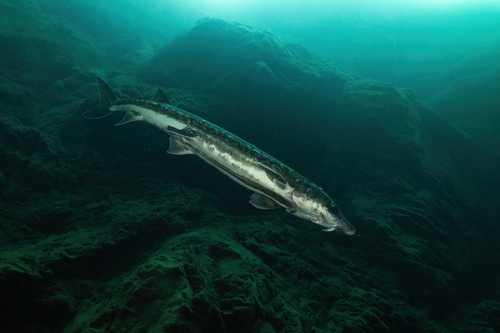
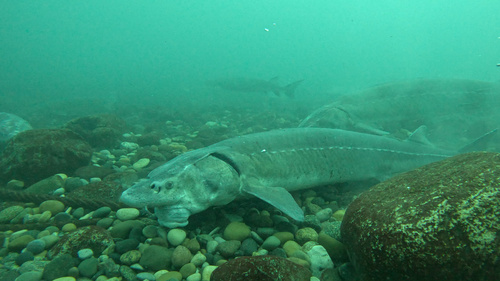
The white sturgeon is one of North America's largest freshwater fishes and occurs along the Pacific coast from Alaska to California. The species has an elongate, grey body with rows of bony plates (scutes) and bears barbels beneath the pointed snout above a downward-facing, protrusible mouth. Exceptional individuals reach six metres and over a hundred years of age. The fish is anadromous: it lives largely in the sea and coastal waters and migrates far up rivers to spawn. It feeds on fishes and bottom animals. The species yields meat and caviar.

Frequently asked questions

How do you recognise the Columbia sturgeon?

The Columbia sturgeon has an elongate, eel-like body, is mainly silver-grey and shows a plain pattern. One of the largest freshwater fishes of North America (up to ~6 m); rows of bony plates and barbels; can live to more than 100 years; eggs as caviar.

Where does the Columbia sturgeon live?

The Columbia sturgeon lives in both fresh and salt water and is mostly found around sand or mud bottom. Northeast Pacific and large rivers along the west coast of North America (including the Columbia, Fraser and Sacramento).

How big does the Columbia sturgeon get?

The Columbia sturgeon grows to a maximum of about 610 cm. On average the species is around 21 cm.

Is the Columbia sturgeon dangerous to humans?

No, the Columbia sturgeon is harmless to humans. None required: this species is harmless to humans.

Is the Columbia sturgeon edible?

Yes, the Columbia sturgeon is commonly eaten.

More photos
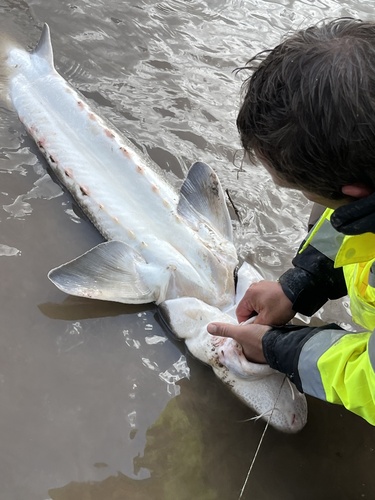
Columbia sturgeon (Acipenser transmontanus) — Acipenseridae — 2
iNaturalist ((c) Julien Ueda, some rights reserved (CC BY-NC))
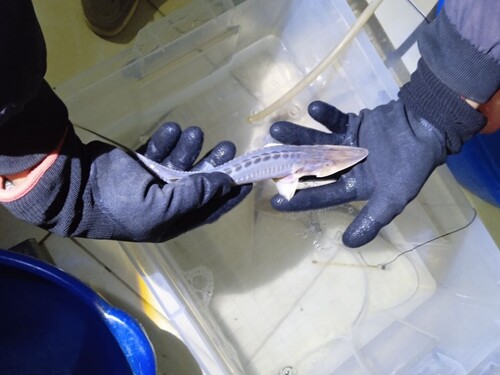
Columbia sturgeon (Acipenser transmontanus) — Acipenseridae — 3
iNaturalist ((c) Ilya Burylov, some rights reserved (CC BY-NC))
Columbia sturgeon (Acipenser transmontanus) — Acipenseridae — 4
Wikimedia Commons — Josephe Huët (Public domain)
Fin

Want the complete picture on the Columbia sturgeon?

Point your camera at the fish and Fin names the species in seconds. Free, and the Columbia sturgeon is one of 12,519 species in the app.

Get the app →

All data

Identification

English name
Columbia sturgeon verified
Scientific name
Acipenser transmontanus
Family
Acipenseridae
Other names
Oregon sturgeon; Pacific sturgeon; Sacramento sturgeon; White sturgeon verified

Appearance

Size class
Extra large verified
Max length (cm)
610.0 verified
Average length (cm)
21.0 verified
Body shape
Elongated (eel-like) sourced
Dominant colour
Silver / grey inferred
Pattern
Plain inferred
Tail shape
Forked inferred
Mouth position
Inferior (downward) inferred
Lips
Thick / fleshy inferred
Barbels
Yes sourced
Dorsal fins
One continuous inferred
Dorsal spines
No sourced

Habitat & distribution

Water type
Euryhaline sourced
Substrate
Sand / mud bottom sourced
Min depth (m)
1.0 verified
Max depth (m)
122.0 verified
Natural range
Northeast Pacific and large rivers along the west coast of North America (including the Columbia, Fraser and Sacramento). inferred
Origin
Native sourced

Behaviour & biology

Diet
Carnivore sourced
Diet (detail)
Fishes; younger animals eat midge larvae, crustaceans and molluscs sourced
Social behaviour
Solitary inferred
Territorial
No inferred
Reproduction
Separate sexes sourced
Sexual dimorphism
No inferred
levensduur_max_jaar
104.0 verified
Seasonality
Migrates up the rivers in spring to spawn. inferred
Special features
One of the largest freshwater fishes of North America (up to ~6 m); rows of bony plates and barbels; can live to more than 100 years; eggs as caviar. sourced

For anglers

Edibility
Commonly eaten sourced
Fishing method
A target of angling (often catch and release); commercially farmed for meat and caviar. sourced
Regulations source
FishBase ↗ inferred

Safety

Danger to humans
Harmless sourced
First aid
None required: this species is harmless to humans. sourced

Status & sources

Sources
FishBase via GBIF (DwC-A), CC-BY-NC 4.0

Same genus Acipenser

More from the family Acipenseridae
Fin

Want the complete picture on the Columbia sturgeon?

Point your camera at the fish and Fin names the species in seconds. Free, and the Columbia sturgeon is one of 12,519 species in the app.

Get the app →
Is this the Columbia sturgeon? Get the app