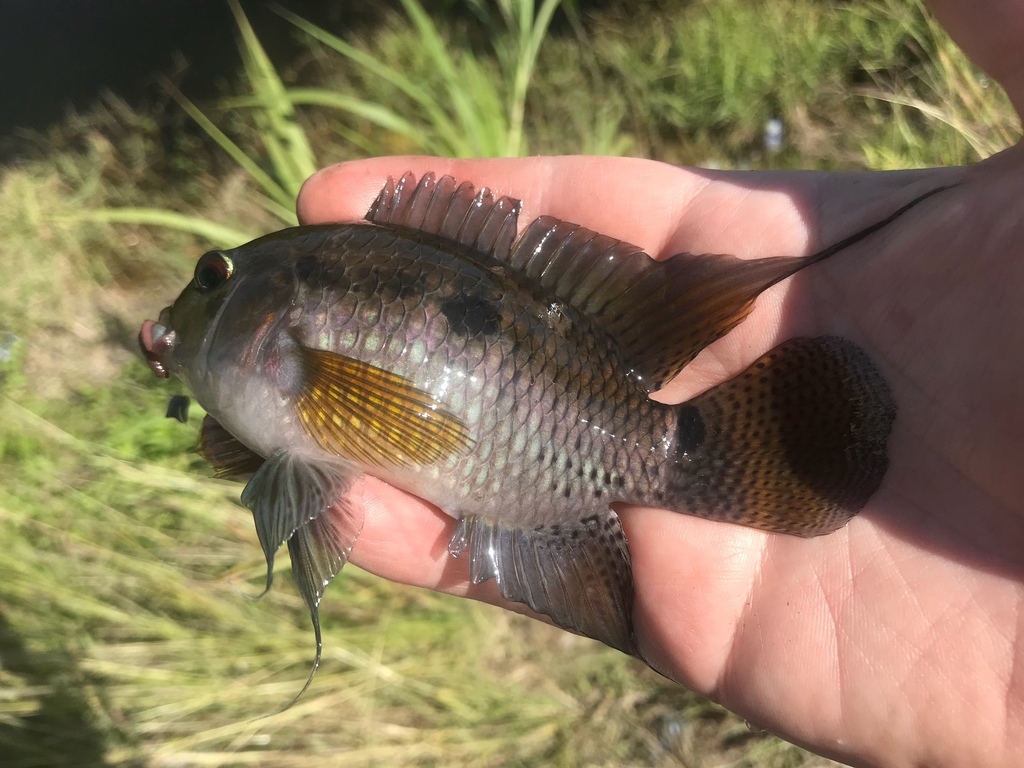
The Black acara (Cichlasoma bimaculatum) is a freshwater fish of the family Cichlidae that grows up to 12 cm.
Description
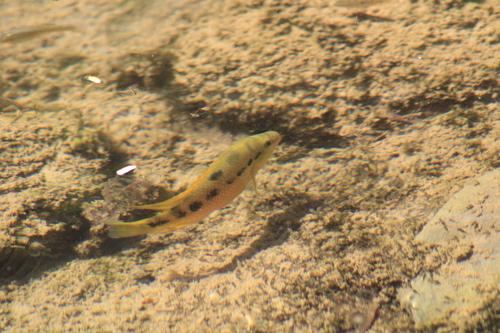
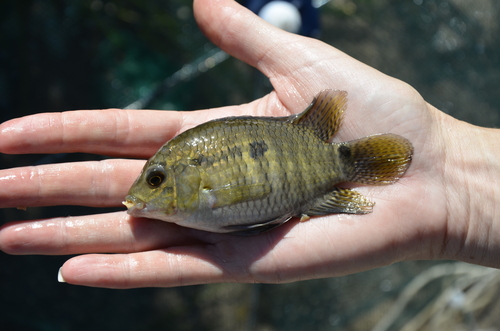
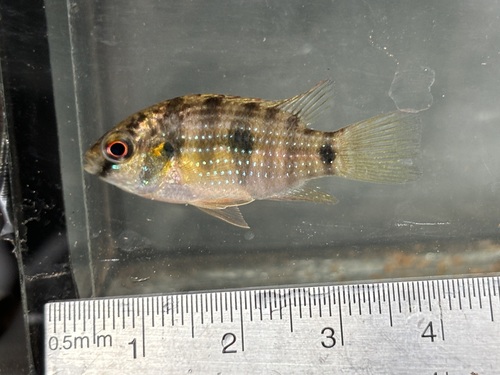
The black acara is a South American cichlid of the family Cichlidae reaching about 12 cm. The laterally compressed body is brownish to olive with a pearly sheen and bears a conspicuous dark blotch in the middle of the flank and a second at the tail base. The species lives in slow-flowing and still fresh water of northern South America and has spread as an aquarium fish beyond that range, becoming established in Florida among other places. It is an omnivore eating small invertebrates, plant matter and detritus. Like many cichlids it forms pairs that clean a spawning site and then fiercely defend eggs and young against intruders.
Frequently asked questions
How do you recognise the Black acara?
The Black acara has a torpedo-shaped body, is mainly brown and shows a vertical stripes pattern.
Where does the Black acara live?
The Black acara lives in fresh water and is mostly found around mixed bottom.
How big does the Black acara get?
The Black acara grows to a maximum of about 12 cm. On average the species is around 12 cm.
Is the Black acara dangerous to humans?
No, the Black acara is harmless to humans.
Is the Black acara edible?
The Black acara is rarely eaten.
Download Fin's Fish Guide
Identify fish in seconds, log your catches and dives. Join the TestFlight beta.
All data
Identification
Appearance
Habitat & distribution
Behaviour & biology
For anglers
Safety
Status & sources
Same genus Cichlasoma
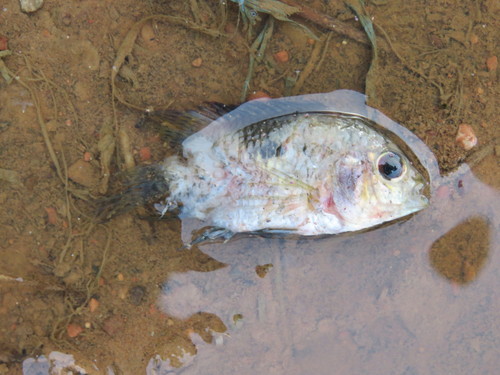
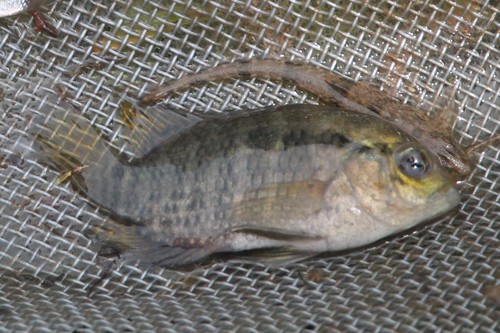

More from the family Cichlidae



Download Fin's Fish Guide
Identify fish in seconds, log your catches and dives. Join the TestFlight beta.