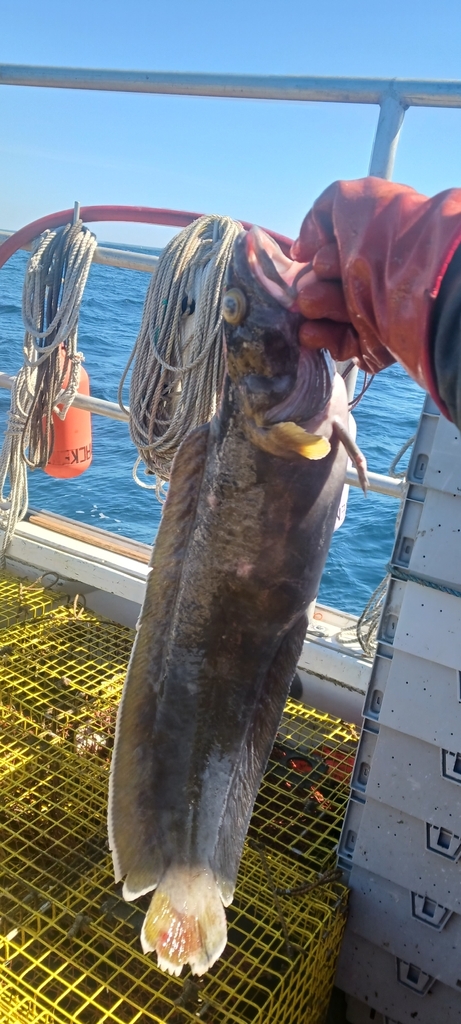
The Brismak (Brosme brosme) is a saltwater fish of the family Lotidae that grows up to 120 cm.
Description
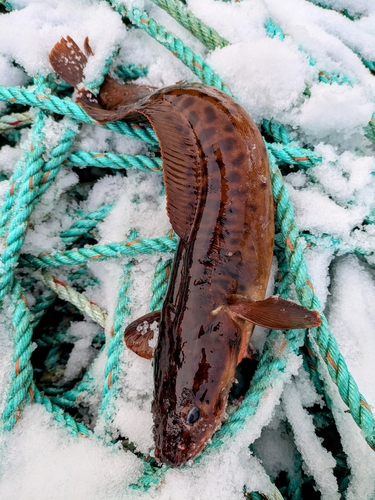
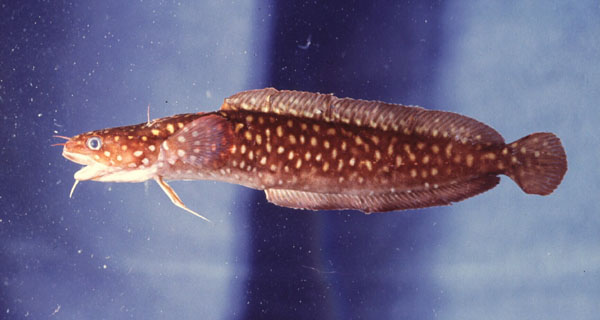
The cusk is an elongate bottom fish of the family Lotidae reaching about 120 cm. Unlike many relatives it has a single long, continuous dorsal fin and one anal fin, both edged in white, plus a single chin barbel. The back is dark red- or green-brown fading to a pale belly, while juveniles show yellow cross-bands. Cusk live solitarily or in small groups on rocky and gravel bottoms of the northern Atlantic at depths of 18 to 1000 m, feeding on crustaceans, shellfish, flatfishes and starfish. It is a valued food fish, taken mainly on long lines and in trawls.
Frequently asked questions
How do you recognise the Brismak?
The Brismak has an elongate, eel-like body, is mainly brown and shows a plain pattern.
Where does the Brismak live?
The Brismak lives in the sea (marine waters) and is mostly found around sand or mud bottom.
How big does the Brismak get?
The Brismak grows to a maximum of about 120 cm. On average the species is around 50 cm.
Is the Brismak dangerous to humans?
No, the Brismak is harmless to humans.
Is the Brismak edible?
Yes, the Brismak is commonly eaten.
Download Fin's Fish Guide
Identify fish in seconds, log your catches and dives. Join the TestFlight beta.
All data
Identification
Appearance
Habitat & distribution
Behaviour & biology
For anglers
Safety
Status & sources
More from the family Lotidae
Download Fin's Fish Guide
Identify fish in seconds, log your catches and dives. Join the TestFlight beta.