 Fin's Fish Guide
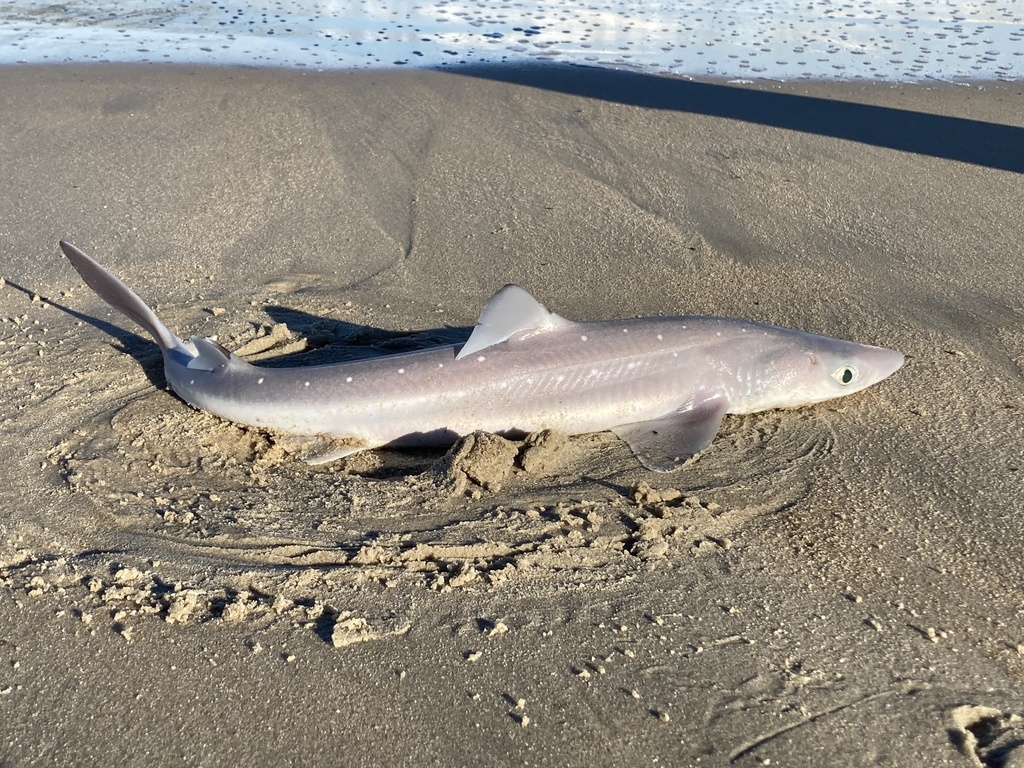
The Blue dog (Squalus acanthias) is a brackish-water fish of the family Squalidae that grows up to 160 cm.
Circumglobal in boreal and temperate waters; absent from the North Pacific (replaced there by Squalus suckleyi).
Description
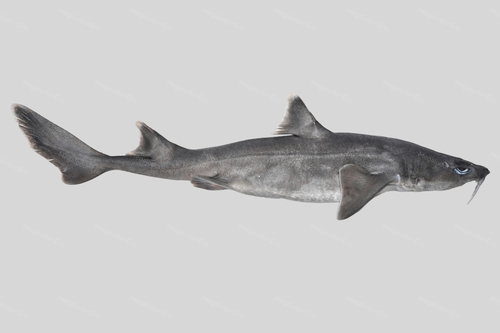
The spurdog is a slender, small shark of the family Squalidae reaching about 160 cm. The back is blue-grey with a row of small white spots and the belly is white; an anal fin is absent. In front of each of the two dorsal fins stands a venomous spine that can inflict a painful wound. The species occurs circumglobally in cool, temperate waters, including the North Sea, hunting fish, squid and crustaceans. Spurdogs are ovoviviparous with an exceptionally long gestation of 18 to 24 months. Because of overfishing and slow reproduction the species is assessed as Vulnerable across much of its range.
Frequently asked questions
How do you recognise the Blue dog?
The Blue dog has an elongate, eel-like body, is mainly silver-grey and shows a spots pattern. Slender shark with a venomous spine in front of each dorsal fin and a row of white blotches on the blue-grey back; no anal fin.
Where does the Blue dog live?
The Blue dog lives in brackish water and is mostly found around sand or mud bottom. Circumglobal in boreal and temperate waters; absent from the North Pacific (replaced there by Squalus suckleyi).
How big does the Blue dog get?
The Blue dog grows to a maximum of about 160 cm. On average the species is around 100 cm.
Is the Blue dog dangerous to humans?
The Blue dog is venomous — handle spines with care and seek medical help after a sting if needed. For wounds from the venomous dorsal spines: immerse the wound in hot water (about 45 °C) to ease pain, clean it, and seek medical care if pain or swelling persists.
Is the Blue dog edible?
Yes, the Blue dog is commonly eaten.
Easily confused with
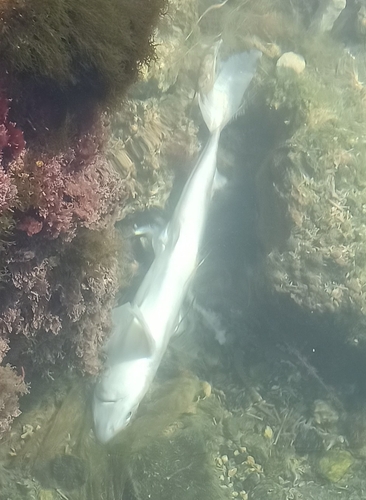
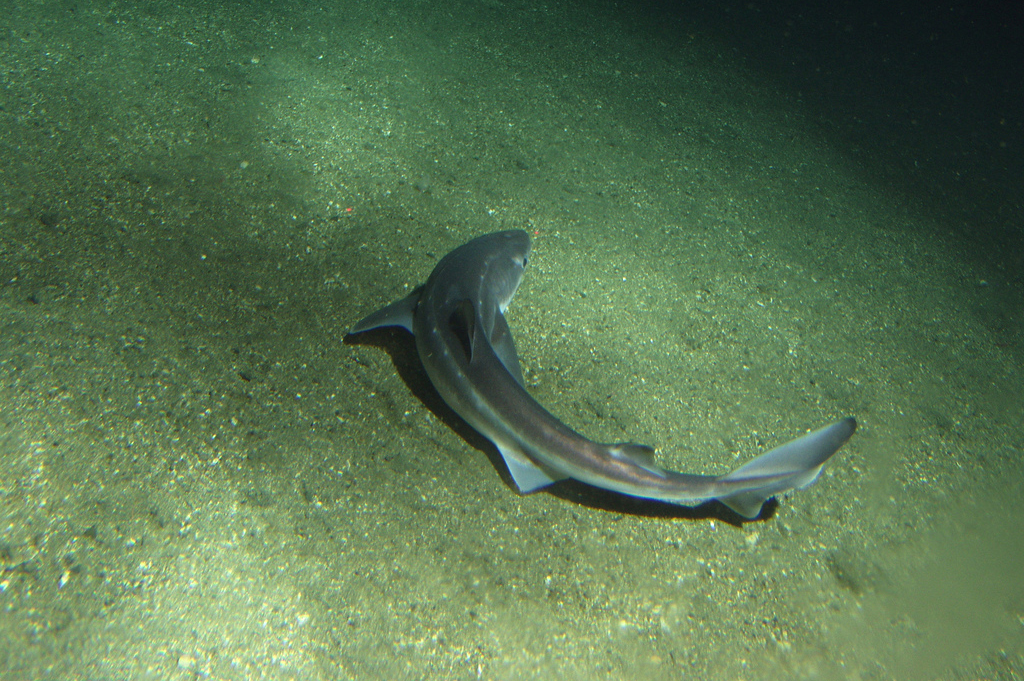
These species look like the Blue dog and live in the same waters.

Want the complete picture on the Blue dog?
Point your camera at the fish and Fin names the species in seconds. Free, and the Blue dog is one of 12,519 species in the app.
All data
Identification
Appearance
Habitat & distribution
Behaviour & biology
For anglers
Safety
Status & sources
Same genus Squalus

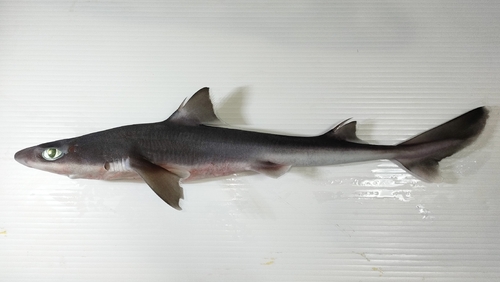

More from the family Squalidae
Want the complete picture on the Blue dog?
Point your camera at the fish and Fin names the species in seconds. Free, and the Blue dog is one of 12,519 species in the app.