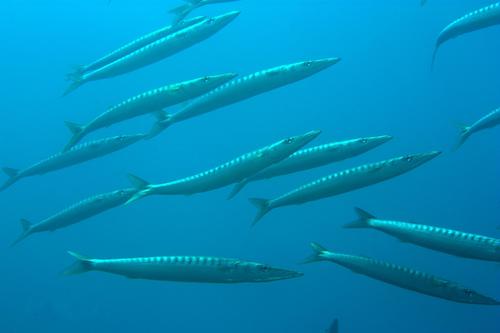
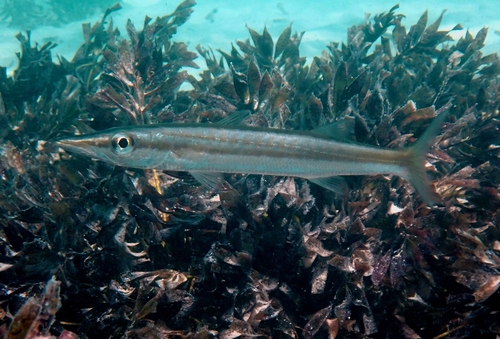
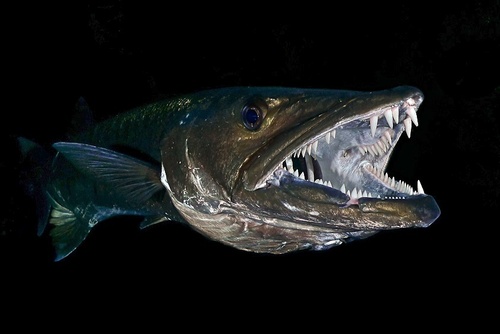
Home · Sphyraenidae · Bigeye barracuda
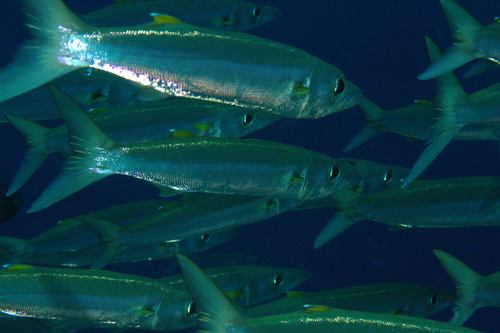
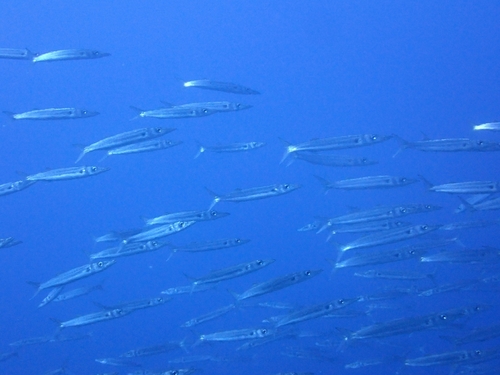
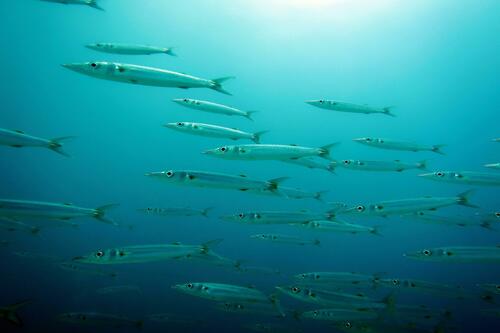
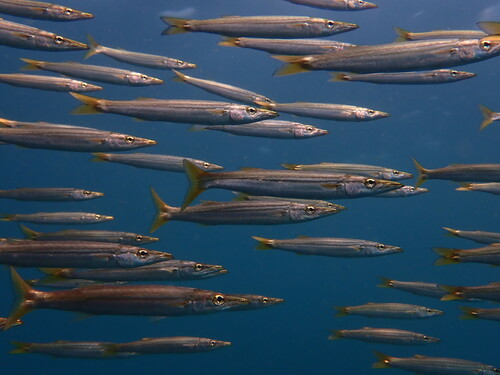
Bigeye barracuda (Sphyraena forsteri) — Sphyraenidae

Bigeye barracuda

Sphyraena forsteri
Family: Sphyraenidae
LC · Least Concern

The Bigeye barracuda (Sphyraena forsteri) is a saltwater fish of the family Sphyraenidae that grows up to 92 cm.

Length
92.3 cm
Water
Saltwater
Depth
6.0–300.0 m
Diet
Carnivore
Behaviour
Schooling
Activity
Nocturnal
Body shape
Elongated (eel-like)
Substrate
Stone or rock
Danger
Venomous / poisonous
Range
Indo-Pacific
Edibility
Commonly eaten

Want the complete picture on the Bigeye barracuda?

Get the app

Description

The bigeye barracuda is a predatory fish from the Indo-Pacific, ranging from East Africa through Southeast Asia to the Marquesas and Society Islands, north to southern Japan. The species grows to about 90 cm and has a streamlined, silvery body with large eyes and jaws full of sharp teeth. By day it forms large schools above lagoon and outer reef slopes; at night it hunts fish, shrimp and squid. Large individuals can cause ciguatera poisoning if eaten. The IUCN assesses the species as Least Concern (LC).

Frequently asked questions

How do you recognise the Bigeye barracuda?

The Bigeye barracuda has an elongate, eel-like body, is mainly silver-grey and shows a plain pattern. Large eyes and sharp teeth; forms large shoals during the day Note: in tropical areas this species can cause ciguatera poisoning when eaten; large specimens of coral reef predators can accumulate the toxin. Eat with caution or avoid in risk areas.

Where does the Bigeye barracuda live?

The Bigeye barracuda lives in the sea (marine waters) and is mostly found around stony or rocky ground. Indo-Pacific

How big does the Bigeye barracuda get?

The Bigeye barracuda grows to a maximum of about 92 cm. On average the species is around 50 cm.

Is the Bigeye barracuda dangerous to humans?

The Bigeye barracuda is venomous — handle spines with care and seek medical help after a sting if needed. The flesh of large barracudas can contain ciguatoxin and cause ciguatera poisoning (stomach upset, tingling, reversal of hot/cold sensation). Do not eat large specimens; seek medical help if symptoms of poisoning appear.

Is the Bigeye barracuda edible?

Yes, the Bigeye barracuda is commonly eaten.

More photos
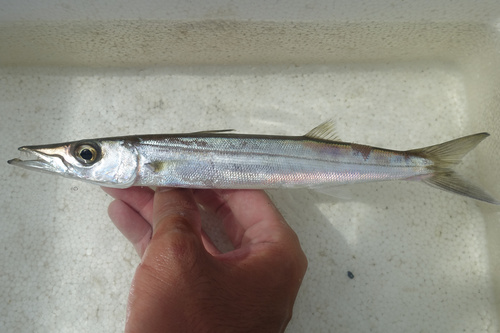
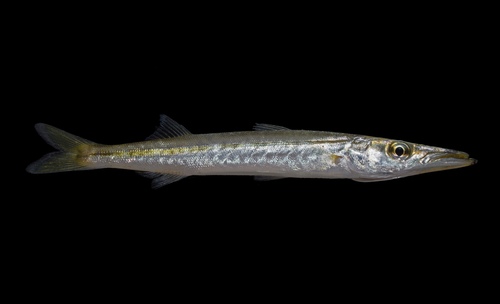
Bigeye barracuda (Sphyraena forsteri) — Sphyraenidae — 2
iNaturalist ((c) sharkdevotee, some rights reserved (CC BY-NC))
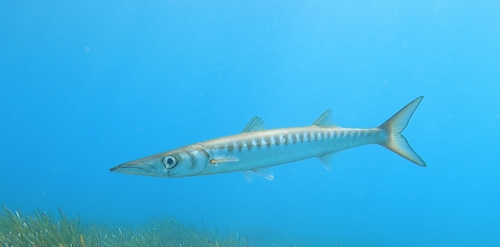
Bigeye barracuda (Sphyraena forsteri) — Sphyraenidae — 3
iNaturalist ((c) craigjhowe, some rights reserved (CC BY-NC))
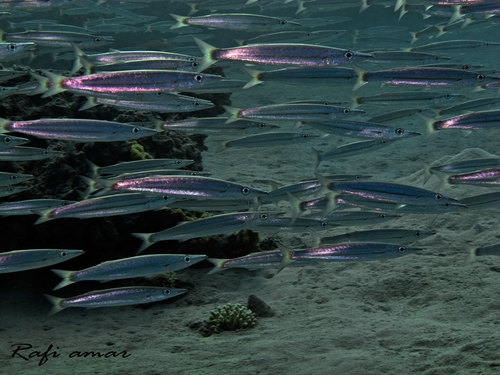
Bigeye barracuda (Sphyraena forsteri) — Sphyraenidae — 4
Ben Costamagna (CC BY 4.0) via GBIF — iNaturalist
Bigeye barracuda (Sphyraena forsteri) — Sphyraenidae — 5
iNaturalist ((c) Thomas Menut, some rights reserved (CC BY-NC))
Fin

Want the complete picture on the Bigeye barracuda?

Point your camera at the fish and Fin names the species in seconds. Free, and the Bigeye barracuda is one of 12,519 species in the app.

Get the app →

All data

Identification

English name
Bigeye barracuda verified
Scientific name
Sphyraena forsteri
Family
Sphyraenidae
Other names
Bigeye barracuda; Blackspot barracuda; Black-spot barracuda; Big-eye sea-pyke; Blotched sea-pike; Forster's barracuda; Forster's sea-pike; Foster's barracuda; Striped seapike verified

Appearance

Size class
Extra large verified
Max length (cm)
92.3 verified
Average length (cm)
50.0 verified
Body shape
Elongated (eel-like) sourced
Dominant colour
Silver / grey sourced
Pattern
Plain sourced
Tail shape
Forked inferred
Mouth position
Terminal sourced
Lips
Thin sourced
Barbels
Yes sourced
Dorsal fins
Two separate sourced
Dorsal spines
Yes sourced

Habitat & distribution

Water type
Saltwater sourced
Substrate
Stone or rock sourced
Min depth (m)
6.0 verified
Max depth (m)
300.0 verified
Natural range
Indo-Pacific verified
Origin
Native verified

Behaviour & biology

Diet
Carnivore sourced
Diet (detail)
Fishes, shrimps and squid inferred
Social behaviour
Schooling sourced
Territorial
No sourced
Activity
Nocturnal sourced
Reproduction
Separate sexes sourced
Sexual dimorphism
No sourced
Seasonality
Schooling reef predator; hunts at night. sourced
Special features
Large eyes and sharp teeth; forms large shoals during the day Note: in tropical areas this species can cause ciguatera poisoning when eaten; large specimens of coral reef predators can accumulate the toxin. Eat with caution or avoid in risk areas. verified

For anglers

Edibility
Commonly eaten sourced
Fishing method
Trolling or jigging with lures sourced
Regulations source
FishBase ↗ inferred

Safety

Danger to humans
Venomous / poisonous sourced
First aid
The flesh of large barracudas can contain ciguatoxin and cause ciguatera poisoning (stomach upset, tingling, reversal of hot/cold sensation). Do not eat large specimens; seek medical help if symptoms of poisoning appear. sourced

Status & sources

Sources
FishBase via GBIF (DwC-A), CC-BY-NC 4.0

Same genus Sphyraena

More from the family Sphyraenidae
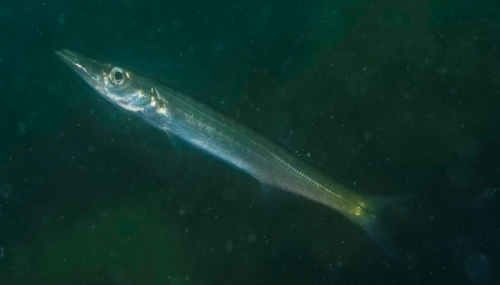
Fin

Want the complete picture on the Bigeye barracuda?

Point your camera at the fish and Fin names the species in seconds. Free, and the Bigeye barracuda is one of 12,519 species in the app.

Get the app →
Is this the Bigeye barracuda? Get the app