 Fin's Fish Guide
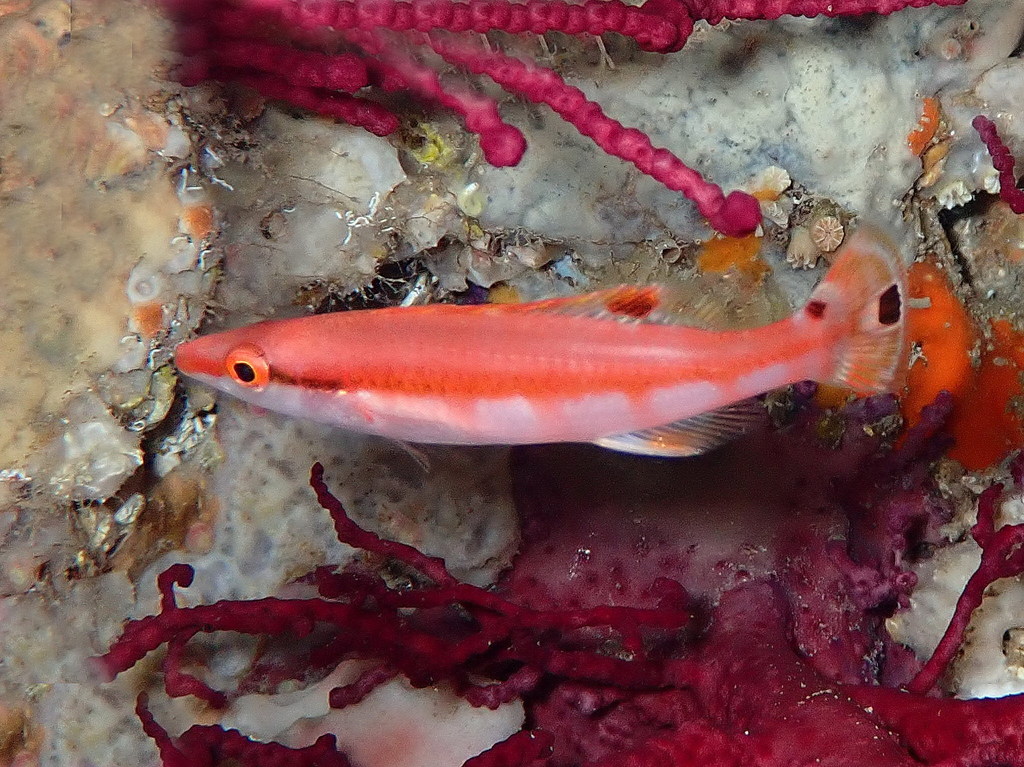
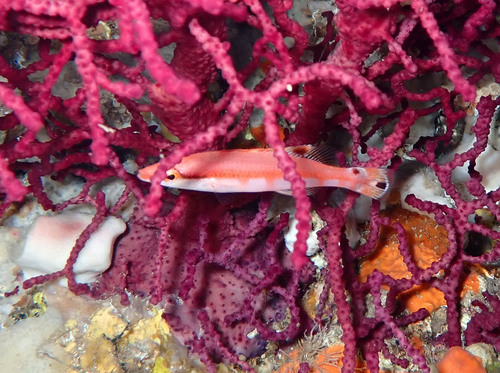
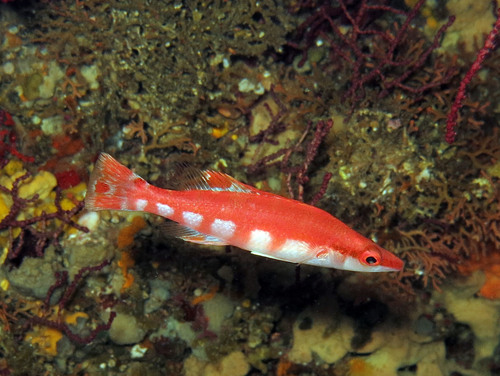
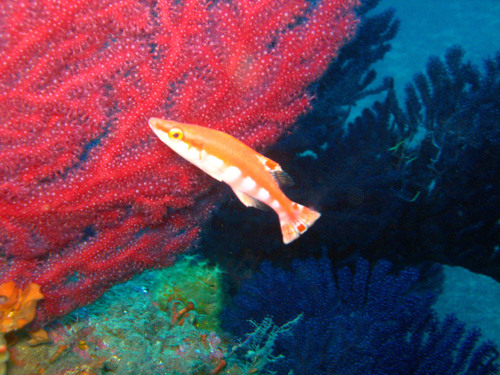
The Banded wrasse (Lappanella fasciata) is a saltwater fish of the family Labridae that grows up to 15 cm.
Mediterranean Sea and the adjacent eastern Atlantic, on rocky and gravel-covered bottoms, generally deeper than most other wrasses.
Description
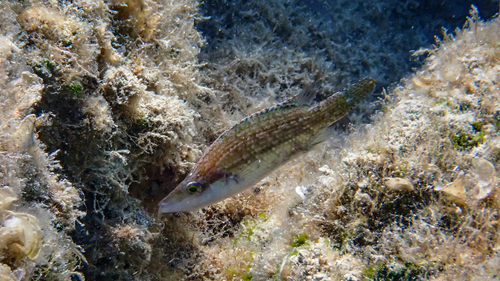
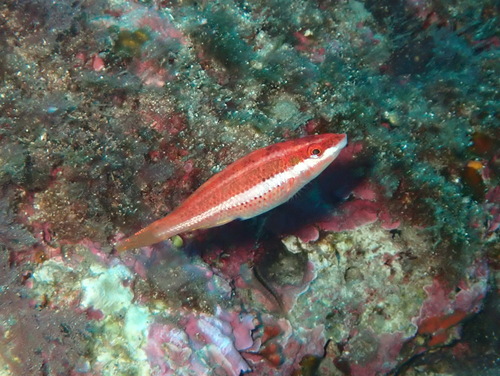
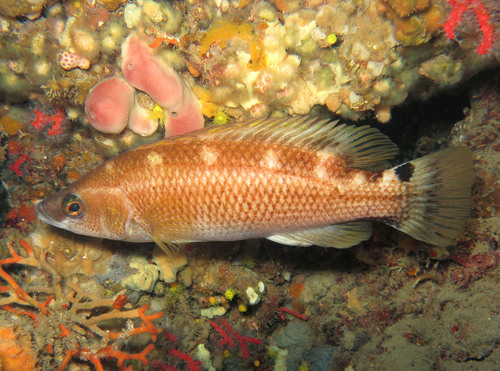
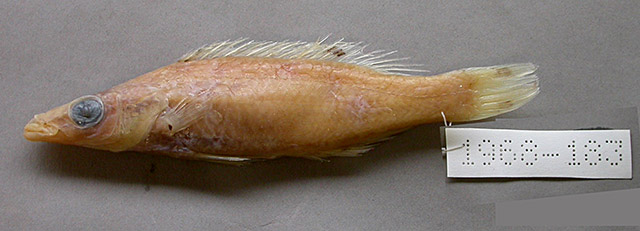
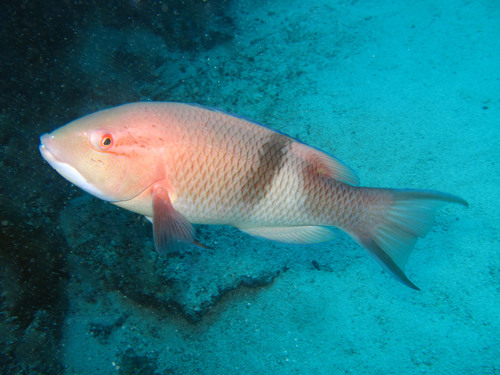
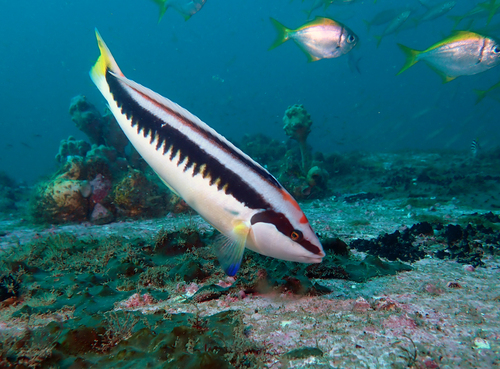
The banded wrasse is a small wrasse of the family Labridae reaching about 15 cm. The elongate, red-brown body bears a few dark cross-bars and has the thick lips typical of wrasses. Unlike many coastal wrasses the species lives fairly deep: on rocky and gravel-covered bottoms of the Mediterranean and the adjacent eastern Atlantic, often deeper than most other wrasses. Among the stones it searches for small crustaceans, molluscs and worms, which it crushes with strong throat teeth. Because of its small size and deep lifestyle it is rarely seen by divers and has hardly any fishery importance.
Frequently asked questions
How do you recognise the Banded wrasse?
The Banded wrasse has an elongate, eel-like body, is mainly brown and shows a vertical stripes pattern. Small, deeper-living wrasse with thick lips and a few dark vertical bars across the red-brown body.
Where does the Banded wrasse live?
The Banded wrasse lives in the sea (marine waters) and is mostly found around stony or rocky ground. Mediterranean Sea and the adjacent eastern Atlantic, on rocky and gravel-covered bottoms, generally deeper than most other wrasses.
How big does the Banded wrasse get?
The Banded wrasse grows to a maximum of about 15 cm.
Is the Banded wrasse dangerous to humans?
No, the Banded wrasse is harmless to humans. None required: this species is harmless to humans.
Is the Banded wrasse edible?
The Banded wrasse is rarely eaten.
More photos
Easily confused with
These species look like the Banded wrasse and live in the same waters.



Want the complete picture on the Banded wrasse?
Point your camera at the fish and Fin names the species in seconds. Free, and the Banded wrasse is one of 12,519 species in the app.
All data
Identification
Appearance
Habitat & distribution
Behaviour & biology
For anglers
Safety
Status & sources
Same genus Lappanella
More from the family Labridae



Want the complete picture on the Banded wrasse?
Point your camera at the fish and Fin names the species in seconds. Free, and the Banded wrasse is one of 12,519 species in the app.