 Fin's Fish Guide

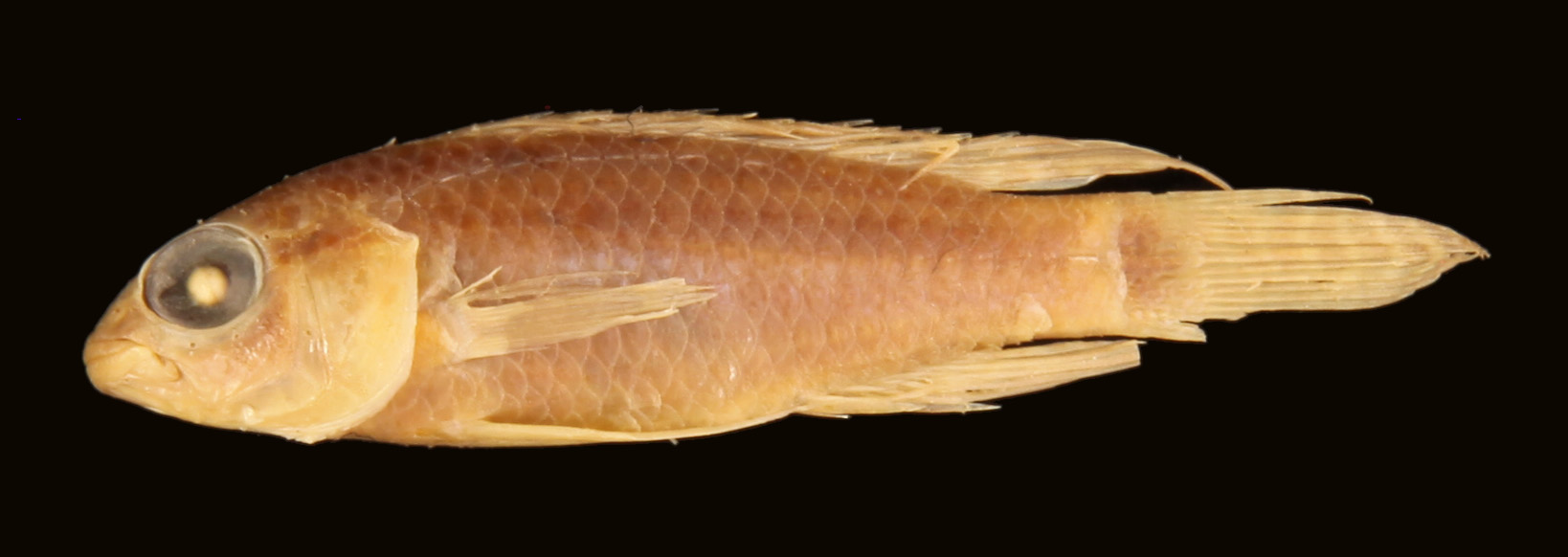
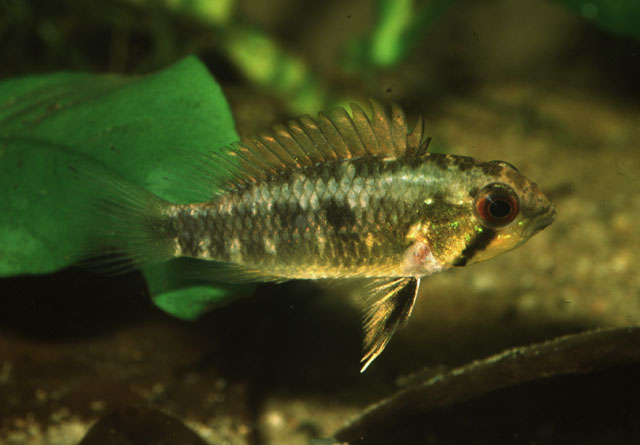
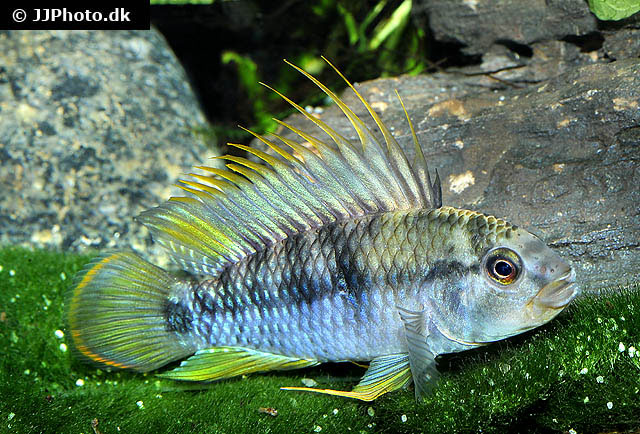
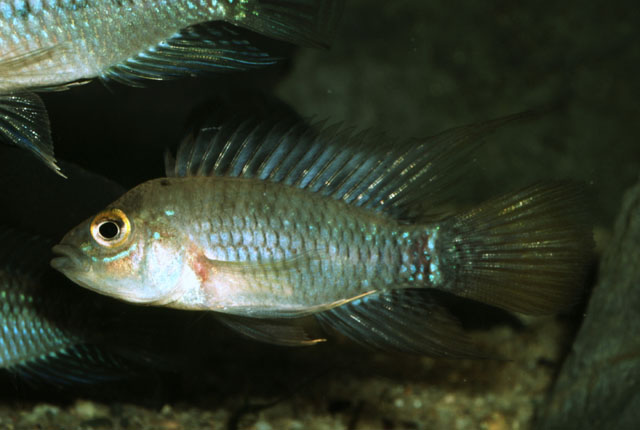
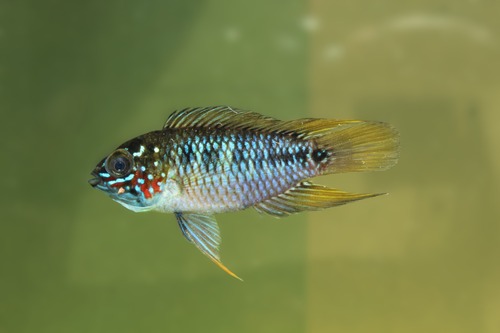
The Apistogramma ortmanni is a freshwater fish of the family Cichlidae that grows up to 4 cm.
The north of South America, on the Guiana Shield (Essequibo, Courantyne, Cuyuni).
Description
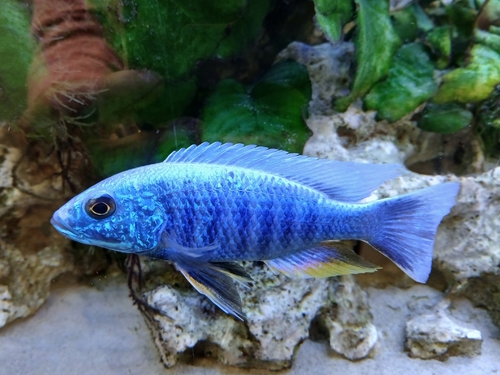
Ortmann's dwarf cichlid is a small cichlid from northern South America, on the Guiana Shield, in the Essequibo, Corantijn and Cuyuni basins. The species usually reaches about 4 cm (maximum about 7.5 cm) and has a slender body with a blue sheen and a dark lateral stripe; males are larger and more colourful than females. It inhabits slow-flowing and standing waters with plenty of cover. The diet consists of small invertebrates and insect larvae. The eggs are laid on the ceiling of a cavity and tended and guarded by the female.
Frequently asked questions
How do you recognise the Apistogramma ortmanni?
The Apistogramma ortmanni has a torpedo-shaped body, is mainly yellow-gold and shows a horizontal stripes pattern. The female lays the eggs against the roof of a small cavity and cares for the brood.
Where does the Apistogramma ortmanni live?
The Apistogramma ortmanni lives in fresh water and is mostly found around mixed bottom. The north of South America, on the Guiana Shield (Essequibo, Courantyne, Cuyuni).
How big does the Apistogramma ortmanni get?
The Apistogramma ortmanni grows to a maximum of about 4 cm. On average the species is around 4 cm.
Is the Apistogramma ortmanni dangerous to humans?
No, the Apistogramma ortmanni is harmless to humans. None required: this species is harmless to humans.
Is the Apistogramma ortmanni edible?
The Apistogramma ortmanni is not usually eaten.

Want the complete picture on the Apistogramma ortmanni?
Point your camera at the fish and Fin names the species in seconds. Free, and the Apistogramma ortmanni is one of 12,519 species in the app.
All data
Identification
Appearance
Habitat & distribution
Behaviour & biology
For anglers
Safety
Status & sources
Same genus Apistogramma

More from the family Cichlidae



Want the complete picture on the Apistogramma ortmanni?
Point your camera at the fish and Fin names the species in seconds. Free, and the Apistogramma ortmanni is one of 12,519 species in the app.