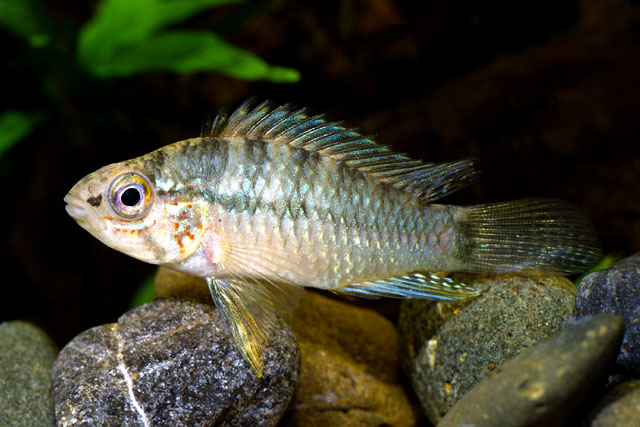
The Inconspicuous dwarf cichlid (Apistogramma inconspicua) is a freshwater fish of the family Cichlidae that grows up to 4 cm.
Description
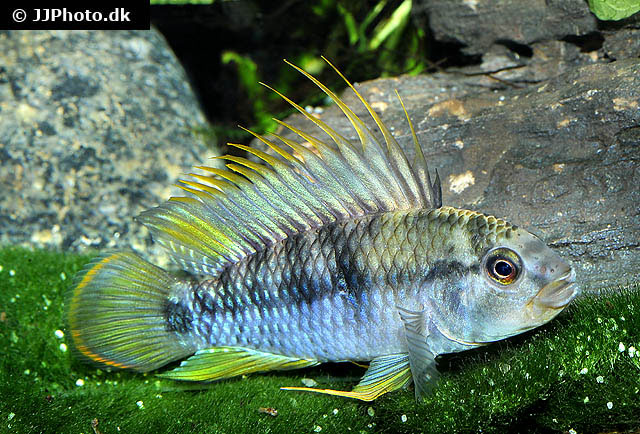
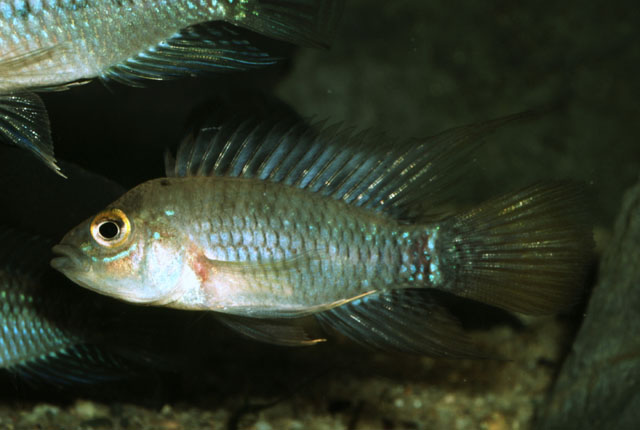
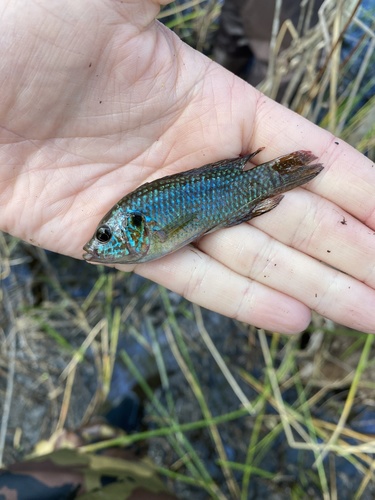
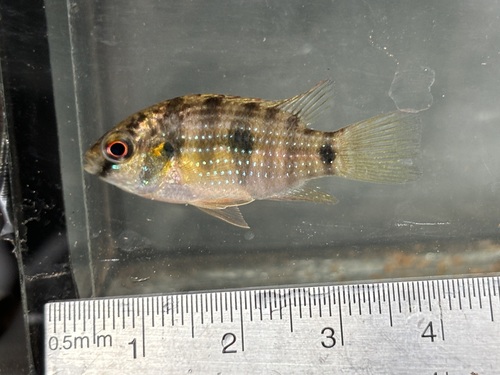
The Inconspicuous dwarf cichlid is a dwarf cichlid (Cichlidae) from clear and blackwater streams of the upper Amazon basin in Bolivia. The species grows to about 6 cm; the male is larger and brightly coloured with blue, yellow and red tints and spreading fins, the female yellow and smaller. As a bottom-dweller it shelters among leaf litter, roots and plants and snaps at small invertebrates and insect larvae. The female is a caring cave brooder that fiercely defends the young. The fish is harmless to humans.
Frequently asked questions
How do you recognise the Inconspicuous dwarf cichlid?
The Inconspicuous dwarf cichlid has a torpedo-shaped body and is mainly multicoloured.
Where does the Inconspicuous dwarf cichlid live?
The Inconspicuous dwarf cichlid lives in fresh water and is mostly found around sand or mud bottom.
How big does the Inconspicuous dwarf cichlid get?
The Inconspicuous dwarf cichlid grows to a maximum of about 4 cm.
Is the Inconspicuous dwarf cichlid dangerous to humans?
No, the Inconspicuous dwarf cichlid is harmless to humans.
Download Fin's Fish Guide
Identify fish in seconds, log your catches and dives. Join the TestFlight beta.
All data
Identification
Appearance
Habitat & distribution
Behaviour & biology
For anglers
Safety
Status & sources
Same genus Apistogramma
More from the family Cichlidae



Download Fin's Fish Guide
Identify fish in seconds, log your catches and dives. Join the TestFlight beta.